Working in addiction recovery requires unwavering ethical standards and clear professional boundaries. This Addiction Recovery Center Staff Code of Conduct template helps treatment facilities establish and document critical behavioral expectations for counselors, therapists, support staff, and administrators working with vulnerable populations in recovery.
Why this template matters for recovery centers
Staff conduct directly impacts client safety, treatment outcomes, and regulatory compliance. This template addresses the unique ethical challenges of addiction treatment settings—including dual relationships, boundary maintenance with clients in various stages of recovery, mandatory reporting obligations, and appropriate responses when staff members themselves experience relapse.
Built for healthcare and behavioral health teams
Recovery centers, substance abuse treatment facilities, mental health clinics, and residential programs can customize this template to match their specific policies while ensuring staff understand and agree to core professional standards. The form covers confidentiality requirements under HIPAA and 42 CFR Part 2, professional boundary guidelines, relapse response protocols for staff in recovery, and consequences for policy violations.
Paperform makes it simple to collect staff acknowledgments digitally, send automatic reminders for annual renewals, and maintain secure records for accreditation audits and compliance reviews. With conditional logic, you can tailor questions based on staff roles—asking different follow-up questions for clinical staff versus administrative personnel.
Take it further by connecting this form to Stepper to automatically notify HR when acknowledgments are completed, trigger onboarding workflows for new hires, or schedule annual recertification reminders. For facilities requiring signed agreements, Papersign can transform submissions into legally binding eSignature documents, creating a complete audit trail for regulatory compliance.
Whether you're a clinical director onboarding new therapists, an HR manager implementing annual compliance training, or an executive director ensuring facility-wide policy adherence, this template provides the professional structure recovery centers need while remaining accessible to all staff members.



More templates like this
Substance Abuse Treatment Center Employee Handbook Acknowledgment Form
A comprehensive employee acknowledgment form for substance abuse treatment centers covering confidentiality requirements under 42 CFR Part 2, relapse prevention protocols, MAT policies, and discharge planning procedures.
Behavioral Health Technician Crisis Intervention Certification Request
Request enrollment in crisis intervention certification for behavioral health technicians. Covers de-escalation techniques, restraint alternatives, and trauma-informed care approaches.
Addiction Treatment Facility Safety Incident Report
Document safety incidents in addiction treatment facilities while maintaining patient confidentiality, recording staff response, and tracking treatment plan impacts for clinical review.
Behavioral Health Crisis Center Patient Elopement Report
A comprehensive elopement report form for behavioral health facilities to document missing patients, assess risk factors, and coordinate immediate response efforts with mobile crisis teams.
Behavioral Health Crisis Intervention NDA & Confidentiality Agreement
A comprehensive non-disclosure agreement for behavioral health crisis intervention teams, protecting patient episode confidentiality, treatment plans, and insurance authorization information.
Behavioral Health Crisis Intervention System Implementation Milestone Report
A comprehensive milestone tracking form for behavioral health crisis intervention systems, covering intake assessments, risk stratification, care coordination protocols, follow-ups, and outcome measurements to ensure effective implementation.
Behavioral Health Technician Skills Assessment
A comprehensive competency evaluation for behavioral health technicians covering crisis intervention, de-escalation techniques, documentation standards, and patient rights knowledge.
Crisis Stabilization Unit Counselor Wellness Check
A comprehensive wellness check form designed for crisis stabilization unit counselors to assess work-related stress, burnout, and emotional wellbeing in high-pressure healthcare environments.
Medication-Assisted Treatment (MAT) Training Certification Form
A comprehensive training completion form for addiction counselors completing MAT certification, covering opioid use disorder protocols, naloxone administration, and state certification requirements.
Mental Health Practice Employee Handbook Acknowledgment Form
A comprehensive acknowledgment form for mental health practice employees confirming understanding of handbook policies, mandatory reporting laws, crisis intervention protocols, telehealth guidelines, and patient boundary requirements.
Workplace Compassion Fatigue Accommodation Request Form
A confidential form for healthcare workers experiencing compassion fatigue, secondary traumatic stress, or burnout to request workplace accommodations and mental health support.
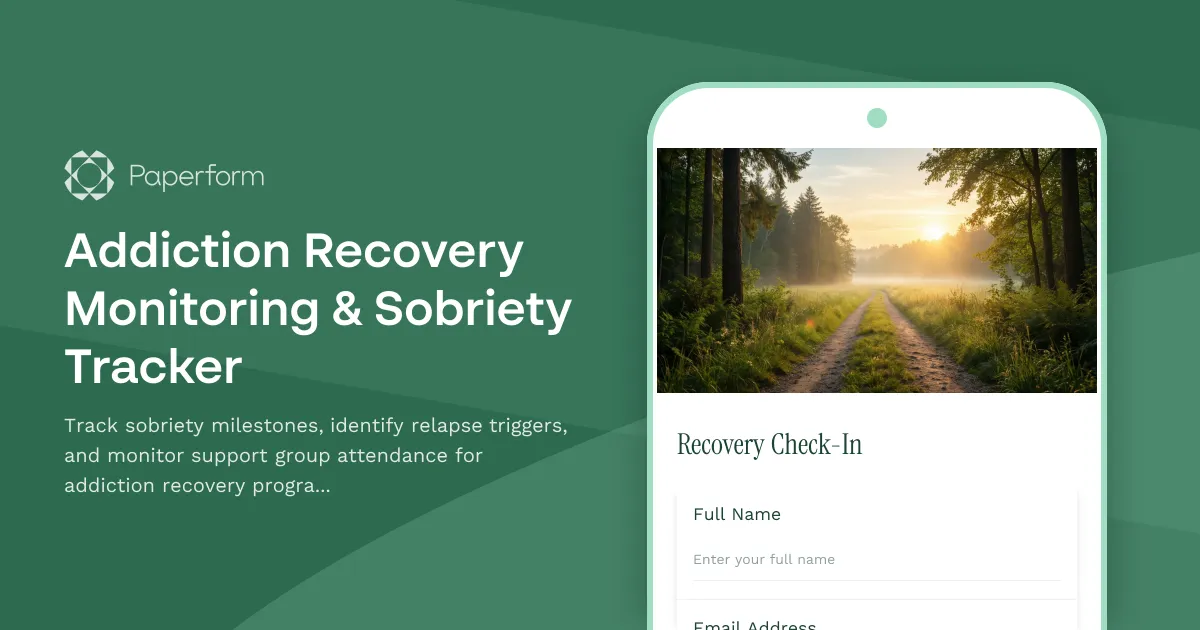
Addiction Recovery Monitoring & Sobriety Tracker
Track sobriety milestones, identify relapse triggers, and monitor support group attendance for addiction recovery programs. A comprehensive check-in form for patients and counselors.