How Verelle Collective Built an Enterprise-Grade Retail Intelligence Engine With Stepper
TL;DR – How Verelle Collective Uses Stepper
- Use case: Independent small business & ecommerce (Verelle + Verelle Collective)
- Core outcome: Built an enterprise-grade retail intelligence engine without code
- Time saved: ~20+ hours per week in market research and operational work
- Business impact: New scalable retail intelligence service, plus more time for marketing/growth
Small businesses often feel like they’re running uphill: too many tools, not enough time, endless manual work, and no access to the kind of backend intelligence that big brands rely on. Samēra Ayani—known as Sam—knows this reality better than most.
For more than a decade, Sam tried to solve the same problem from every angle: why do independent small businesses—who make up the backbone of local commerce—get stuck with brittle tech stacks, manual processes, and fragmented data, while enterprise brands enjoy seamless intelligence and automation?
“Why do billion-dollar brands get enterprise-level intelligence, while small retailers are left duct-taping tools together?”
As a multi-brand operator, curriculum developer, POS and e-commerce strategist, and founder of Verelle Collective, Sam lived this question through every version of her career. Each role revealed a deeper truth: retailers weren’t struggling because they lacked skill. They were struggling because they lacked infrastructure.
When she discovered Stepper, that changed overnight.
The first time I used it, my brain almost exploded. I thought, I’m sorry, what? Did somebody reach into my actual problems and solve them for me right now?
Today, Verelle Collective is being built on Stepper. It’s the backbone of Sam’s business—in her words, “the power to customize my tools, systems, processes and workflows” without needing to code. Stepper didn’t just automate her tasks. It unlocked an entire new business model.
About Sam Ayani

- Roles: Founder and Operator, Verelle Collective
- Industries: Retail, Health and Lifestyle
- Focus: Samēra Ayani is a retail intelligence architect and founder of Verelle Collective, building enterprise-grade automation systems for small businesses and lifestyle retailers.
The Challenge: A Fragmented Tech Stack and Thousands of Hours Lost
Sam’s background spans adult education, digital marketing, wellness, and retail. That experience brought one truth into sharp focus: the problems small businesses face are systemic, not isolated.
She had lived every pain point:
- Inventory systems that don’t talk to POS systems
- Platforms that don’t sync with e-commerce
- Email marketing tools locked behind feature paywalls
- Retail platforms with weak or nonexistent integrations
- Endless manual curation, research, and reporting
- Thousands of dollars lost to tools, developers, and workarounds
As she put it:
I have come up against every problem that a small independent business owner could possibly come across… I’ve literally come across all of it.
Even as her businesses evolved—from organic grocery to coaching to selling products online—the same technical bottlenecks followed her.
She tried everything: Zapier, Make, n8n, AutoKit, Pabbly, and all other Zapier alternatives. These tools were either too shallow, too technical, too expensive, or too fragile. Nothing delivered the level of control and intelligence she needed. And after years of trying to solve it on her own, she has paid dearly investing in systems that failed to deliver.
“I have invested five figures easily in trying to learn how to do things that still didn’t work… We’re broaching six figures when we’re talking about time sink.”
SMB operators like Sam don’t lack ability—they lack infrastructure. Stepper gave her the missing layer.
Discovering Stepper, an AI Workflow Automation Platform that Actually Thinks With You
Sam found Stepper almost by accident. A long-time Paperform user, she joined the new Stepper Discord community while she was deep in the weeds rebuilding her ecommerce store. But, busy trying to put together her automation stack, she didn’t actually open Stepper until weeks later.
When she finally did, the reaction was immediate.
“The first time I used Stepper, my brain almost exploded,” she said. “I thought, I’m sorry, what? Did somebody reach into my actual problems and solve them for me right now?”
Sam immediately saw what Stepper made possible:
- True conversational building with Native AI
- Real visibility into logic
- No need to “know the how” - Stepper works with you
- API-level power without coding, all supported by conversational AI
- A way to unify all her tools—finally
Stepper didn’t expect her to wrestle with logic, endpoints, polling times, or custom code. Instead, it invited her into a conversation. She could describe the workflow she needed in plain English, and Stepper built the structure, explained the logic, and showed her exactly how the pieces fit together.
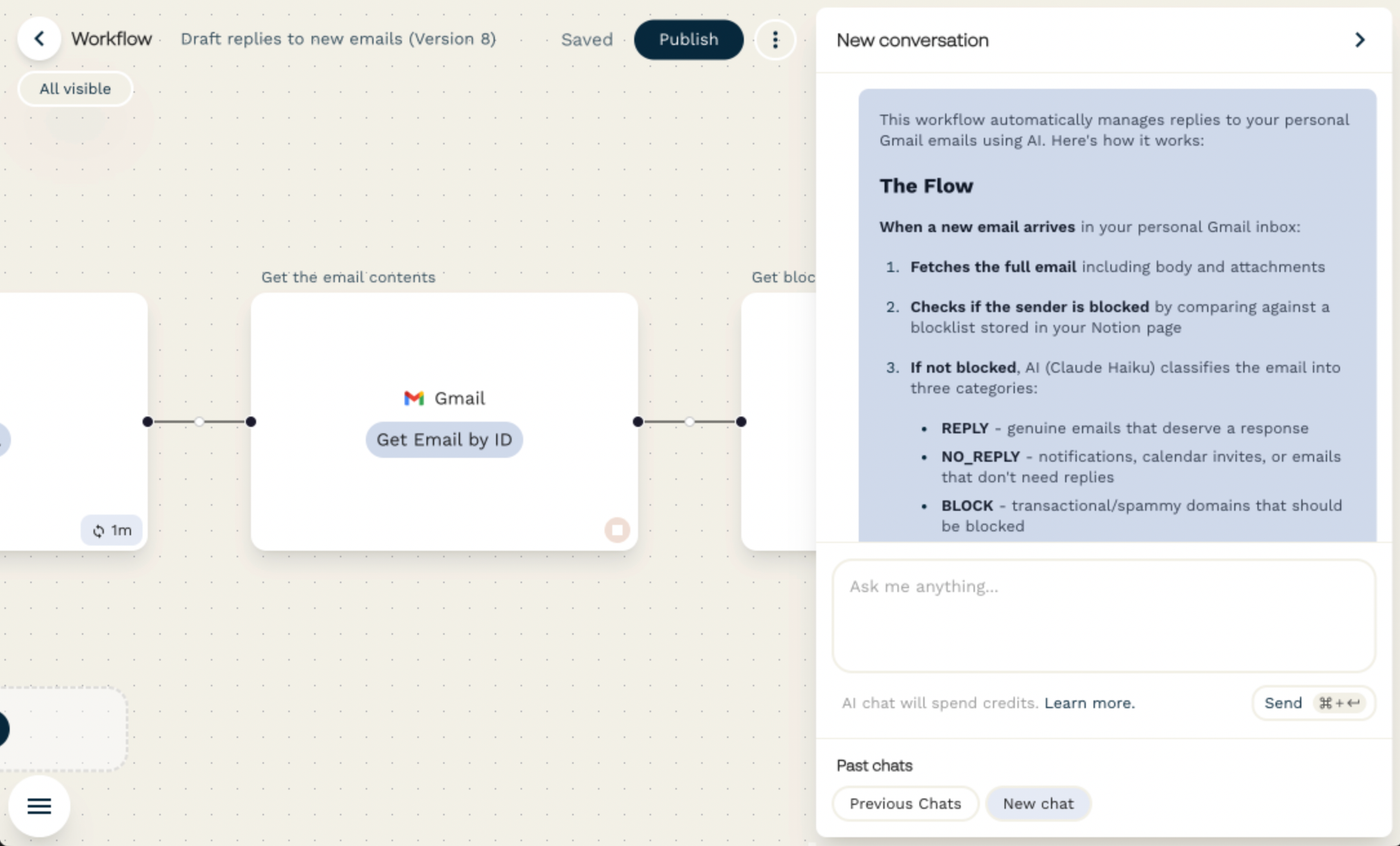 Stepper AI working to build a workflow
Stepper wasn’t “another automation tool.” It felt like a new category altogether. She realized the thing she’d been chasing for 15 years was now in front of her.
“I don’t have to know the "how" beforehand. Stepper teaches me the how. Stepper works out the how… I get to go in and have a conversation.”
For the first time in her career, the ceiling wasn’t technical. She wasn’t fighting the tool. She wasn’t duct-taping workflow apps together. She could finally focus on outcomes—the thing retailers have the least time for but need the most.
What This Small Business Expert Built With Stepper
Today, Stepper is the tool she is using as her foundation to build Verelle Collective. It fuels both her e-commerce store (Verelle) and her retail intelligence service (Verelle Collective).
1. Automated Inventory Intelligence
Her inventory management, which once required late-night cross-checking across multiple platforms, transformed into a continuous stream of insights. Stepper interpreted her POS data, surfaced reorder points, flagged vendor pricing, and highlighted emerging product patterns. Intelligence that she once believed belonged only to billion-dollar retailers was suddenly running on her own store.
“That level of retail intelligence was just not available to me before,” she said.
Stepper now analyzes her Lightspeed POS data:
- Automatically checks stock levels
- Generates reorder lists
- Finds vendors with the best prices
- Suggests competitive pricing
- Surfaces market trends and movement
“That level of retail intelligence was just not available to me before.”
This alone replaces hours of manual data work—and expensive third-party apps.
2. Automated Market Research
Her weekly market research, a hours-long ritual of scanning Amazon, vendor sites, and marketplace trends, now ran in the background. Stepper watched the data, made connections, and presented information she once gathered manually.
“All of that is going away,” she said. “Probably 20 hours a week.”
What once took her 20+ hours a week now runs automatically:
- Product performance analysis
- Vendor price comparisons
- Amazon and marketplace benchmarking
- Margin and pricing recommendations
3. Backend Retail Workflows
Her abandoned-cart flows, once constrained by the limits of an email platform, expanded into true AI-assisted logic based on inventory, purchase behavior, customer patterns, and profitability. Loyalty sequencing, triggered replenishment emails, and accounting reconciliation began working the same way. Tasks that once required separate platforms, expensive plugins, or hours of elbow grease became part of one unified system she understood and trusted.
“Abandoned cart recovery is automation 101,” she told us, “but now I don’t need email platforms to do this anymore.”
She’s building workflows and business process automations that go far beyond simple automations:
- Dynamic abandoned-cart recovery
- Automated product recommendations
- Inventory-triggered email sequences
- Loyalty workflows with dynamic rewards
- Unified POS-to-QuickBooks reconciliation
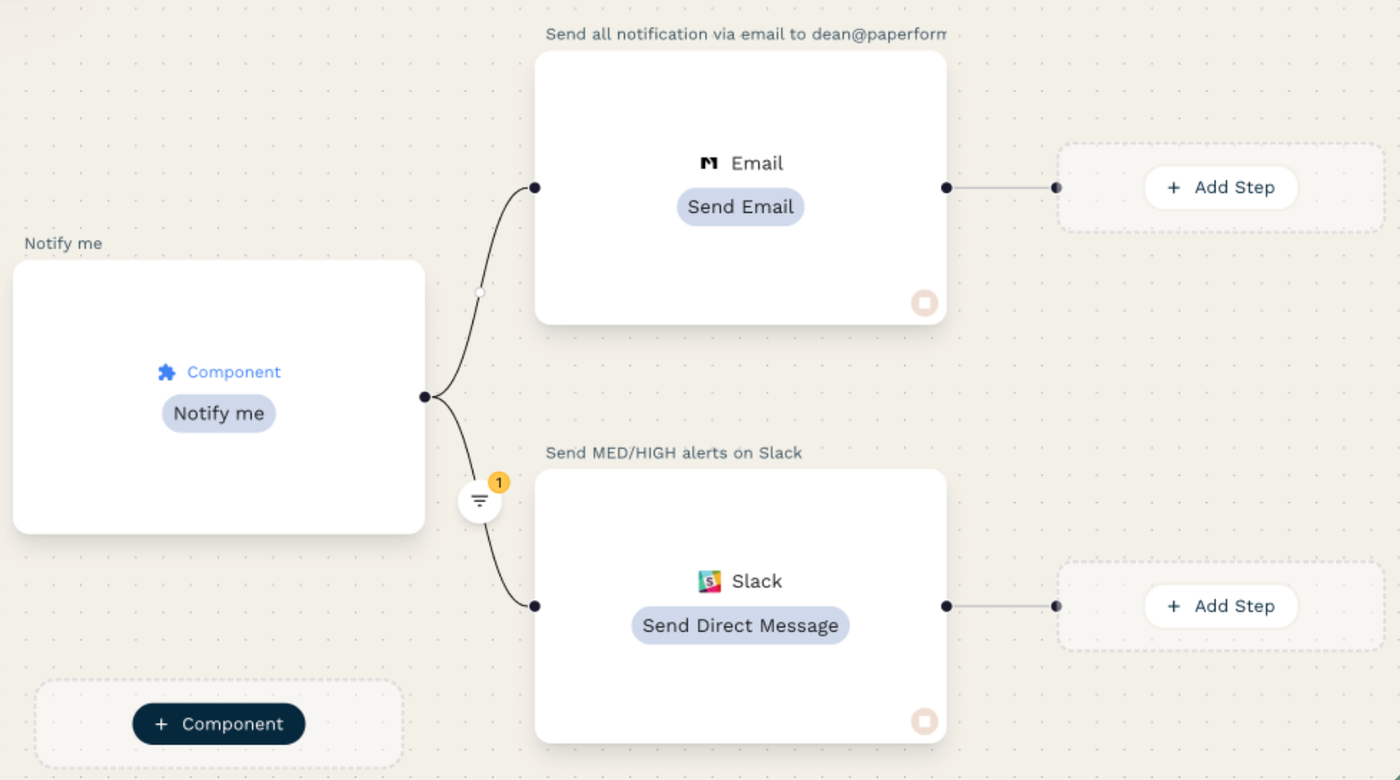 Use branching logic to manage customer data and checkout
4. Her Secret Retail Engine
This is the secret workflow that Sam says will completely transform her business—and her clients’. And one she is playing very close to her chest.
Sam has spent years building an intuitive sense for her industry. It is her superpower—and it was entirely stuck in her head.
Until Stepper changed that.
She has begun building what she now calls her “baby”: a engine that will automate her secret processes and transforming it into a reusable, automated intelligence layer.
“I can't tell you too much, but will say I can now take what's in my brain, take it out of my head, automate it… and I immediately get all of those hours back,” she said.
- Stepper will enable her to convert her intuition and buying criteria into reusable logic
- Stepper will cut 10–15 hours of weekly manual work
- Stepper will democratize the kind of intelligence big retailers guard tightly
This workflow will become the foundation of her new retail intelligence offering and is possible because of Stepper.
The Impact of Stepper: Time Back, Money Back, and a New Business Model
Sam calculates that Stepper gives her:
- 20+ hours back every week
- Thousands saved on tools
- No need for additional staff
- Freedom to focus on marketing, growth, and customers
- A scalable system she can package and sell
Because of Stepper, I really will be able to grow. My time is much more valuable as an owner spent on growing the business… all those dollars I was spending, now I get to put that into marketing.
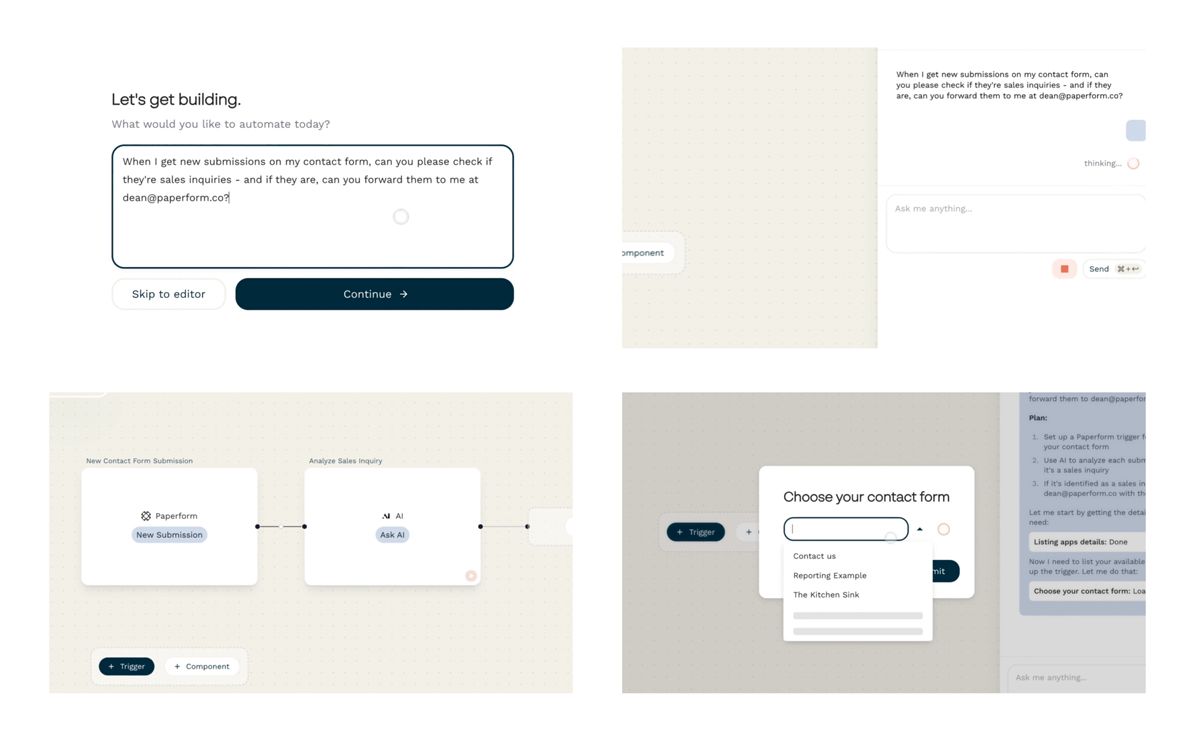
Why Stepper Is the Right Automation Platform for Small Business
For Sam, Stepper didn’t remove the work. It removed the friction. It gave her back the hours she had traded away, the clarity she kept fighting for, and the intelligence she always knew she should have access to.
Above all, it changed the relationship she had with her business. Instead of bending her processes to the tools available, she could finally shape tools around the way retail should work.
“Don’t bother with anything else,” she said. “Jump into Stepper now. It’s light years above the other tools. I don’t have to worry about the how any longer. Just outcomes. It gives me the power to customize my business the way I need it to.”
For the first time, she has a platform that matches her ambition: a system that thinks with her, learns with her, and scales with her.
That’s what Stepper unlocks: clarity, intelligence, and control—without the friction.
If you’re ready to build workflows that actually work the way your business does, Stepper is ready when you are.
Get creating now.
Q&A With Sam On Why Stepper Just Works
Q: What were the biggest pain points in your retail operations before Stepper?
Sam spent years stuck between tools that refused to work together, forcing her to manually connect systems that should have been automated.
“Inventory systems that don’t talk to my POS system, that doesn’t talk to my email marketing system… I knew this was possible because big retailers have this ability. It made me angry that I couldn’t.”
Q: What made Stepper different from Zapier, Make, or n8n?
After trying every major workflow automation platform, Stepper was the first that actually explained its logic and let her understand what was happening behind the scenes.
“I don’t have to know beforehand the how. Stepper’s integrated AI teaches me the how. Stepper tells you what it’s thinking. I have a much deeper understanding of APIs now.”
Q: How much time does Stepper save you each week?
The shift was immediate—automation finally worked the way she needed, freeing up hours she used to lose to repetitive analysis and manual work.
“Easily 20 hours a week.”
Q: What is Sam most excited to build next?
Her focus is on turning her deep product intuition into a scalable, automated asset for her business and clients.
“My new back-end engine. That’s really where my business is going to shine.”
Q: Would you recommend Stepper?
There’s no hesitation in her answer—Stepper solved the problems she’d been battling for more than a decade.
“My gosh, don’t bother with anything else. Yes.”
Ready to build workflow systems that scale your business?
Sam didn’t adopt Stepper. She built a her business on top of it.
Verelle Collective exists because Stepper makes enterprise-grade retail intelligence accessible to independent retailers—without engineering teams, without duct tape, and without guesswork.
This is what Stepper was designed for:
- Clarity you can trust
- Performance without complexity
- Automation that adapts to you
- Power without code
- Control without friction
If you’re an operator, solopreneur, or retailer who’s tired of bending your business to your tools, Stepper flips the equation.
Ready to start building workflows that actually work?
Create your free Stepper account
Related reading