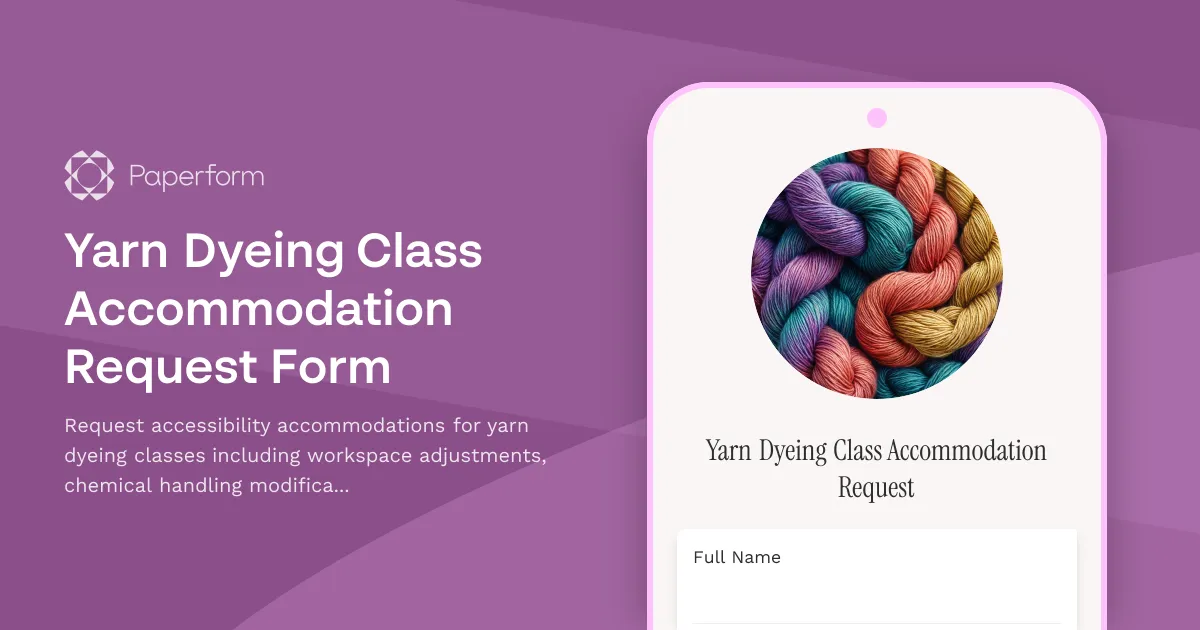
Making Yarn Dyeing Accessible to Everyone
Creating beautiful hand-dyed yarn should be an inclusive experience. Whether you're a fiber arts studio, craft school, or workshop instructor, this yarn dyeing class accommodation request form helps you gather essential information to make your classes accessible to students with diverse needs.
Thoughtful Accommodations for Hands-On Fiber Arts
Yarn dyeing involves unique challenges—from working with dye chemicals and heat sources to precise color mixing and extended standing periods. This template helps you understand each student's specific needs so you can prepare appropriate modifications ahead of time.
The form captures details about workspace accessibility (seating options, table height adjustments, lighting needs), chemical handling modifications (ventilation requirements, glove alternatives, scent sensitivities), and instruction method preferences (visual demonstrations, written steps, one-on-one guidance, or audio descriptions).
Streamline Your Accommodation Process with Paperform
Built on Paperform's flexible platform, this form uses conditional logic to show relevant follow-up questions based on accommodation types requested. Students can clearly communicate their needs, and you'll have all the information organized in one place to prepare an inclusive learning environment.
For fiber arts businesses managing multiple workshop series, you can connect this form to your calendar system and sync accommodation details with your CRM or class management tools. Use Stepper to automate your accommodation workflow—trigger confirmation emails, notify teaching assistants of specific needs, and create checklists for workspace setup based on the accommodations requested.
Whether you're running weekend dyeing intensives, ongoing weekly classes, or private workshops, this template ensures every student can participate fully and safely in the creative process of transforming yarn into wearable art.

More templates like this
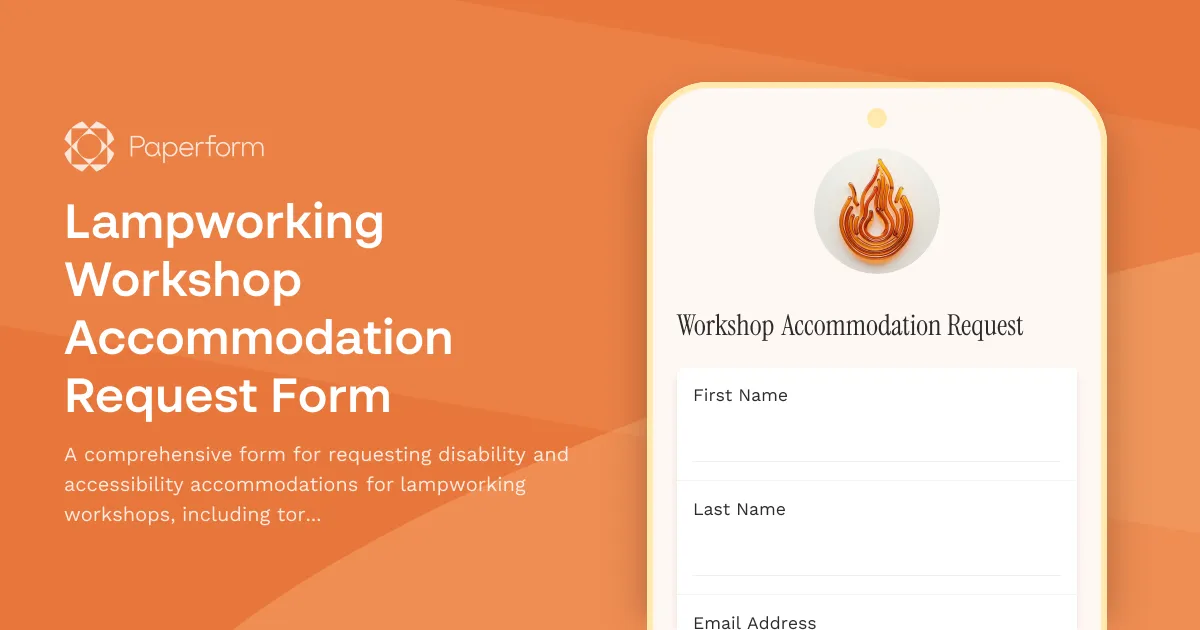
Lampworking Workshop Accommodation Request Form
A comprehensive form for requesting disability and accessibility accommodations for lampworking workshops, including torch accessibility, safety equipment modifications, and instruction method preferences.
Leatherworking Class Accommodation Request Form
Request accessibility accommodations for leatherworking classes, including tool adaptations, workspace modifications, and personalized instruction methods to ensure an inclusive learning experience.
Calligraphy Class Accommodation Request Form
Request accessibility accommodations for calligraphy classes including pen modifications, paper positioning adaptations, and preferred instruction formats to ensure an inclusive learning experience.
Embroidery Class Accommodation Request Form
Request accessibility accommodations for embroidery classes including adaptive equipment, workspace modifications, and alternative instruction methods to ensure an inclusive learning experience.
Enameling Workshop Accommodation Request Form
A comprehensive form for participants to request disability and accessibility accommodations for enameling workshops, including kiln accessibility needs, tool modifications, and instruction format preferences.
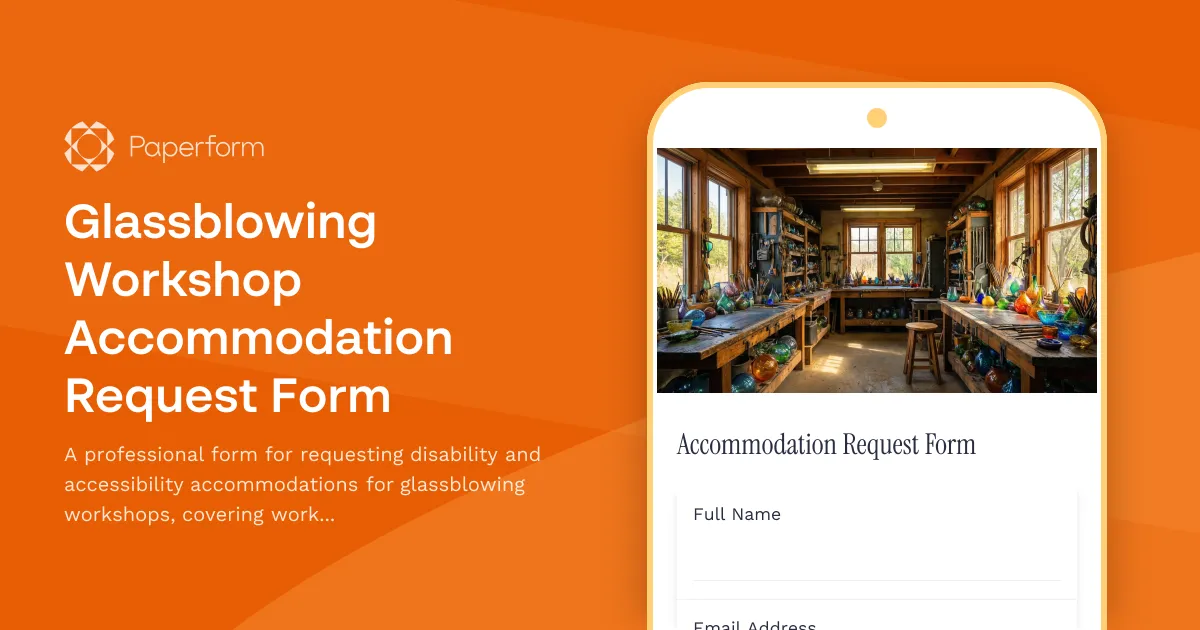
Glassblowing Workshop Accommodation Request Form
A professional form for requesting disability and accessibility accommodations for glassblowing workshops, covering workspace modifications, tool adaptations, and safety protocol adjustments.
Ink Making Workshop Accommodation Request Form
Request accessibility accommodations for ink making workshops including workspace modifications, material handling assistance, and alternative instruction methods to ensure an inclusive creative experience.
Knitting and Crochet Class Registration Form
A comprehensive registration form for knitting and crochet classes that captures student experience, project preferences, equipment needs, and guild membership details.
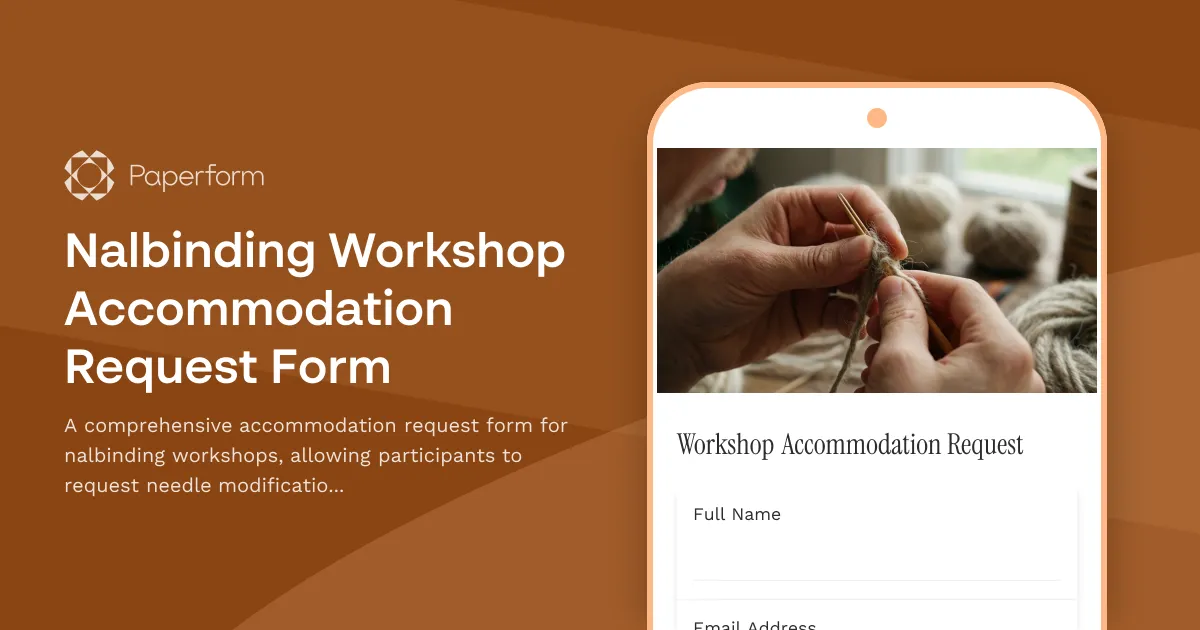
Nalbinding Workshop Accommodation Request Form
A comprehensive accommodation request form for nalbinding workshops, allowing participants to request needle modifications, material handling assistance, and alternative instruction methods to ensure an accessible learning experience.
Pottery Studio Accommodation Request Form
A comprehensive form for pottery students and members to request disability accommodations, including wheel accessibility modifications, adaptive tools, and alternative instruction formats.
Quilting Machine Operation Class Accommodation Request Form
A comprehensive accommodation request form for quilting machine operation classes, designed to capture accessibility needs including equipment modifications, workspace adjustments, and instruction method alternatives.

Resin Art Workshop Accommodation Request Form
Request accessibility accommodations for resin art workshops including ventilation needs, workspace modifications, and instruction format preferences to ensure a safe and inclusive creative experience.