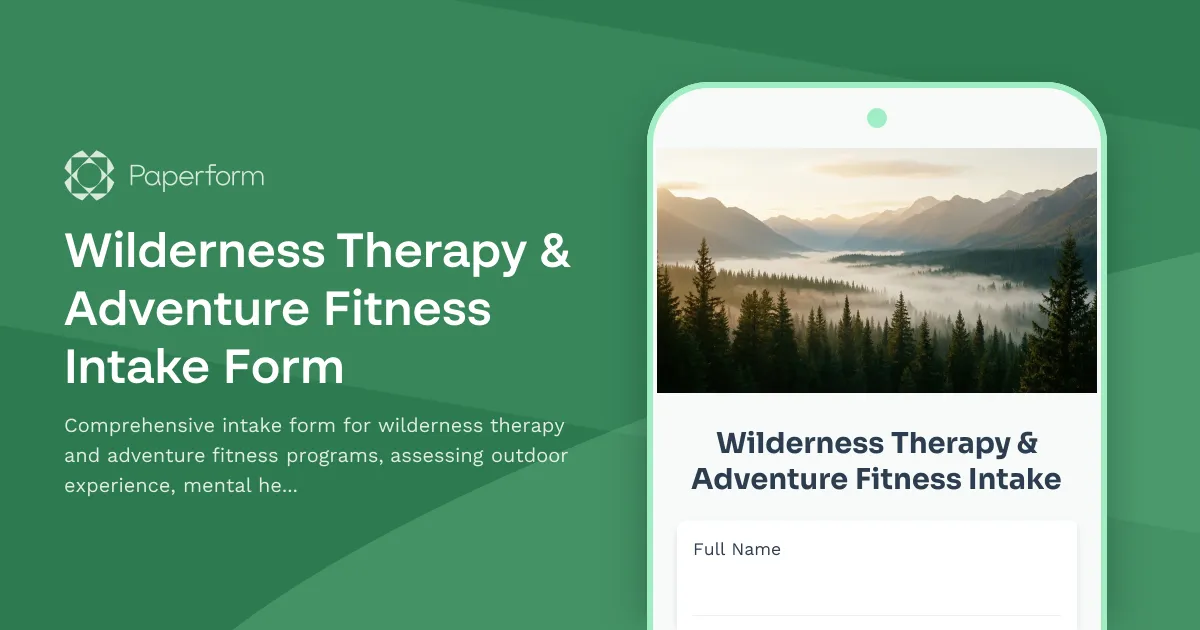
Transform Your Life Through Wilderness Therapy & Adventure Fitness
Wilderness therapy and adventure fitness programs combine the healing power of nature with physical conditioning and therapeutic support to create profound personal transformation. Whether you're seeking mental health treatment in an outdoor setting, building resilience through adventure challenges, or reconnecting with yourself away from daily distractions, a comprehensive intake process ensures you're matched with the right program for your unique journey.
This Wilderness Therapy & Adventure Fitness Intake Form template is designed for outdoor therapy centers, adventure wellness retreats, therapeutic wilderness camps, and fitness programs that blend mental health support with outdoor activities. Built with Paperform, this template helps practitioners gather essential information about participants' outdoor experience, mental health history, physical conditioning, comfort with group living, and transformational goals—all in one professional, compassionate intake form.
Why Wilderness Programs Need Specialized Intake Forms
Traditional therapy and fitness intake forms don't capture the unique considerations of wilderness-based programs. Participants need to be assessed for:
- Outdoor experience and comfort levels with camping, hiking, and wilderness activities
- Mental health treatment needs and therapeutic goals in a non-clinical setting
- Physical conditioning and medical clearance for demanding outdoor activities
- Group living readiness and interpersonal skills for community-based programs
- Safety considerations including allergies, medications, and emergency contacts
- Personal transformation goals that go beyond typical fitness or therapy outcomes
This intake form template addresses all these dimensions, giving program leaders the information they need to create safe, effective, and personalized wilderness therapy experiences.
Perfect for Adventure Therapy Providers & Wellness Retreats
This template is ideal for:
- Wilderness therapy programs treating adolescents and adults with mental health challenges
- Adventure fitness retreats combining outdoor challenges with wellness coaching
- Therapeutic camping programs for trauma recovery and personal growth
- Outdoor leadership training with mental health components
- Nature-based wellness centers offering immersive healing experiences
- Expedition therapy programs for groups and individuals
- Adventure coaching businesses focused on transformation through outdoor challenges
How This Template Streamlines Your Intake Process
Instead of juggling multiple PDFs, email chains, and phone screenings, this Paperform template gives you a single, professional intake experience that:
- Collects comprehensive information about mental health history, physical fitness, outdoor skills, and program expectations
- Uses conditional logic to show relevant follow-up questions based on experience levels and needs
- Creates a compassionate experience with thoughtful questions that honor each person's journey
- Syncs with your practice management tools via Stepper, Zapier, or native integrations
- Maintains HIPAA-friendly practices through secure data collection and storage options
- Saves staff time by gathering all essential information before the initial consultation
The form can be embedded on your website, shared via email, or sent as a standalone link, and it works beautifully on any device—important for families and individuals researching programs from home.
Comprehensive Assessment Areas
This wilderness therapy intake template covers:
- Personal Information & Emergency Contacts - Basic demographics and multiple emergency contacts for remote program safety
- Outdoor Experience Assessment - Current skill levels with hiking, camping, navigation, and wilderness living
- Mental Health History & Treatment Goals - Current challenges, past treatment, medications, and therapeutic objectives
- Physical Health & Fitness Level - Medical conditions, fitness assessment, dietary needs, and physical limitations
- Group Living & Social Comfort - Experience with communal living, social anxiety, and interpersonal skills
- Transformational Goals - Personal growth objectives, what participants hope to change or discover
- Program Preferences - Duration, intensity level, and specific program interests
- Medical Clearance & Consent - Required health screenings and permission for participation
Customization for Your Program's Unique Approach
Every wilderness therapy and adventure fitness program has its own philosophy and methods. This template is fully customizable, so you can:
- Add questions about specific modalities you use (CBT, DBT, mindfulness, somatic therapy)
- Include questions about previous outdoor program experiences
- Adjust fitness requirements based on your program's physical demands
- Add specialized questions for youth, adult, or family programs
- Include questions about substance use history if relevant to your program
- Add insurance and payment information fields
- Customize the tone to match your brand—from clinical and professional to warm and adventure-focused
Automation That Supports Your Intake Workflow
After someone submits their intake form, Paperform's conditional logic and integrations can trigger the right next steps:
- Send different follow-up emails based on urgency or program fit
- Create records in your CRM or practice management system automatically
- Route applications to different staff members based on program type or needs
- Generate intake summaries for clinical review
- Schedule screening calls or assessments through calendar integrations
- Use Stepper workflows to manage multi-step approval processes, insurance verification, or family consultations
This means your intake process becomes a smooth, professional experience from first inquiry to program acceptance.
Building Trust Through Thoughtful Intake
For individuals and families considering wilderness therapy, the intake form is often their first substantial interaction with your program. A well-designed form demonstrates:
- Professionalism and safety consciousness through comprehensive health and experience questions
- Therapeutic expertise by asking about mental health in respectful, informed ways
- Personalization by gathering information about individual goals and needs
- Transparency about program requirements and expectations
This builds confidence in your program and sets the stage for transformational work.
Security, Compliance, and Confidentiality
Mental health and medical information requires the highest levels of security. While Paperform is not HIPAA-compliant, it offers SOC 2 Type II compliance and robust security features that support confidential intake processes. For programs requiring HIPAA compliance, you can use this form for initial inquiries and then transition to HIPAA-compliant tools for protected health information.
Paperform's security features include:
- Encrypted data transmission
- Secure data storage
- Access controls and permissions
- Data residency options
- Integration with HIPAA-compliant storage solutions
Trusted by Wellness Professionals Worldwide
Paperform is used by over 500,000 teams, including therapists, coaches, wellness centers, and fitness professionals who need to collect sensitive information with care and professionalism. The platform's intuitive editor means you can customize this template yourself without technical skills, and the beautiful, on-brand design helps you stand out in a competitive wellness market.
Get Started with Your Wilderness Program Intake
This template gives you everything you need to create a thorough, compassionate intake experience for wilderness therapy and adventure fitness participants. Customize the questions, match your brand styling, and start gathering the information you need to guide people toward meaningful transformation in the great outdoors.
Whether you're launching a new wilderness therapy program or improving your existing intake process, Paperform helps you collect the right information, automate follow-up, and focus on what matters most—creating life-changing experiences in nature.



More templates like this
Fitness Therapy for PTSD Intake Form
A comprehensive intake form for trauma-informed fitness therapy programs that assess PTSD symptoms, trauma triggers, grounding techniques, somatic experiences, and exercise tolerance to create safe, personalized therapeutic movement plans.
Meditation & Movement Wellness Intake Form
A holistic intake form for meditation and movement programs that assesses mindfulness practice, stress levels, sleep quality, anxiety management, and somatic awareness to create personalized wellness plans.
Body Image Coaching Intake Form
A comprehensive intake form for body image coaches to understand clients' relationship with their body, diet history, media influences, self-talk patterns, and body acceptance goals.
Burnout Recovery Coaching Intake Form
A comprehensive intake form for burnout recovery coaching that assesses symptoms, work situation, stress factors, rest capacity, and helps establish sustainable lifestyle goals.
Dance Movement Therapy Emergency Contact Form
A comprehensive emergency contact form for dance movement therapy clients that captures mobility range, body image concerns, rhythm sensitivity, movement preferences, and consent for therapeutic movement exploration.
Seasonal Depression Coaching Intake Form
A compassionate coaching intake form for clients experiencing seasonal affective disorder (SAD), gathering information about symptom history, severity, current coping strategies, and mood management goals to create personalized support plans.

Active Aging Program Intake Form
A comprehensive intake form designed for personal trainers and wellness coaches working with adults aged 70+ to assess health conditions, independence levels, social wellness, and personal fitness goals.
Addiction Recovery Coach Intake Form
A compassionate intake form for addiction recovery coaches to gather essential client information including substance use history, sobriety status, treatment background, triggers, support systems, and recovery goals.
Chronic Pain Coaching Intake Form
A comprehensive intake form for chronic pain coaches to understand clients' pain conditions, medical history, lifestyle impact, current coping strategies, and quality of life goals to create personalized coaching plans.
Chronic Stress Coaching Intake Form
A comprehensive intake form for chronic stress coaching that assesses stress sources, symptoms, coping mechanisms, lifestyle factors, and helps clients set meaningful stress resilience goals.
Diabetes Management Fitness Intake Form
A comprehensive fitness intake form for clients with diabetes, covering blood glucose monitoring, insulin management, exercise protocols, and endocrinologist coordination.
Endometriosis Pain Psychology Intake Form
Comprehensive psychological intake form for patients experiencing endometriosis-related pain. Assess symptom severity, treatment history, relationship impacts, and pain coping strategies to provide targeted therapeutic support.