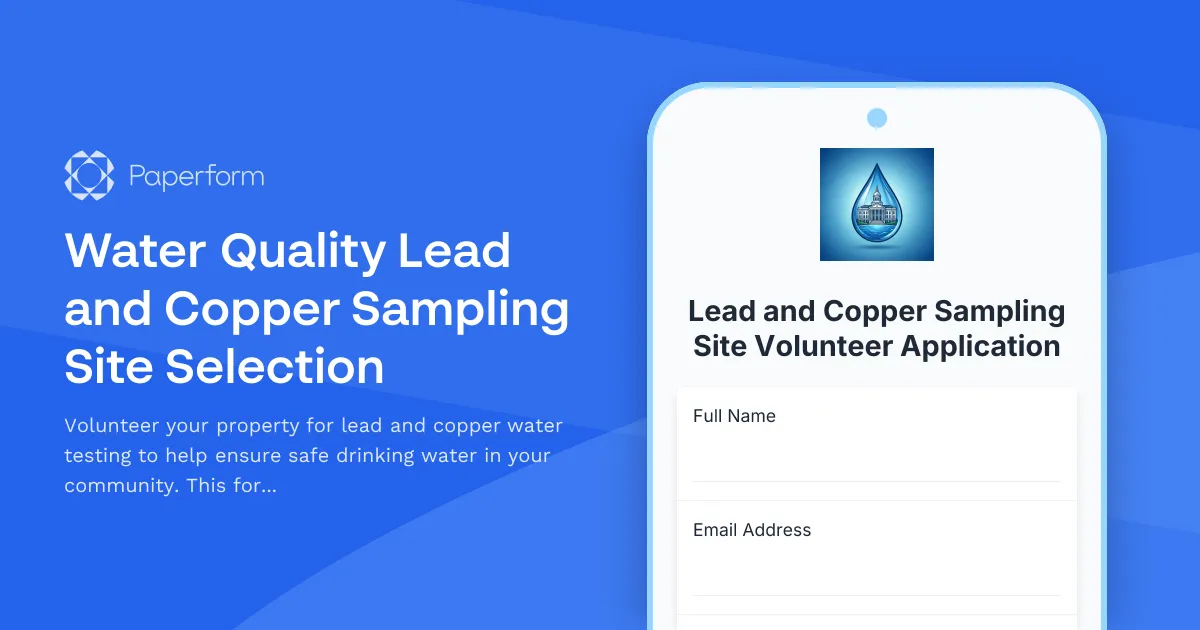
Help Ensure Safe Drinking Water in Your Community
Access to clean, safe drinking water is a fundamental right, and monitoring water quality is one of the most important responsibilities of municipal water utilities. If you've been asked to volunteer your property for lead and copper sampling—or if you're proactively offering—this Water Quality Lead and Copper Sampling Site Selection Form makes the entire process simple, transparent and compliant with EPA regulations.
Why Lead and Copper Testing Matters
Under the EPA's Lead and Copper Rule (LCR), water utilities must regularly test drinking water at customer taps to monitor for lead and copper contamination. These metals can leach from pipes, fixtures and plumbing materials—especially in older homes—and pose serious health risks, particularly to children and pregnant individuals.
To meet regulatory requirements, utilities must select a representative sample of high-risk homes and buildings, conduct first-draw water sampling, and report results to state and federal agencies. This form streamlines volunteer recruitment, premise plumbing documentation, sampling protocol consent and result notification preferences—all in one easy-to-complete digital experience.
Who Should Use This Form
This template is designed for:
- Municipal water utilities and public water systems managing compliance with EPA Lead and Copper Rule requirements
- Environmental health departments coordinating water quality monitoring programs
- City and county public works departments responsible for drinking water safety
- Water quality consultants conducting sampling on behalf of municipalities
- Public health agencies engaging residents in community water testing initiatives
Whether you're managing a routine LCR monitoring cycle or responding to a water quality concern, this form helps you gather the detailed premise plumbing information required to select appropriate sampling sites and maintain regulatory compliance.
What This Form Includes
The template is structured to capture all the essential information for lead and copper sampling site selection:
Homeowner/Occupant Information
Collect contact details, property address, and whether the volunteer is the property owner or tenant—critical for access permissions and result notification.
Property and Plumbing Details
Document the age of the property, construction year, service line material (lead, copper, galvanized, plastic, or unknown), and interior plumbing configuration. This information helps utilities identify "Tier 1" high-risk sites as defined by EPA regulations.
Plumbing Materials Assessment
Capture details about pipe materials, fixture types, water softeners, filtration systems, and any recent plumbing work—all factors that can influence lead and copper levels at the tap.
Sampling Site Eligibility
Confirm whether the property meets key eligibility criteria: cold water kitchen or bathroom tap, no point-of-use filters, sufficient occupancy for first-draw sampling, and accessibility for samplers.
First-Draw Protocol Consent
Explain the first-draw sampling method (collecting water that has been standing in pipes for at least 6 hours) and obtain consent from the volunteer to follow the protocol, including not using water before sample collection.
Sample Collection Preferences
Allow volunteers to indicate their preferred sampling date/time windows, special access instructions, and whether they'd like to self-collect samples with provided kits or have a technician visit.
Result Notification Preferences
Let volunteers choose how they'd like to receive their water test results (email, mail, phone) and whether they consent to have their anonymized data included in public reporting.
Acknowledgment and Consent
Include a clear acknowledgment section confirming the volunteer understands the sampling process, consents to property access, and agrees to follow first-draw protocols.
How Paperform Makes Water Quality Monitoring Easier
Managing lead and copper compliance can be complex, especially when coordinating with dozens or hundreds of volunteer households. Paperform turns this administrative challenge into a streamlined digital workflow:
Conditional Logic for Regulatory Compliance
Use Paperform's powerful conditional logic to automatically flag properties that meet "Tier 1" high-risk criteria (homes built before 1983 with lead service lines or lead solder) and route those submissions for priority sampling. You can also show or hide plumbing questions based on property age or construction details.
Automated Notifications and Scheduling
Set up custom email confirmations that thank volunteers, explain next steps, and provide first-draw protocol instructions. Connect Paperform to your calendar system to coordinate sampling appointments, or use scheduling fields to let volunteers pick available time slots.
Secure Data Collection
Water quality data can be sensitive, especially when tied to individual addresses. Paperform is SOC 2 Type II compliant and offers data residency controls, ensuring that your sampling data is collected, stored and transmitted securely in accordance with public records and privacy requirements.
Integration with Water Quality Management Systems
Send completed submissions directly to your CRM, project management tool, or GIS mapping system via native integrations, webhooks, or Stepper workflows. You can automatically add sampling sites to your compliance tracking database, flag high-risk properties, and trigger follow-up tasks for your field team.
AI Insights for Reporting
Use Paperform's AI Insights to quickly analyze patterns in your sampling pool—such as the percentage of homes with lead service lines, the geographic distribution of high-risk sites, or common plumbing configurations—helping you prepare reports for state agencies and community stakeholders.
Streamline Your Water Quality Program with Paperform
Paperform gives public water systems and environmental health departments the tools to manage lead and copper compliance without the paperwork overload. From volunteer recruitment to sample collection coordination to result notification, everything stays organized in one platform—no spreadsheets, no lost forms, no compliance gaps.
Whether you're running a routine monitoring cycle or launching a community-wide water quality initiative, Paperform helps you engage residents, document premise plumbing details, and maintain the audit trail required for EPA reporting—all while providing a professional, accessible experience for the volunteers who make safe water monitoring possible.
Ready to modernize your water quality monitoring program? Start with this template and customize it to match your municipality's protocols, sampling requirements and branding.
More templates like this
Backflow Prevention Device Testing Certification Form
Submit backflow prevention device testing results and certifications for commercial properties. Licensed testers can report test outcomes, device details, and compliance documentation to municipal water authorities.
Combined Sewer Overflow Notification Signup
Register for CSO alerts and water contact advisories for waterfront properties. Receive timely notifications about combined sewer overflow events and water quality warnings.
Cross-Connection Control Survey Compliance Form
A comprehensive compliance form for businesses to report cross-connection control systems, plumbing configurations, and potential backflow hazards to municipal water authorities.
Fire Flow Availability Request Form
Request a fire flow availability letter from your municipal utility department for development permits, construction projects, and fire marshal compliance.
Fire Protection Water Service Compliance Certification Form
Municipal form for certifying fire protection water service compliance, including annual flow test results, backflow prevention testing, and system maintenance records.
Grease Interceptor Emergency Pump-Out Request Form
Emergency grease trap and interceptor pump-out request form for overflowing devices requiring immediate service, spill containment, and health department notification.
Grease Interceptor Hauling Manifest Discrepancy Report
Report discrepancies in grease interceptor hauling manifests, including volume differences, disposal certification issues, and request investigations for municipal compliance and environmental protection.
Grease Management Program Compliance Certification
A comprehensive certification form for restaurant grease management compliance, including training records, maintenance logs, and best practices verification for municipal utility requirements.
Grease Trap Installation Permit Application
Municipal permit application for restaurant grease trap and interceptor installation, including technical specifications, maintenance plans, and contractor certification requirements.
Grease Trap Waste Disposal Manifest
A professional manifest submission form for grease trap waste haulers to report generator information, disposal volumes, and treatment facility certification to municipal utilities.
Industrial Pretreatment Permit Self-Monitoring Report
Submit self-monitoring reports for industrial pretreatment permits including analytical results, QA/QC documentation, and certification statements for wastewater discharge compliance.
Industrial Pretreatment Sampling Point Modification Request
Submit a request to modify industrial wastewater sampling point locations with detailed justification, accessibility requirements, and compliance documentation for municipal utility approval.