Streamline warehouse visitor safety with a compliant registration form
Managing visitor safety in warehouse environments requires clear protocols, proper equipment issuance, and documented safety acknowledgments. This warehouse visitor registration form helps logistics managers, facility supervisors, and operations teams ensure every guest understands critical safety rules before entering active warehouse zones.
Built for high-traffic warehouse facilities
Whether you're managing a distribution center, manufacturing warehouse, fulfillment facility, or cold storage operation, this template covers the essential safety touchpoints: host verification, purpose of visit documentation, high-visibility vest assignment, forklift traffic awareness, pedestrian walkway designation, and loading dock safety acknowledgment.
The form captures visitor details, emergency contacts, and validates that guests have received and understood your facility's safety requirements—creating a clear audit trail for compliance and insurance purposes.
Safety-first design that works on any device
Visitors can complete registration on a tablet at your security desk or on their phone before arrival. The form's conditional logic adapts based on visitor type and area access requirements, showing only relevant safety briefings and equipment needs.
Automate visitor workflows with Stepper
Connect this form to Stepper to automatically notify hosts when their guest arrives, send temporary badge details via email, log visitor records in your facility management system, or trigger expiration reminders for multi-day passes. You can also set up automatic safety incident alerts if a visitor reports a near-miss or safety concern during their visit.
Integrate with your security and operations stack
Paperform connects seamlessly with tools warehouse operations teams already use. Send visitor logs to Google Sheets or Airtable, ping Slack when VIPs arrive, update your CRM with client visit records, or push data to access control systems via webhooks and integrations.
This template is trusted by logistics operations, manufacturing facilities, third-party logistics providers (3PLs), and distribution centers that need professional, safety-compliant visitor management without complex software installations.



More templates like this
Warehouse After-Hours Inventory Access Request
Request after-hours access to warehouse inventory areas with manager approval, certification verification, and automated time tracking for logistics operations.
Fulfillment Center Tour Visitor Registration Form
A comprehensive visitor registration form for fulfillment center tours, including safety briefings, zone access restrictions, and confidentiality agreements for warehouse operations.
Loading Dock Maintenance Request Form
Professional loading dock maintenance request form for facility managers to report issues with dock levelers, door seals, safety equipment, and schedule repairs with minimal downtime.
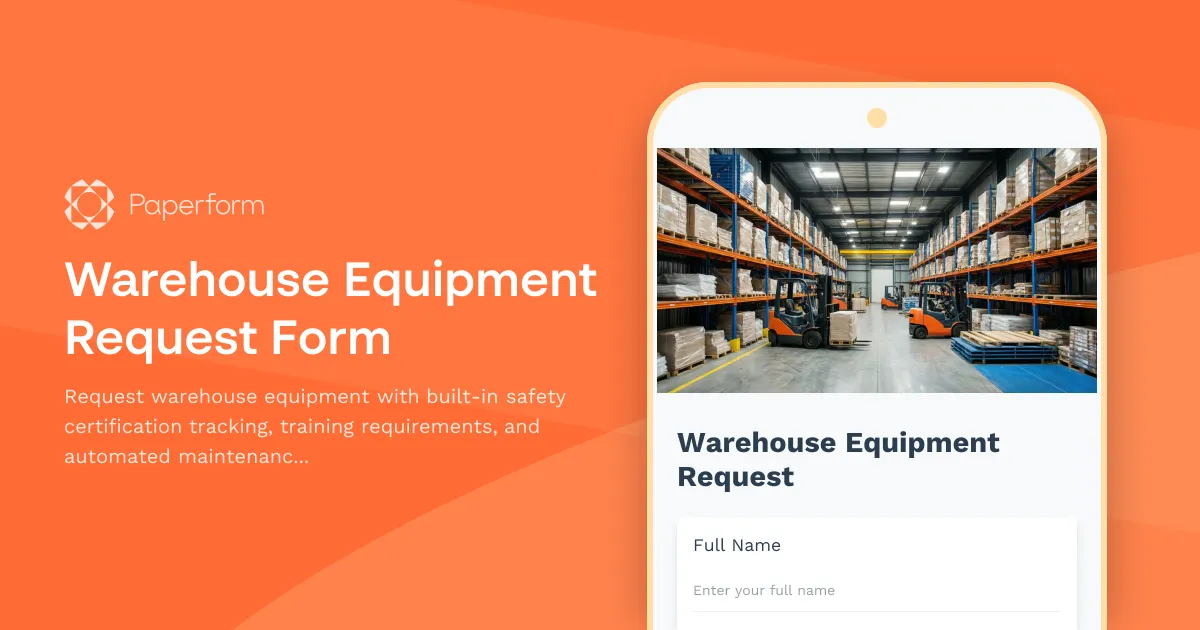
Warehouse Equipment Request Form
Request warehouse equipment with built-in safety certification tracking, training requirements, and automated maintenance scheduling for compliant operations.
Co-Manufacturing Food Facility Visitor Form
A comprehensive visitor registration form for co-manufacturing food facilities with allergen awareness training, GMP observation requirements, lot traceability protocols, and recipe confidentiality agreements.
Cold Storage Facility Emergency Request Form
Report temperature alarms, equipment failures, and critical maintenance issues in cold storage facilities with automated technician dispatch and inventory risk assessment.
Construction Site Safety Equipment Request Form
Request PPE and safety equipment for construction sites with OSHA compliance verification, sizing details, and jobsite delivery coordination.
Construction Site Visitor Registration Form
A comprehensive construction site visitor registration form with safety induction, hazard acknowledgment, and contractor verification to ensure compliance and site safety.
Hydroponics Facility Access Badge Request
A comprehensive access badge request form for hydroponics facilities that includes nutrient management training verification, contamination prevention protocols, and operations manager approval workflow.
Industrial Electrical Contractor Assessment Form
Evaluate electrical contractor performance on installation quality, code compliance, safety procedures, and emergency response for industrial facilities.
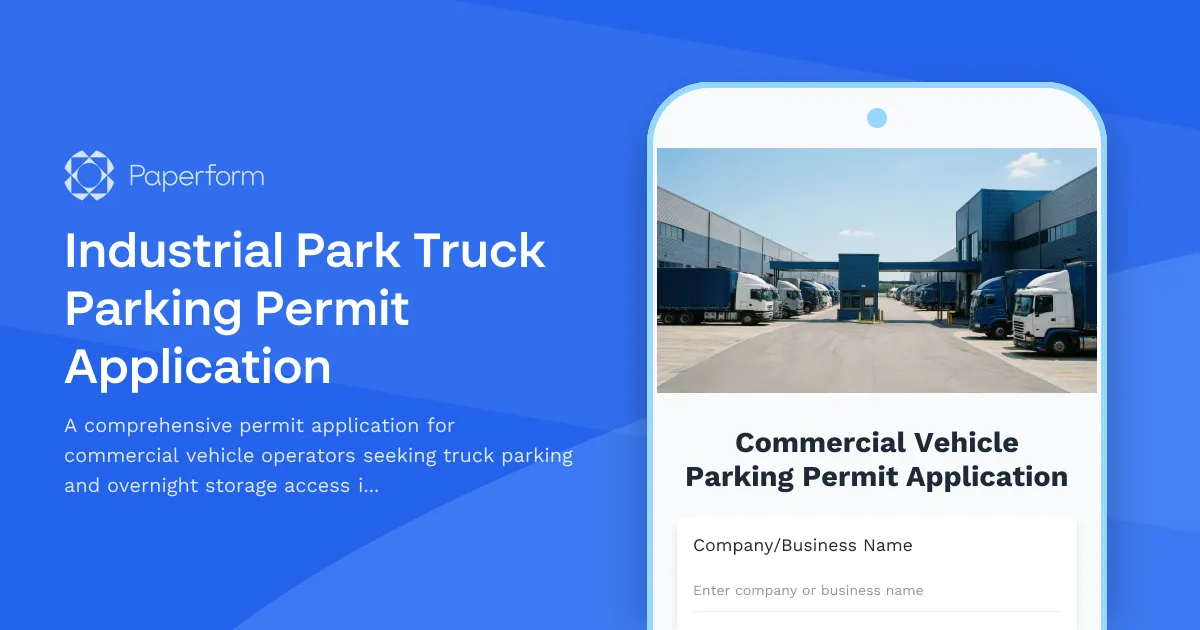
Industrial Park Truck Parking Permit Application
A comprehensive permit application for commercial vehicle operators seeking truck parking and overnight storage access in industrial parks, including CDL verification and vehicle specifications.
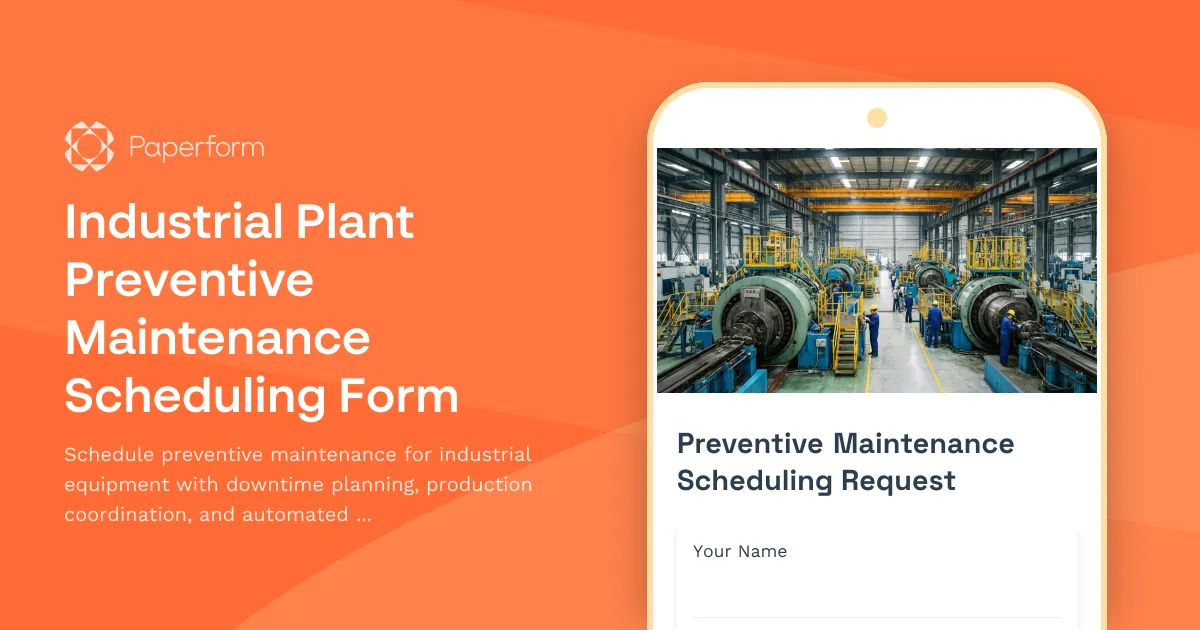
Industrial Plant Preventive Maintenance Scheduling Form
Schedule preventive maintenance for industrial equipment with downtime planning, production coordination, and automated parts ordering to minimize disruption and maximize uptime.