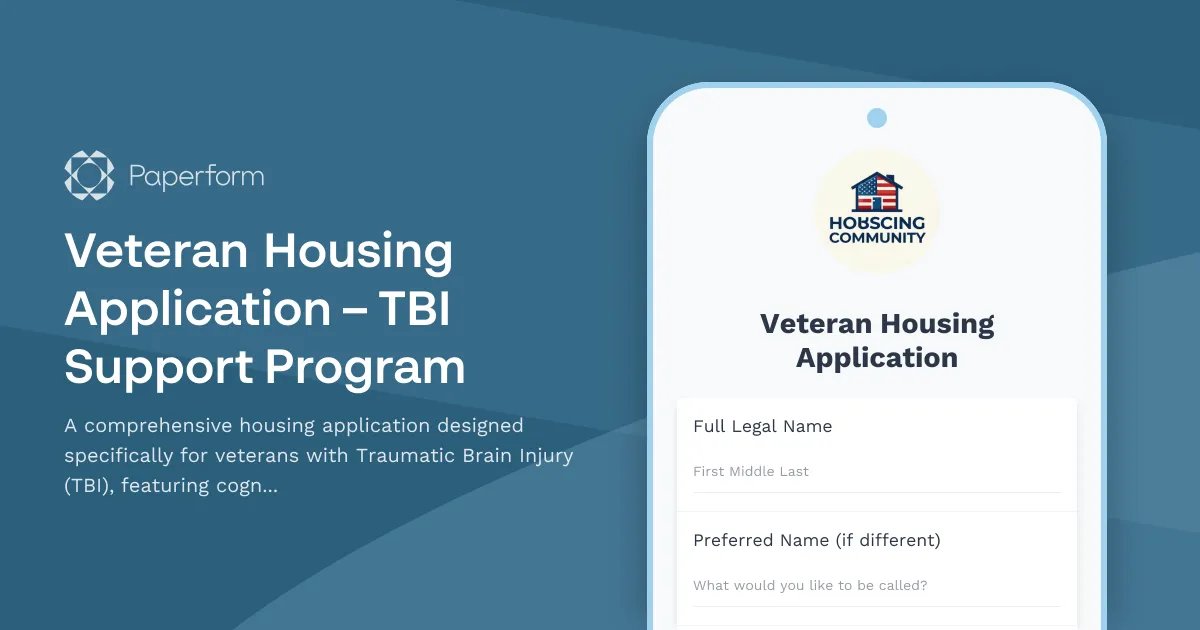
Veteran Housing Application for TBI Support Programs
Finding safe, supportive housing is one of the most critical steps in recovery for veterans living with Traumatic Brain Injury (TBI). This Veteran Housing Application for TBI Support Programs is specifically designed to help housing providers, VA-affiliated organizations, and nonprofit programs efficiently assess applications while ensuring veterans receive the cognitive supports, structured environments, and healthcare coordination they need to thrive.
Why This Template Is Essential for Veteran Housing Programs
Veterans with TBI often face unique challenges—memory difficulties, sensory sensitivities, executive function impairments, and the need for ongoing medical care. Standard housing applications don't account for these needs, leaving both applicants and providers without the critical information required to create successful placements.
This template bridges that gap. It's built with input-friendly design, clear language, and structured sections that help applicants (or their caregivers) provide complete information without feeling overwhelmed. For housing coordinators, it captures everything needed to match veterans with the right level of support, accommodations, and VA healthcare integration.
Who Should Use This Form?
This template is ideal for:
- Veteran housing programs and transitional living facilities offering TBI-specific supports
- Nonprofit organizations serving veterans with disabilities
- VA-affiliated housing providers coordinating with VA healthcare systems
- Supportive housing coordinators managing specialized placements
- Social workers and case managers assisting veterans through the application process
What This Form Captures
The application is organized into clear, digestible sections:
Veteran Information & Service History
Collects basic contact details, military service dates, branch, discharge status, and whether the veteran is currently receiving VA benefits. This establishes eligibility and helps coordinators understand the applicant's service background.
TBI & Medical History
Gathers information about TBI diagnosis, severity, date of injury, current symptoms, and cognitive challenges. This section helps housing staff understand what accommodations and supports will be most beneficial, from memory aids to noise-reduction environments.
VA Healthcare Coordination
Captures current VA enrollment status, treating VA facility, primary care provider, case manager contact information, and whether the veteran has a VA-assigned social worker. This ensures seamless communication between housing staff and the veteran's existing healthcare team.
Current Living Situation & Housing Needs
Documents the veteran's current housing status (housed, transitional, homeless, at-risk), living situation, reasons for seeking new housing, and specific needs such as wheelchair accessibility, ground-floor units, or quiet environments.
Cognitive & Daily Living Supports
Assesses needs for structured routines, memory aids, medication management, appointment reminders, and assistance with daily tasks. This critical section ensures housing staff can provide or arrange appropriate supports.
Safety & Emergency Contacts
Collects emergency contact information, caregiver details, and any safety concerns or triggers that staff should be aware of to create a safe, supportive environment.
Income, Employment & Financial Information
Gathers income sources (VA disability, employment, SSI, etc.), monthly income, and ability to pay rent. This helps determine eligibility for subsidized programs and appropriate rent levels.
References & Supporting Documentation
Allows applicants to provide professional references such as VA social workers, case managers, therapists, or current housing providers who can speak to their needs and stability.
Additional Information & Consent
Provides space for applicants to share anything else relevant to their application and includes necessary consent for background checks, medical information sharing with VA, and program rules acknowledgment.
How Paperform Enhances the Veteran Housing Application Process
Accessible, Cognitive-Friendly Design
Paperform's document-style editor lets you create forms that are easy to read and navigate—critical for applicants with TBI who may struggle with cluttered, confusing layouts. Use clear headings, simple language, and plenty of white space to reduce cognitive load.
Conditional Logic for Personalized Applications
Not every veteran needs the same level of support. Use Paperform's conditional logic to show or hide questions based on previous answers. For example, only display detailed caregiver questions if the applicant indicates they have a caregiver, or ask about service animal needs only when relevant.
Multi-Page or Guided Mode for Easier Completion
Break the application into digestible pages or use Guided Mode to present one question at a time. This prevents overwhelm and helps applicants with attention or executive function challenges stay focused and complete the form.
Secure File Uploads for Documentation
Veterans can upload DD-214 forms, VA healthcare enrollment verification, medical documentation, and other required files directly within the application. Everything stays organized in one secure submission.
Email Notifications & Follow-Up
Set up custom confirmation emails that reassure applicants their application was received and outline next steps. Housing coordinators receive instant notifications when applications come in, ensuring timely review and response.
Integration with Case Management Systems
Connect Paperform to your CRM, Google Sheets, Airtable, or case management software via Stepper (stepper.io), Zapier, or webhooks. Automatically route applications to the right staff member, create intake records, and keep veteran information synchronized across systems.
Papersign for Consent & Agreements
Need applicants to sign consent forms, program agreements, or lease contracts? Use Papersign (papersign.com) to send documents for secure eSignature immediately after submission. Keep everything linked to the original application for a complete audit trail.
AI Insights for Program Improvement
Use Paperform's AI Insights to analyze applications and identify trends—common support needs, barriers to housing, referral sources—helping you refine your program and better serve the veteran community.
Supporting Veterans with Dignity and Efficiency
Veterans who've sacrificed for their country deserve housing solutions that respect their unique needs and streamline their path to stability. This template reduces administrative burden on both applicants and housing staff, while ensuring critical information isn't missed.
By using Paperform, housing providers can deliver a professional, compassionate application experience that reflects the level of care and structure veterans with TBI need. The platform's flexibility means you can easily adapt the form as your program evolves, while maintaining GDPR compliance and SOC 2 Type II security standards that protect sensitive veteran information.
Whether you're a VA-affiliated housing provider, a nonprofit serving veterans, or a supportive housing coordinator, this template gives you a solid foundation to assess applications thoroughly, coordinate with VA healthcare systems, and match veterans with the right supportive environments.
Start with this template, customize it to your program's specific requirements, and create a housing application process that honors the service and supports the recovery of veterans living with TBI.


More templates like this
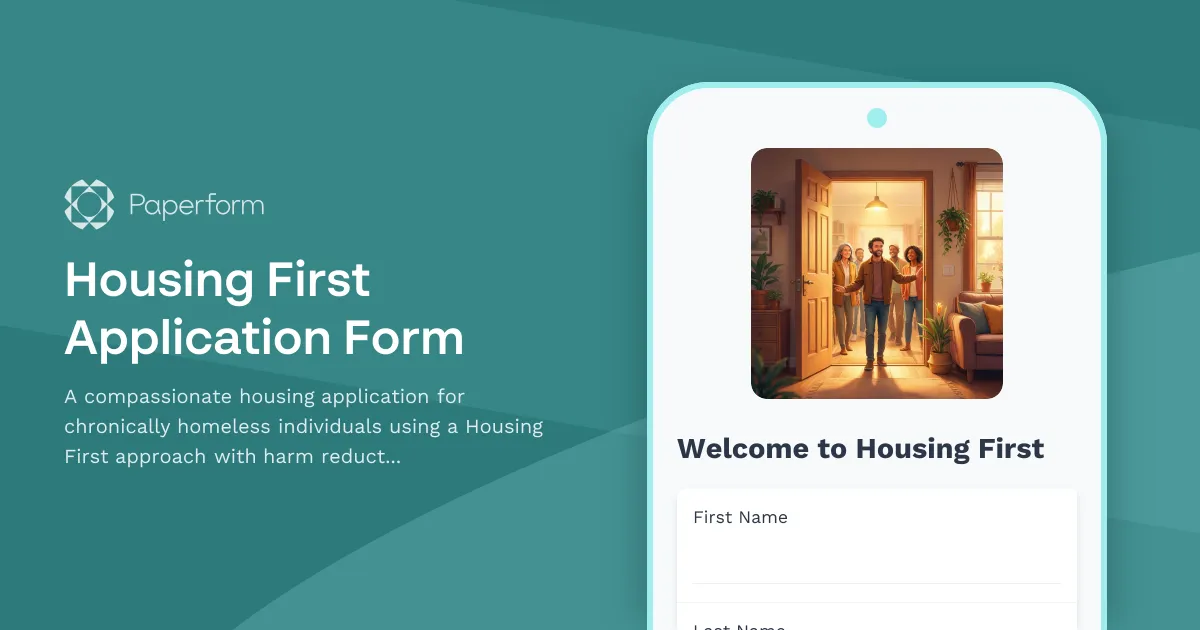
Housing First Application Form
A compassionate housing application for chronically homeless individuals using a Housing First approach with harm reduction principles and no sobriety requirements.
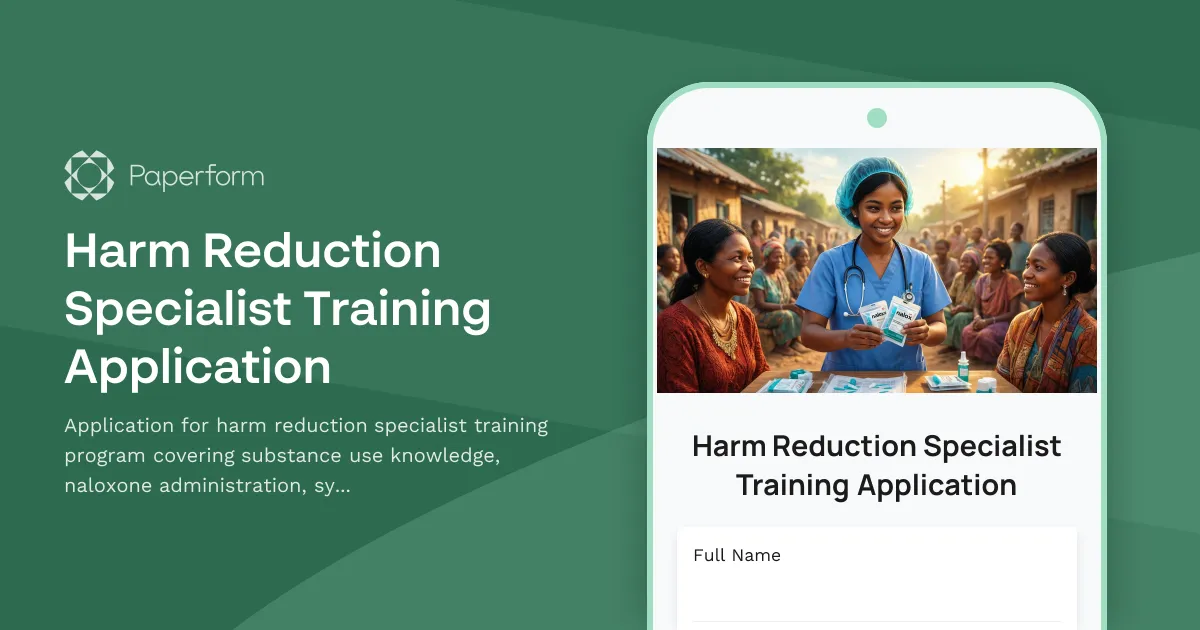
Harm Reduction Specialist Training Application
Application for harm reduction specialist training program covering substance use knowledge, naloxone administration, syringe services, and trauma-informed care approaches.
Housing Application for Adults with Traumatic Brain Injury
A comprehensive, accessible housing application designed for adults with traumatic brain injury seeking supportive living environments with cognitive rehabilitation and community reintegration services.
Permanent Supportive Housing Application
A housing-first application for individuals experiencing chronic homelessness to access permanent supportive housing with wrap-around services and no preconditions.
Prenatal Housing Application for Women in Recovery
Housing application for pregnant women in recovery programs with prenatal care compliance, parenting education enrollment, and infant care planning.
Residential Facility Application for Sex Offender Treatment Program
A comprehensive application form for individuals seeking admission to residential sex offender treatment facilities, including offense history, risk assessment, and community notification compliance verification.
Residential Program Application for Juvenile Offenders
A comprehensive application form for juvenile offenders seeking placement in residential rehabilitation programs, including court commitment orders, educational assessments, and reintegration planning.
Residential Program Application for Pregnant Teens
A comprehensive application form for pregnant teenagers seeking residential housing support, prenatal care, educational services, and family planning counseling.
Safe Haven Mother & Baby Housing Application
Confidential housing application for expectant and new mothers seeking safe, supportive housing with access to counseling, medical care, and adoption planning services.
Sober Living Home Application Form
A comprehensive application for individuals seeking admission to a sober living home, including recovery program verification, sponsor information, and house meeting commitments.
Supported Housing Application for Adults on the Autism Spectrum
A compassionate housing application designed for autistic adults seeking supported living environments with social skills groups, employment assistance, and structured routines.
Veterans Health Screening & Assessment Form
Comprehensive health screening form for veterans including military service history, combat exposure assessment, PTSD screening, VA benefits enrollment, and specialized care coordination needs.