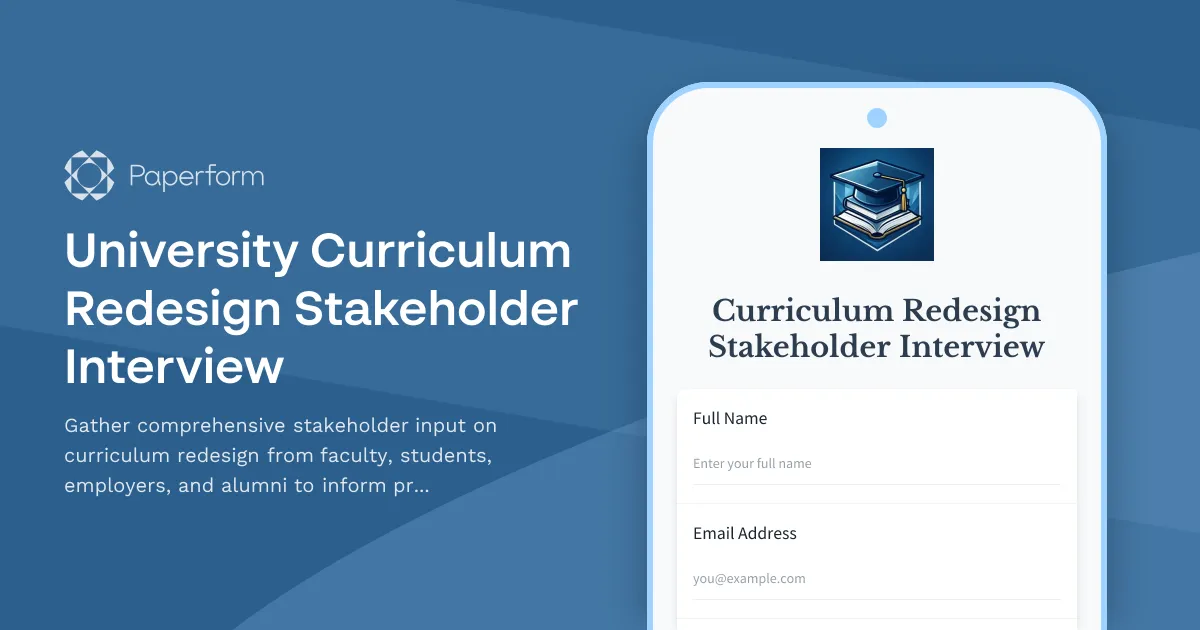
Transform Your Academic Programs with Data-Driven Stakeholder Insights
Universities and colleges face the ongoing challenge of keeping curricula relevant, engaging, and aligned with evolving industry needs. Whether you're revising a degree program, updating course content, or reimagining learning outcomes, gathering structured input from key stakeholders is essential to building programs that truly serve students and employers alike.
This University Curriculum Redesign Stakeholder Interview template helps academic institutions collect meaningful feedback from faculty members, current students, alumni, and industry employers—all in one streamlined, professional form. By centralizing stakeholder research, you'll uncover valuable insights about learning outcomes, teaching methodologies, program structure, and real-world application that can guide evidence-based curriculum decisions.
Why use Paperform for curriculum stakeholder interviews?
Paperform is the ideal solution for education institutions conducting stakeholder research. Unlike rigid survey tools, Paperform's document-style editor lets you create interview forms that feel thoughtful and professional—reflecting the academic rigor of your institution while remaining accessible to diverse respondent groups.
The form adapts to each stakeholder type using conditional logic, ensuring faculty members see questions relevant to pedagogy and academic standards, while employers are asked about skills gaps and industry alignment. Students and alumni receive targeted questions about their learning experience and career preparation. This personalized approach increases response quality and completion rates.
With Paperform's AI Insights, you can quickly analyze hundreds of responses to identify common themes, priorities, and areas of consensus or disagreement across stakeholder groups. Instead of manually reading through open-ended responses, AI summarizes key insights, helping curriculum committees make faster, more informed decisions.
Who benefits from this template?
This template is designed for:
- Academic program directors leading curriculum review and redesign initiatives
- Curriculum development committees gathering input for accreditation or program improvement
- Department chairs and deans assessing program relevance and student outcomes
- Institutional research offices conducting stakeholder analysis for strategic planning
- Faculty development teams exploring innovative teaching methods and learning technologies
- Accreditation coordinators documenting stakeholder engagement for compliance reporting
What makes this template effective?
The form is structured to capture both quantitative ratings and qualitative insights across four critical dimensions:
- Learning outcomes and competencies — What skills, knowledge, and attributes should graduates possess?
- Industry relevance and career preparation — How well does the curriculum prepare students for employment and professional success?
- Teaching methods and learning experiences — Which pedagogical approaches, technologies, and formats best support student learning?
- Program structure and flexibility — How should courses be sequenced, organized, and delivered to meet diverse learner needs?
By asking consistent questions across stakeholder groups while tailoring follow-ups based on their unique perspective, you'll build a comprehensive picture of curriculum strengths, gaps, and opportunities.
Streamline your workflow with automation
Once you've collected stakeholder input, Stepper (stepper.io) can help you turn responses into action. Route feedback to the appropriate curriculum subcommittees, compile summary reports for governance approval, send thank-you messages to participants, and update project management tools—all automatically triggered by form submissions.
If your curriculum redesign process involves formal agreements, policy acknowledgments, or partnership memoranda, you can use Papersign (papersign.com) to send documents for secure eSignature, keeping everything connected to your original stakeholder research for a complete audit trail.
Designed for academic institutions
This template balances academic professionalism with user-friendly design. It's accessible to stakeholders with varying levels of technical comfort and can be easily embedded on your institutional website, shared via email, or distributed through faculty and student portals.
Paperform is SOC 2 Type II compliant and GDPR-ready, ensuring that sensitive stakeholder feedback is collected and stored securely. Role-based permissions let you control who on your team can view, analyze, or export responses—particularly important when gathering candid feedback from multiple campus constituencies.
Start building better curricula today
Whether you're undertaking a full program redesign, preparing for accreditation review, or responding to changing industry demands, this template provides the structure you need to engage stakeholders meaningfully and make data-informed decisions.
With Paperform's flexibility, built-in analytics, and seamless integrations, you'll spend less time managing spreadsheets and more time designing curricula that prepare students for success. Trusted by educational institutions worldwide, Paperform helps you gather the insights that matter—without the complexity of traditional research tools.
Start your curriculum stakeholder interview today and build academic programs that reflect the voices of those who matter most.
More templates like this
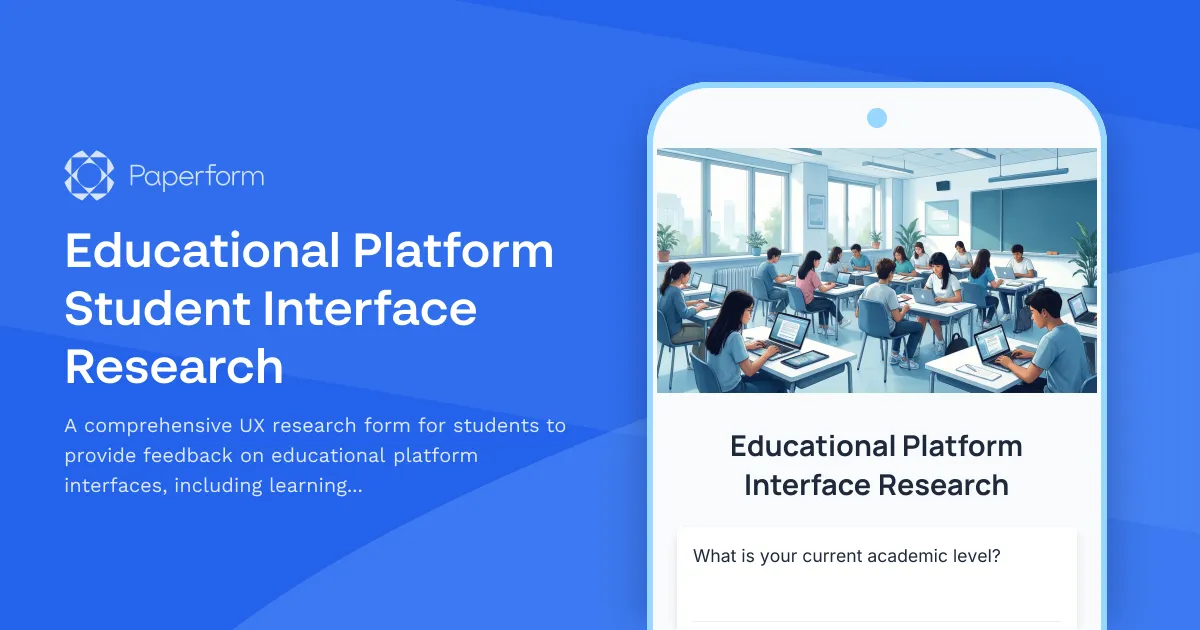
Educational Platform Student Interface Research
A comprehensive UX research form for students to provide feedback on educational platform interfaces, including learning style assessment, navigation issues, and accessibility challenges.
Online Learning Platform Redesign Stakeholder Interview
Gather comprehensive feedback from instructors, students, IT staff, and instructional designers on learning platform redesign priorities including course delivery, assessment tools, collaboration features, accessibility compliance, and mobile experience.
Quality Childcare Accreditation Stakeholder Interview
A comprehensive stakeholder interview form designed to gather insights from center directors, teachers, parents, and accreditation bodies about quality childcare accreditation standards, assessment processes, and benefits.
E-Learning Course Development Focus Group Application
Recruit subject matter experts with teaching experience for focus groups on e-learning course development, instructional design support, and digital content creation needs.
Academic Psychology Study Recruitment Form
Recruit participants for psychology research studies with demographic screening, availability scheduling, compensation preferences, and IRB-compliant consent agreements.
Autism Early Intervention Research Study - Participant Signup
A comprehensive research study enrollment form for families with children eligible for autism early intervention programs, including developmental milestone tracking, therapy commitment assessment, and parental consent.
Behavioral Economics Experiment Signup Form
A comprehensive signup form for behavioral economics research studies featuring task previews, payment details, deception disclosure, and debrief consent protocols.
Childcare Center Focus Group Recruitment Form
A professional screening form for recruiting parents to participate in a childcare center focus group, gathering insights on child age, care needs, curriculum priorities, and budget considerations.
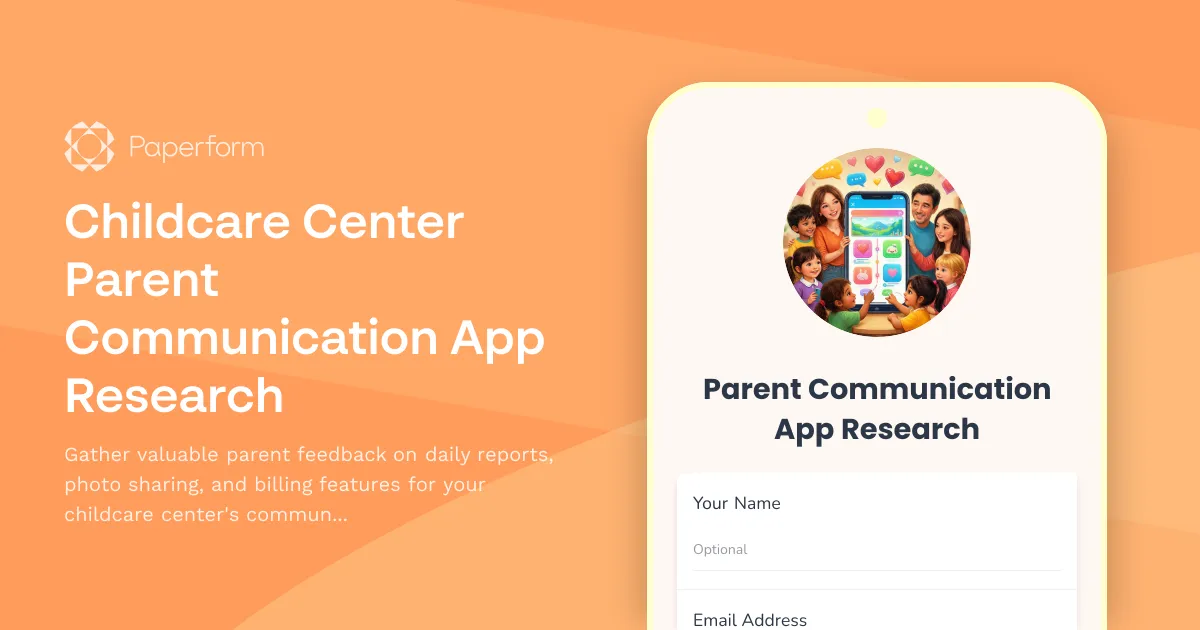
Childcare Center Parent Communication App Research
Gather valuable parent feedback on daily reports, photo sharing, and billing features for your childcare center's communication app. Understand what matters most to families.
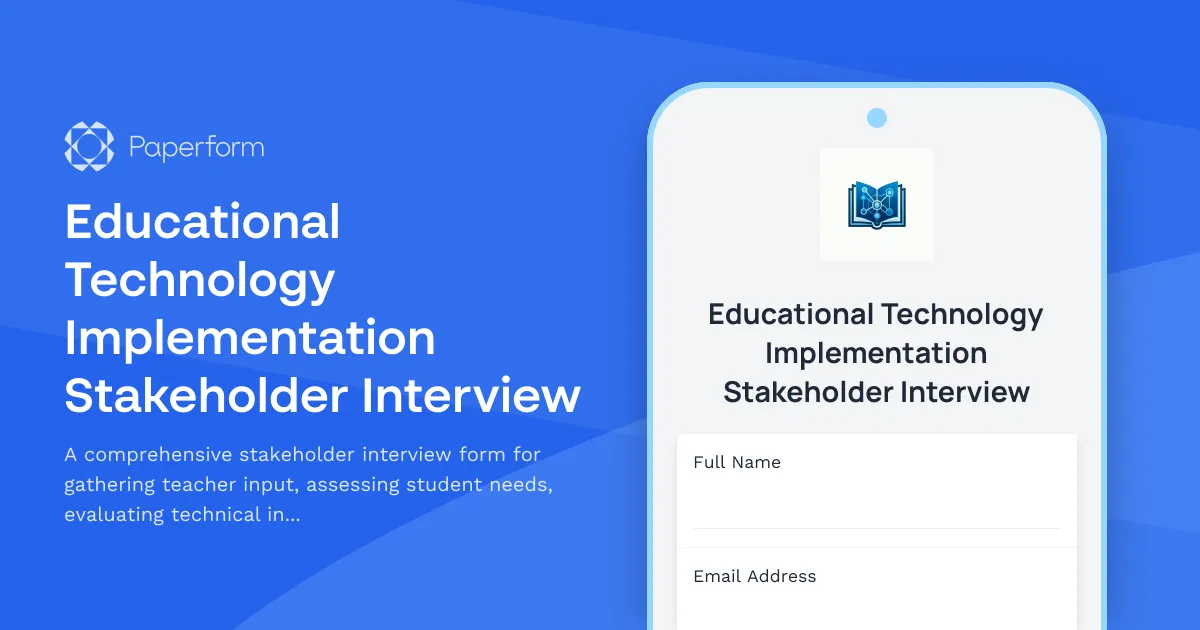
Educational Technology Implementation Stakeholder Interview
A comprehensive stakeholder interview form for gathering teacher input, assessing student needs, evaluating technical infrastructure, and understanding training preferences for EdTech implementation.
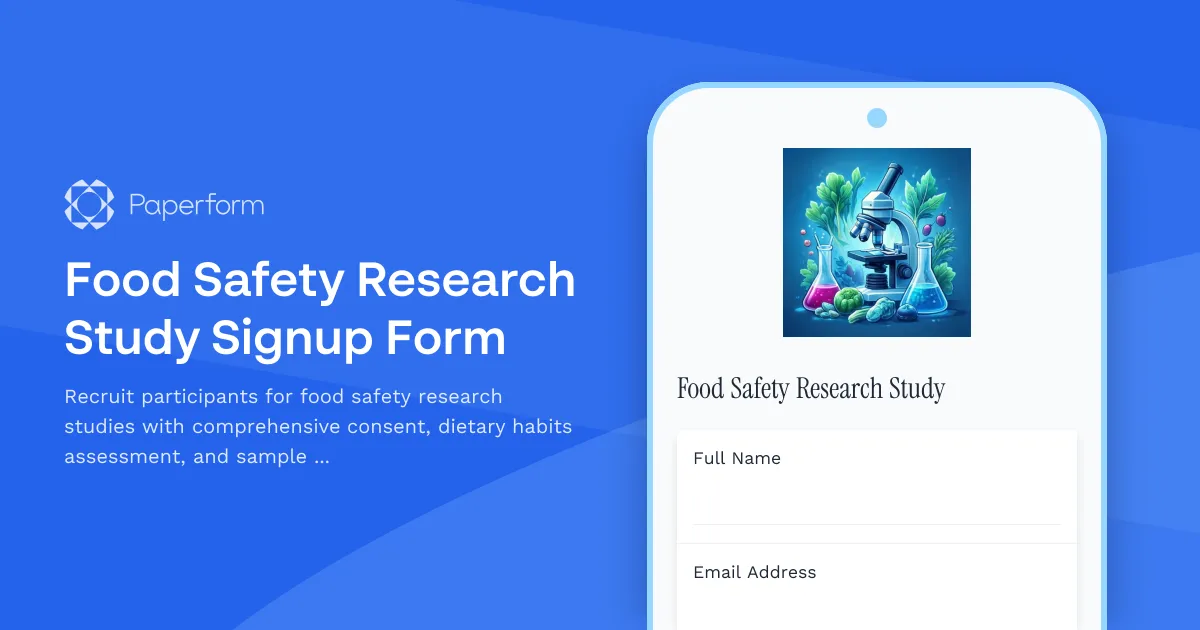
Food Safety Research Study Signup Form
Recruit participants for food safety research studies with comprehensive consent, dietary habits assessment, and sample collection agreements.
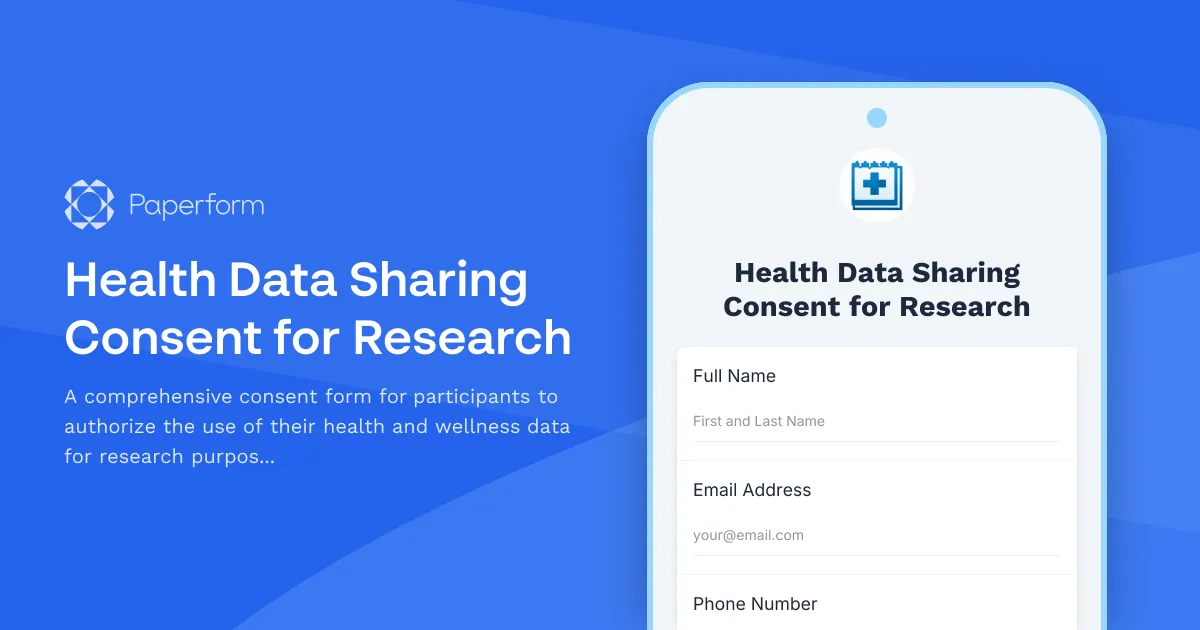
Health Data Sharing Consent for Research
A comprehensive consent form for participants to authorize the use of their health and wellness data for research purposes, with clear explanations of data usage, privacy protections, and participant rights.