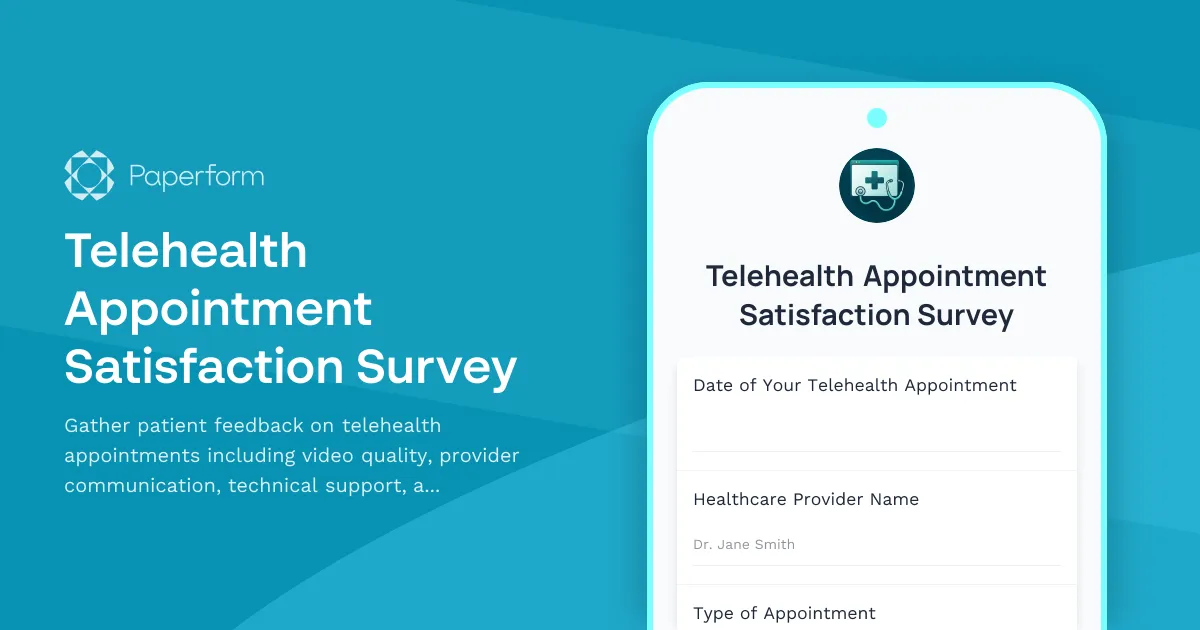
Measure and Improve Your Telehealth Patient Experience
As telehealth becomes an essential part of modern healthcare delivery, understanding your patients' experience with virtual appointments is crucial for continuous improvement. This Telehealth Appointment Satisfaction Survey helps healthcare providers, clinics, and hospitals systematically collect feedback on video visit quality, provider communication, technical challenges, and patient preferences.
Whether you're a primary care practice, mental health clinic, specialist office, or hospital system, this survey template covers the key aspects of telehealth satisfaction—from the ease of joining appointments to the quality of clinical care delivered remotely. Use it to identify technical pain points, evaluate provider performance, understand patient preferences between virtual and in-person care, and demonstrate quality improvement efforts.
The survey includes targeted questions about video and audio quality, connection stability, ease of platform use, provider communication effectiveness, privacy concerns, and comparative satisfaction with traditional office visits. This data helps you optimize your telehealth technology stack, improve staff training, and make informed decisions about which services work best virtually versus in-person.
Built with Paperform, this template gives you a professional, mobile-friendly survey that patients can complete immediately after their appointment or via a follow-up email. Responses flow directly into your preferred systems via integrations with healthcare CRMs, Google Sheets, or your patient management software. You can also use Stepper to automatically route negative feedback to quality improvement teams or trigger follow-up workflows based on specific responses.
Perfect for telehealth coordinators, patient experience managers, quality improvement teams, and healthcare administrators who want to deliver exceptional virtual care and continuously enhance the digital patient experience.



More templates like this
Ketamine Therapy Patient Satisfaction Survey
A comprehensive survey for ketamine therapy clinics to measure patient satisfaction with treatment protocols, clinical support, integration therapy, and track symptom improvements throughout the therapeutic journey.
Telehealth Patient Experience Survey
Gather comprehensive feedback on your telehealth platform's video quality, scheduling, provider communication, and billing processes to improve patient experience and service delivery.
Behavioral Health Program Effectiveness Survey
Gather comprehensive feedback from patients on behavioral health treatment programs, including group therapy, medication management, staff support, and discharge planning effectiveness.
Fertility Clinic Patient Experience Survey
Comprehensive patient satisfaction survey designed for fertility clinics to gather feedback on IVF cycle support, emotional counseling, success rate transparency, and financial guidance.
Healthcare Value-Based Payment Patient Survey
A comprehensive patient survey designed to measure satisfaction with value-based care models, cost transparency, quality measure awareness, and perceived improvements in healthcare outcomes.
Seasonal Affective Disorder (SAD) Screening Form
A comprehensive screening form to assess seasonal affective disorder symptoms, evaluate light exposure, track mood patterns, and provide personalized light therapy recommendations.
Telehealth Psychiatry Patient Satisfaction Survey
Gather valuable feedback from telehealth psychiatry patients about their experience with medication management, appointment scheduling, prescription refills, and crisis support services.
Telehealth Visit Satisfaction Survey
Gather patient feedback on their telehealth experience, including technology usability, provider quality, and appointment satisfaction to improve virtual care delivery.
Addiction Recovery Program Research Survey
A comprehensive market research survey designed to understand treatment modality preferences, support group interests, aftercare needs, and accessibility requirements for addiction recovery programs.
Clinical Laboratory Outreach Program Survey
Evaluate laboratory outreach services including specimen collection convenience, courier timeliness, test result accuracy, and provider integration quality to improve healthcare delivery.
Community Mental Health Center Client Outcome Survey
A comprehensive mental health outcome survey designed to track symptom reduction, treatment effectiveness, housing stability, employment support, and peer recovery services for community mental health centers.
Eating Disorder Screening Form
A comprehensive eating disorder screening tool featuring the Eating Attitudes Test (EAT-26), body image assessment, and nutritional risk evaluation to identify individuals who may benefit from professional evaluation and support.