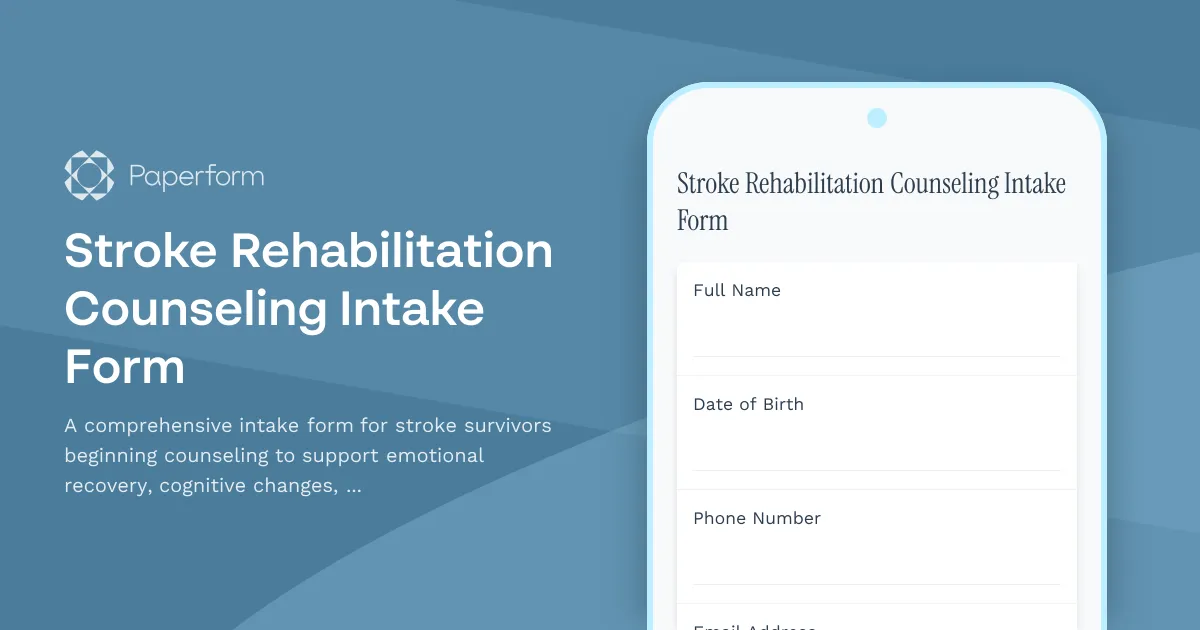
Supporting Recovery After Stroke: A Holistic Counseling Approach
Recovering from a stroke involves much more than physical rehabilitation—it's a journey that affects cognitive function, emotional well-being, and family dynamics. Our Stroke Rehabilitation Counseling Intake Form helps mental health professionals gather essential information to provide compassionate, personalized support for stroke survivors and their families.
Why Specialized Stroke Counseling Intake Matters
Stroke survivors face unique psychological challenges including depression, anxiety, emotional lability, grief over lost abilities, and identity shifts. Meanwhile, family members navigate caregiving stress, role changes, and their own emotional responses. A thoughtful intake process ensures counselors understand the full context of each person's stroke experience, creating a foundation for effective therapeutic intervention.
This template is designed specifically for counselors, therapists, and mental health professionals working with stroke survivors in outpatient settings, rehabilitation centers, neuropsychology practices, and private therapy practices.
What This Form Captures
The intake form collects comprehensive information across several key areas:
Medical and Stroke History: Captures the stroke date, type, affected areas, current physical limitations, and ongoing medical treatments—providing essential context for understanding how the stroke impacts daily life and emotional well-being.
Cognitive and Emotional Changes: Assesses changes in memory, attention, language, problem-solving, and emotional regulation, including the presence of emotional lability (involuntary crying or laughing) which affects many stroke survivors.
Psychological Well-Being: Screens for symptoms of depression, anxiety, frustration, grief, and changes in self-identity that commonly emerge during stroke recovery.
Family and Social Adjustment: Explores how relationships have changed, caregiver dynamics, family stress levels, and the support system available to the stroke survivor.
Goals and Priorities: Identifies what the client hopes to achieve through counseling, whether that's managing emotions, improving communication with family, developing coping strategies, or adjusting to a new normal.
How Paperform Streamlines Your Intake Process
Creating a welcoming, accessible intake experience is crucial when working with stroke survivors who may face cognitive or physical challenges. Paperform's intuitive form builder makes it easy to:
- Design accessible forms with clear layouts, large text, and straightforward language that accommodates cognitive changes
- Use conditional logic to show relevant follow-up questions based on specific symptoms or concerns
- Embed video or audio instructions for clients who struggle with reading due to aphasia or visual changes
- Allow partial saves so clients can complete the form in multiple sessions if fatigue is an issue
- Send data directly to your EHR or practice management software through native integrations or Stepper workflows
Automate Your Counseling Workflow with Stepper
Once a stroke survivor submits their intake form, Stepper can automatically trigger your entire onboarding workflow:
- Send a personalized welcome email with appointment details and resources
- Create a new client record in your practice management system
- Route urgent cases (high depression scores, crisis indicators) to appropriate clinical staff
- Schedule follow-up assessments at recommended intervals
- Generate intake summary reports for the treating therapist
This automation ensures nothing falls through the cracks while allowing you to focus on providing excellent clinical care rather than administrative tasks.
Designed for Mental Health Professionals
This template is ideal for:
- Licensed therapists and counselors specializing in rehabilitation psychology
- Neuropsychologists providing emotional support alongside cognitive assessment
- Social workers in hospital and rehabilitation settings
- Marriage and family therapists helping families adjust to post-stroke changes
- Health psychologists supporting chronic illness adaptation
The form balances thoroughness with sensitivity, acknowledging the emotional weight of the questions while gathering the information you need for effective treatment planning.
HIPAA Considerations and Data Security
While Paperform is not HIPAA compliant, it offers robust security features including SOC 2 Type II compliance and data encryption. For healthcare providers subject to HIPAA, we recommend:
- Using this form for initial contact and non-PHI screening
- Following up with HIPAA-compliant documentation systems for detailed clinical information
- Being transparent with clients about data handling practices
- Consulting with your compliance officer about appropriate use in your setting
Customize for Your Practice
Every counseling practice is unique. With Paperform's flexible editor, you can easily:
- Add your branding, logo, and practice colors
- Include specialized screening tools or assessment scales you prefer
- Adjust language to match your therapeutic approach
- Add fields for insurance information or billing details
- Create separate versions for individual clients versus family counseling
Join Thousands of Healthcare Professionals Using Paperform
Over 500,000 teams worldwide trust Paperform to handle their most important forms and workflows. From solo practitioners to multi-location rehabilitation centers, mental health professionals choose Paperform for its combination of professional design, powerful features, and genuine ease of use.
Start with this stroke rehabilitation counseling intake template and create a compassionate, efficient onboarding experience that puts your clients' needs first.
More templates like this
Medical Equipment Dependence Mental Health Intake Form
A specialized mental health intake form for clients who rely on medical equipment, addressing device dependence, lifestyle impact, body image concerns, and technology-related anxiety.
Addiction Recovery Therapy Intake Form
A comprehensive intake form for addiction recovery counselors to gather essential information about new clients, including substance use history, previous sobriety attempts, support network, and recovery goals.
Burn Survivor Counseling Intake Form
A compassionate intake form for burn survivors seeking mental health support, covering injury details, physical recovery, emotional challenges, and treatment goals.
Chronic Nausea & Hyperemesis Mental Health Intake Form
A specialized mental health intake form for patients experiencing chronic nausea and hyperemesis, assessing symptom severity, nutritional status, medical history, and quality of life impact.
Cognitive Behavioral Therapy Intake Form
A comprehensive CBT intake form with depression screening, anxiety assessment, and therapy goals to help mental health professionals understand new clients and establish treatment plans.
Combat Stress Reaction Therapy Intake Form
A specialized intake form for mental health professionals working with military personnel experiencing combat stress reactions. Captures deployment details, critical incidents, acute symptoms, and unit support information.
Female Veteran Therapy Intake Form
Specialized mental health intake form for female veterans addressing military sexual trauma, identity challenges, VA navigation, and recognition issues in a safe, supportive environment.
Mental Health Intake & Symptom Assessment
A comprehensive mental health intake form with PHQ-9 depression screening, GAD-7 anxiety assessment, and automated crisis intervention routing for safer, more informed care.
Mental Health Therapist Intake and Scheduling Form
A confidential intake and appointment booking form for mental health therapy practices. Collect client information, assess needs, and schedule in-person or teletherapy sessions securely.
Military Chaplain Moral Injury & Spiritual Crisis Intake Form
A compassionate intake form for military chaplains experiencing moral injury, spiritual crisis, compassion fatigue, and faith struggles from bearing witness to trauma in service.
Military-Connected Caregiver Intake Form
A comprehensive intake form for caregivers of military service members and veterans, assessing caregiving demands, service member conditions, VA resources, and caregiver burnout levels.
Neurodivergent Adult Therapy Intake Form
A comprehensive intake form designed for neurodivergent adults seeking therapy, including sections for late diagnosis experiences, masking behaviors, sensory sensitivities, and accommodation needs.