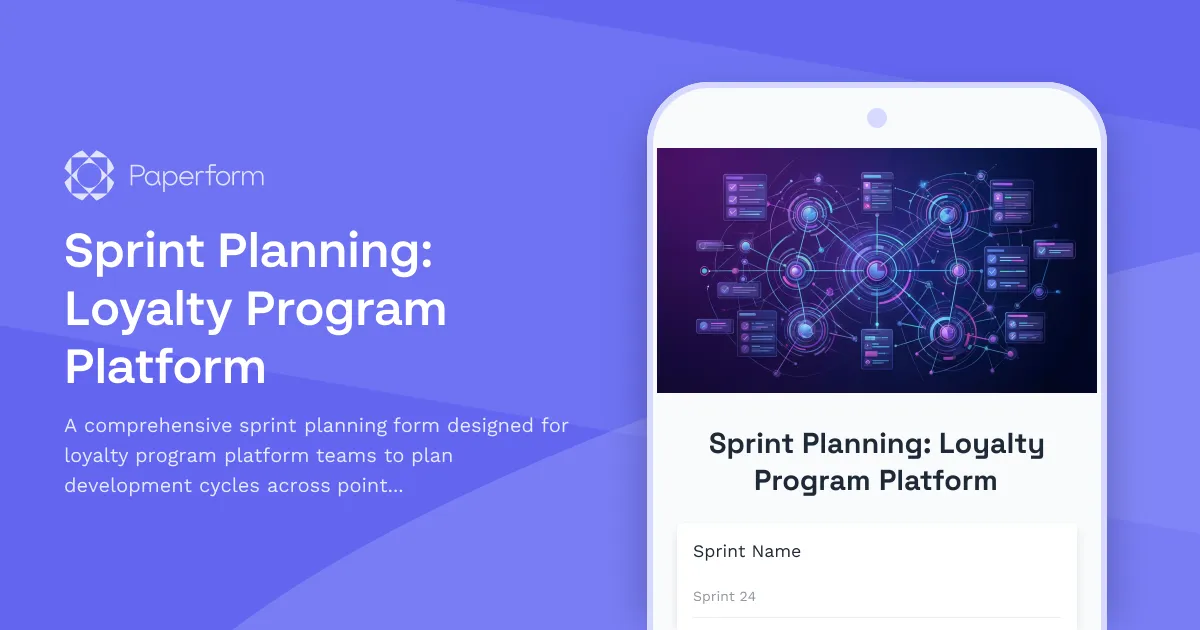
Planning sprints for loyalty program platforms requires coordination across multiple complex systems—from points engines and rewards catalogs to partner integrations and member-facing communications. This sprint planning template helps product teams, developers, and stakeholders align on priorities, capacity, and deliverables for each development cycle.
Whether you're building a new loyalty platform from scratch or iterating on an existing rewards program, this form captures everything your team needs to kick off a successful sprint. It covers sprint goals, user story prioritization, technical dependencies, partner integration requirements, and member communication plans—all in one structured planning session.
Why Paperform works for agile teams:
Paperform makes sprint planning collaborative and flexible. Unlike rigid project management tools, you can customize this template to match your team's exact workflow—whether you run two-week sprints or monthly cycles, work in Scrum or Kanban, or need to involve external partners in the planning process.
Use conditional logic to show or hide sections based on sprint focus areas (infrastructure vs. feature work), calculate story points automatically, and generate clean sprint summaries that can be shared with stakeholders. Connect your form to Stepper to automatically create tickets in Jira, Linear, or Asana, notify team members in Slack, and update your product roadmap in Notion or Airtable—turning planning sessions into actionable work streams without manual data entry.
For teams managing multiple loyalty programs or clients, Paperform's Agency+ plan lets you duplicate and customize sprint planning forms for each product, while maintaining consistent agile practices across your portfolio.
Perfect for:
Product managers leading loyalty platform development, engineering teams building rewards and points systems, SaaS companies offering loyalty solutions, agencies managing client loyalty programs, and any agile team working on customer retention technology.
Get your sprint planning out of messy spreadsheets and into a form that actually works for modern loyalty platform teams.
More templates like this
E-commerce Sprint Planning Form
Plan sprints for e-commerce teams with feature releases, A/B tests, payment integrations, and peak traffic preparation. Perfect for online retail development teams.
Agile Contract Negotiation Form
A comprehensive contract negotiation form designed for agile projects with flexible scope, fixed-price iterations, built-in change request processes, and clear acceptance criteria.
Agile Definition of Ready Checklist
Ensure user stories are fully prepared and ready for sprint planning with this comprehensive Definition of Ready checklist covering story completeness, dependencies, acceptance criteria, and team understanding.
Agile Metrics Dashboard Submission Form
Track sprint performance with comprehensive agile metrics including velocity, cycle time, lead time, and quality indicators for continuous team improvement.
Agile Project Intake Form
A comprehensive agile project intake form for capturing epic descriptions, business cases, success metrics, and initial story mapping to kick off new sprints and initiatives.
Agile Release Checklist Form
A comprehensive release readiness checklist for agile teams to verify code freeze, testing completion, documentation review, and stakeholder approvals before deployment.
Agile Spike Planning Form
Plan research spikes with clear objectives, timeboxes, and acceptance criteria. Document investigation goals, deliverables, and knowledge sharing plans for your agile team.
Agile Sprint Review Form
A comprehensive sprint review form for agile teams to document sprint demos, validate acceptance criteria, gather stakeholder feedback, and prioritize next sprint items.
Agile Team Charter
Establish clear team agreements, norms, and working principles for your agile team with this comprehensive charter creation form.
Agile Team Retrospective (Sailboat)
Run engaging sprint retrospectives using the sailboat metaphor to identify what's propelling your team forward, what's holding you back, and where you're headed next.
Agile Team Skills Matrix Form
Track team competencies, learning goals, and knowledge sharing opportunities to optimize sprint planning and resource allocation in agile teams.
Async Daily Standup for Distributed Teams
A timezone-friendly async standup form that keeps distributed agile teams aligned. Share progress, blockers, and help requests without scheduling conflicts.