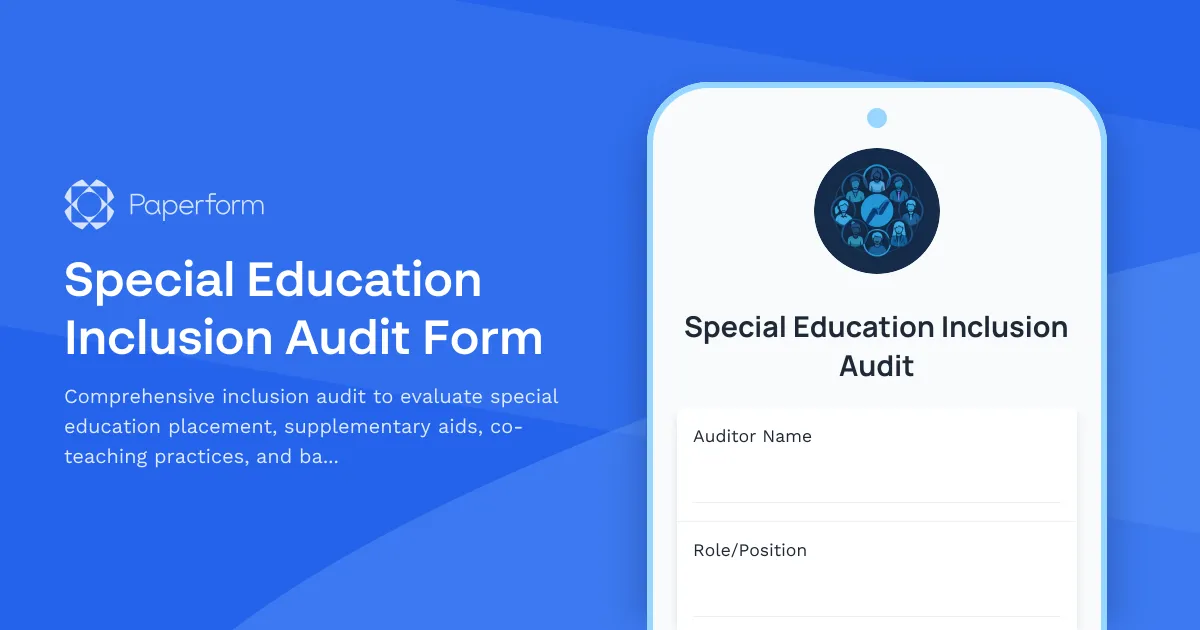
Evaluate and Improve Inclusive Education with Paperform
Creating truly inclusive learning environments for students with disabilities requires systematic evaluation, data collection, and collaborative planning. This Special Education Inclusion Audit Form template helps schools, districts, and educational support teams assess the effectiveness of their inclusion practices, identify barriers to general education access, and develop actionable strategies for improvement.
Why Use This Special Education Inclusion Audit Template?
Special education administrators, coordinators, and IEP teams need a structured way to evaluate how well students with disabilities are being integrated into general education settings. This template provides a comprehensive framework for:
- Documenting current placement data and least restrictive environment (LRE) compliance
- Reviewing supplementary aids and services to ensure students have appropriate supports
- Evaluating co-teaching implementation and collaborative instruction models
- Identifying systemic barriers that prevent meaningful general education access
- Gathering stakeholder input from teachers, support staff, and specialists
- Creating accountability through data-driven decision making
Key Features of This Inclusion Audit Form
This template is designed specifically for special education professionals conducting inclusion audits. It includes sections for:
Student Placement Analysis – Track where students are receiving services, time spent in general education settings, and LRE data to ensure compliance with IDEA requirements.
Supplementary Aids & Services Review – Document accommodations, modifications, assistive technology, paraprofessional support, and other aids that enable students to access the general curriculum.
Co-Teaching Evaluation – Assess the implementation of co-teaching models, collaboration between general and special educators, planning time, and instructional effectiveness.
Barrier Identification – Systematically identify physical, instructional, attitudinal, and systemic barriers that limit student access to inclusive environments.
Professional Development Needs – Capture gaps in staff training and identify areas where additional support or professional learning is needed.
Who Should Use This Template?
This special education inclusion audit form is ideal for:
- Special Education Directors & Coordinators conducting district-wide inclusion reviews
- School Administrators evaluating building-level inclusive practices
- IEP Teams assessing individual student placement and support effectiveness
- Instructional Coaches supporting teachers in implementing inclusive strategies
- Compliance Officers ensuring adherence to federal and state special education regulations
- Educational Consultants working with schools to improve inclusion outcomes
How Paperform Streamlines Your Inclusion Audit Process
Paperform's flexible form builder makes it easy to customize this template to match your district's specific inclusion frameworks, terminology, and evaluation criteria. The document-style editor lets you add your school logo, adjust questions to align with your rubrics, and incorporate conditional logic to show relevant follow-up questions based on responses.
Conditional Logic ensures evaluators only see questions relevant to their role or the specific aspects of inclusion they're reviewing—for example, co-teaching questions only appear when that model is being used in the classroom.
Multi-Page Layout breaks the audit into logical sections, making it less overwhelming for busy educators to complete while ensuring comprehensive data collection.
Integration with Your EdTech Stack means audit results can automatically flow into Google Sheets for analysis, trigger notifications in Slack when critical issues are identified, or sync with your student information system via Stepper workflows.
Turn Audit Data into Action with Stepper Workflows
Once you've collected inclusion audit data, Stepper—your AI-native workflow builder—can help you act on the findings:
- Automatically route concerning findings to special education directors or building administrators for immediate review
- Generate summary reports that aggregate data across multiple classrooms or buildings
- Create follow-up task lists in project management tools like Asana or Monday.com based on identified barriers
- Schedule professional development by detecting common training needs and triggering calendar invitations
- Update compliance tracking systems with current placement and LRE data
This automation ensures that your inclusion audit leads to tangible improvements rather than sitting in a filing cabinet.
Why Educational Institutions Trust Paperform
Over 500,000 teams worldwide use Paperform to create professional forms that actually get results. For schools and districts, Paperform offers:
- SOC 2 Type II compliance and GDPR adherence to protect sensitive student information
- Flexible pricing that works for individual schools or entire districts
- No coding required so special education coordinators can build and modify forms independently
- Beautiful, accessible forms that work seamlessly on any device, whether staff are completing audits on tablets during classroom observations or on laptops during planning periods
Note: While Paperform provides enterprise-grade security, it is not a HIPAA-compliant solution. Schools handling protected health information should ensure appropriate safeguards are in place.
Improve Inclusive Education Outcomes
Effective inclusion doesn't happen by accident—it requires intentional evaluation, collaborative problem-solving, and continuous improvement. This Special Education Inclusion Audit Form template gives your team a structured, professional tool to assess current practices, identify areas for growth, and ultimately create more equitable learning opportunities for all students.
Whether you're conducting annual inclusion reviews, evaluating specific programs, or responding to compliance concerns, Paperform makes the process efficient, organized, and actionable. Customize this template to match your district's inclusion vision and start gathering the data you need to make meaningful change.
More templates like this
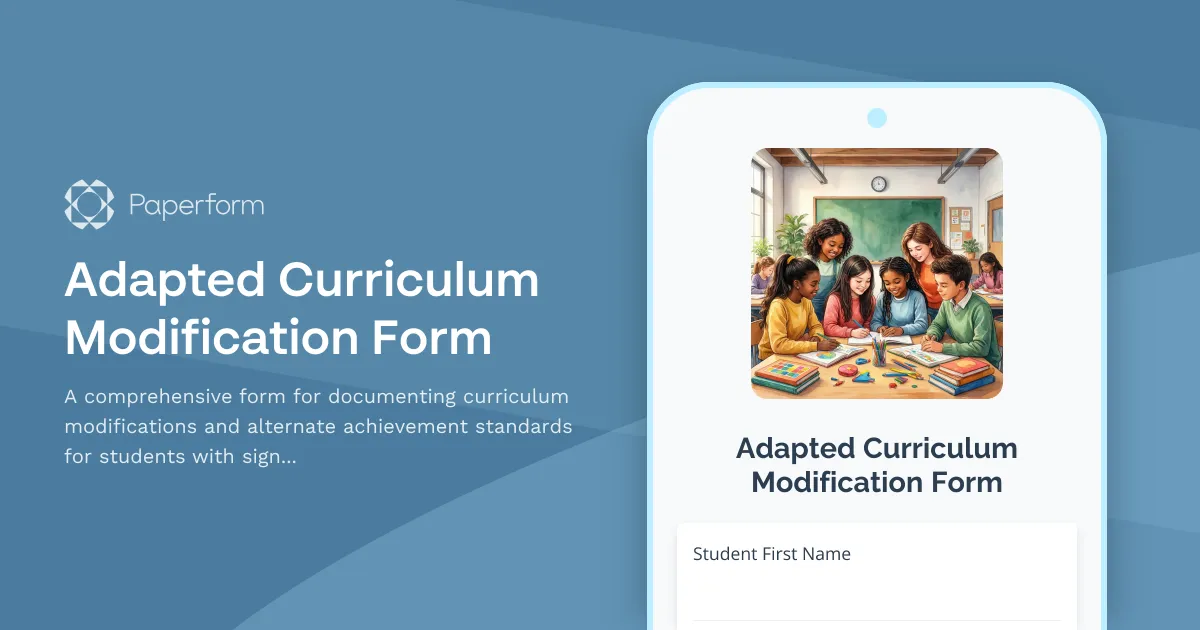
Adapted Curriculum Modification Form
A comprehensive form for documenting curriculum modifications and alternate achievement standards for students with significant cognitive disabilities, focusing on functional skill development and individualized learning goals.
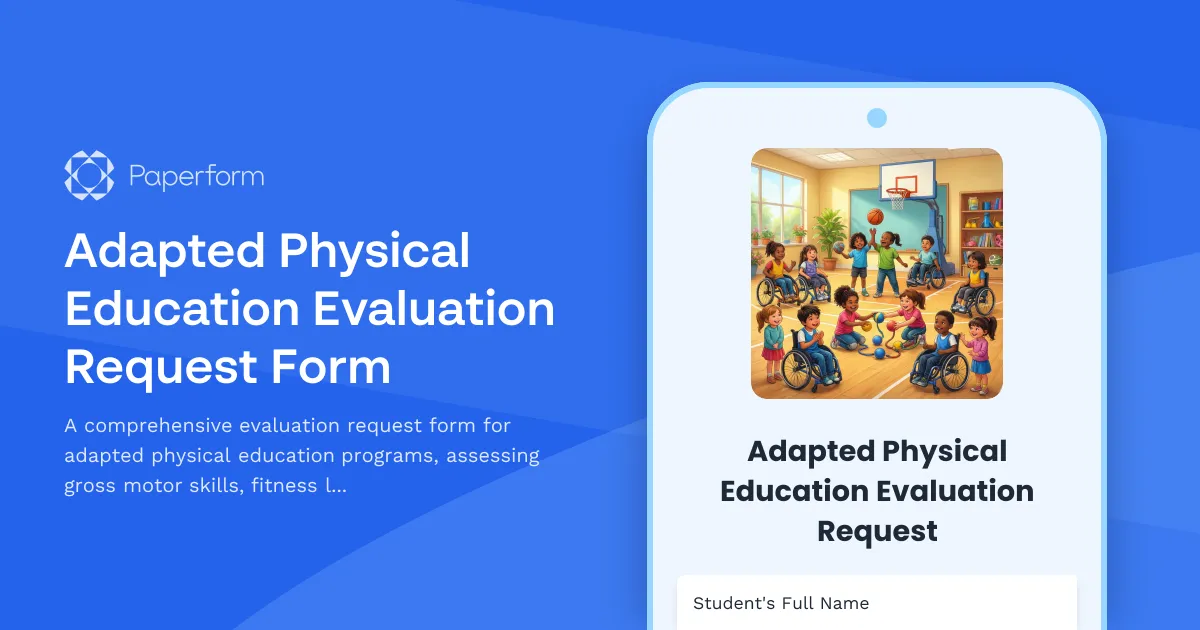
Adapted Physical Education Evaluation Request Form
A comprehensive evaluation request form for adapted physical education programs, assessing gross motor skills, fitness levels, adaptive equipment needs, and inclusive sports participation opportunities for students with diverse abilities.
AP Accommodations Request Form for Students with Disabilities
Request testing accommodations for AP exams including extended time, separate testing environment, and assistive technology. Streamlines the College Board SSD approval process for students with documented disabilities.
Assistive Technology Evaluation Request Form
Request an assistive technology evaluation for students with learning barriers. Assess current technology use, identify needs, and connect with AT specialists for personalized support.
Auditory Processing Disorder Support Plan
A comprehensive support plan form for students with auditory processing disorder, documenting classroom accommodations, sensory needs, and therapy collaboration for optimal learning.
Augmentative and Alternative Communication (AAC) Device Trial Request Form
Request a trial of AAC devices for students or individuals with communication needs. Assess current communication methods, device preferences, training requirements, and funding options to support communication goals.
Autism Spectrum Disorder Diagnostic Observation Consent Form
A comprehensive consent and information form for ASD diagnostic observation including ADOS-2 assessment, parent interview, school observation, and multidisciplinary team evaluation.
Autism Spectrum Support Services Intake Form
A comprehensive intake form for autism spectrum support services that captures sensory profiles, communication preferences, social skills assessments, and behavior patterns to create personalized support plans.
Back to School Standardized Testing Accommodation Request Form
A comprehensive form for students to request testing accommodations for standardized exams, including disability documentation, specific needs, time extensions, and environment preferences.
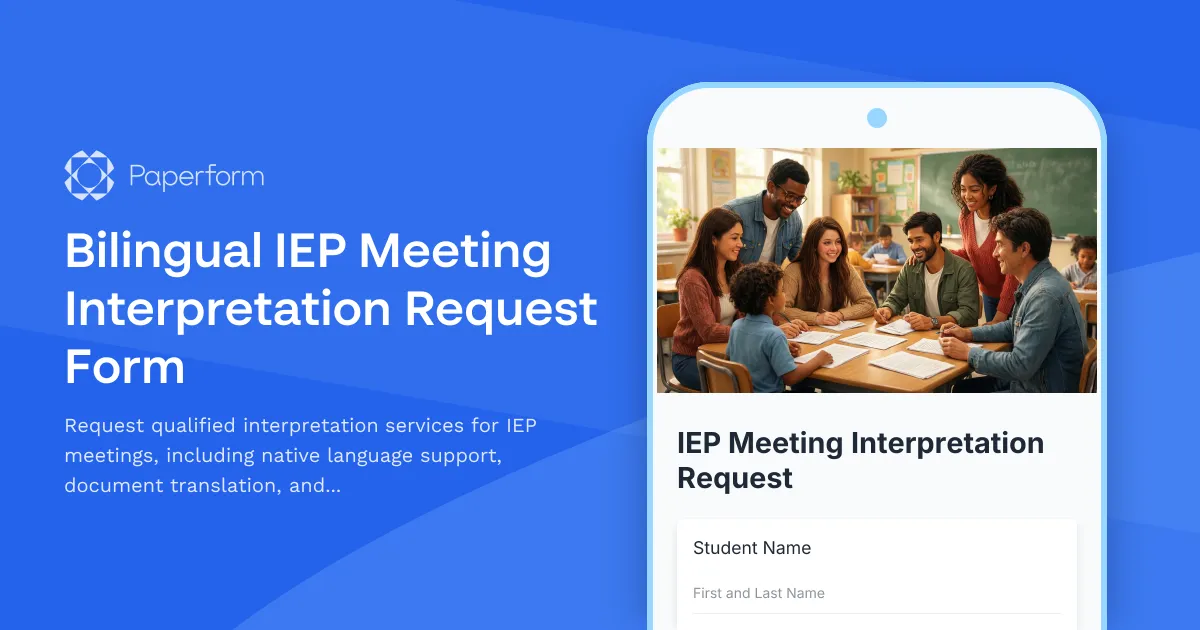
Bilingual IEP Meeting Interpretation Request Form
Request qualified interpretation services for IEP meetings, including native language support, document translation, and cultural liaison assistance to ensure effective communication for all families.
Bilingual Special Education Assessment Request Form
Request a comprehensive bilingual special education evaluation with language dominance testing, cultural considerations, and qualified evaluator assignment for students in multilingual households.
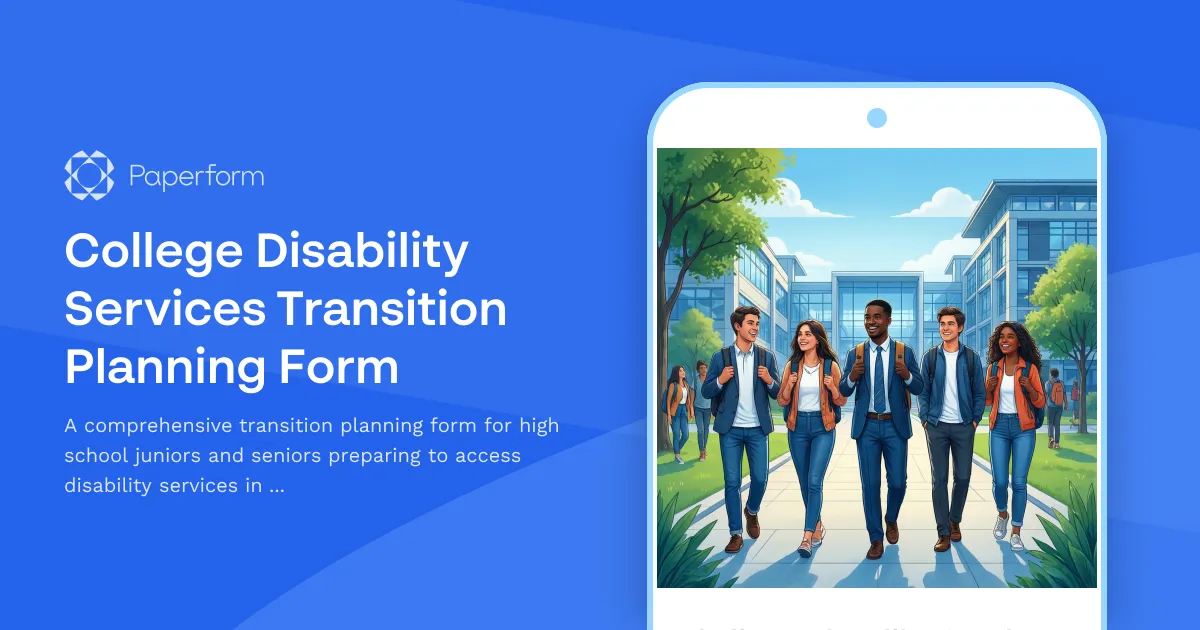
College Disability Services Transition Planning Form
A comprehensive transition planning form for high school juniors and seniors preparing to access disability services in college. Streamline documentation requirements, accommodation planning, and self-advocacy skill assessment.