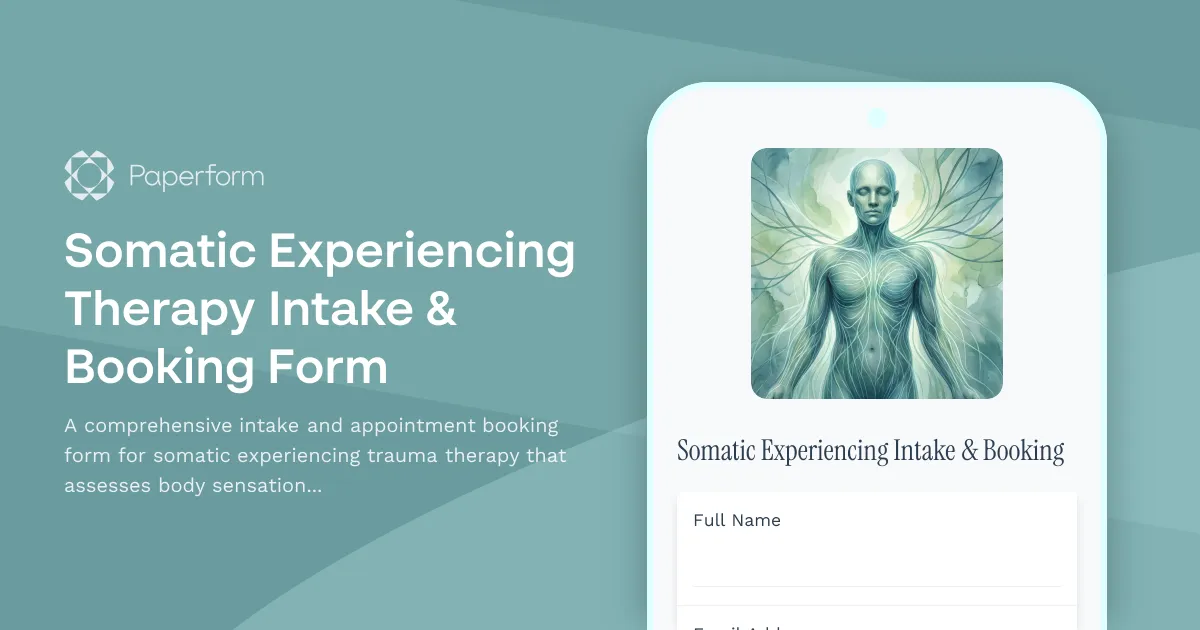
Professional Somatic Experiencing Therapy Intake & Booking
Finding the right therapeutic approach for trauma healing is deeply personal, and somatic experiencing (SE) offers a unique body-centered pathway to recovery. This Somatic Experiencing Therapy Intake & Booking Form is designed specifically for SE practitioners who want to gather meaningful insights before the first session while making it simple for clients to book their appointments.
Why this template works for somatic experiencing practitioners
Unlike traditional talk therapy forms, this template recognizes that SE work requires understanding a client's relationship with their body sensations, nervous system regulation patterns, and capacity for titration. The intake questions help you assess:
- Current body sensation awareness and interoceptive abilities
- Understanding of pendulation between activation and settling
- Preferred session pacing and tolerance windows
- Specific re-negotiation goals and incomplete defensive responses
- Previous trauma therapy experience and somatic modalities
This allows you to meet each client where they are and design sessions that honor their nervous system's unique rhythm.
Built-in appointment scheduling
The form includes Paperform's native scheduling functionality, so clients can select their preferred appointment time based on your real availability. No more back-and-forth emails or double bookings—just seamless coordination that respects both your calendar and their healing timeline.
How Paperform supports your practice
Beyond intake and scheduling, Paperform helps somatic experiencing therapists build a complete practice workflow. Use Papersign to collect informed consent and treatment agreements with secure eSignatures, ensuring all documentation is completed before the first session. Connect your form to your practice management software or CRM through Stepper to automatically create client records, send appointment reminders, and trigger follow-up sequences.
This form template is trusted by therapists, counselors, and bodywork practitioners who understand that trauma lives in the body—and that the intake process itself is part of the therapeutic container. Whether you're a certified SE practitioner, trauma therapist, or somatic psychologist, this template helps you gather the information you need while honoring the sensitivity of this work.
More templates like this
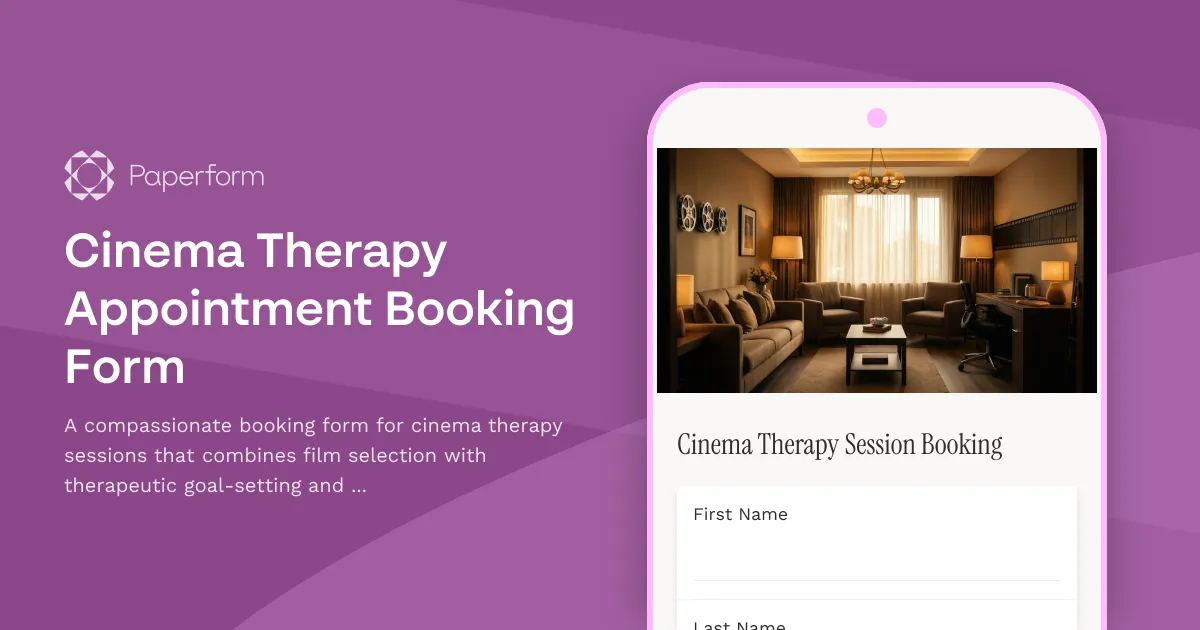
Cinema Therapy Appointment Booking Form
A compassionate booking form for cinema therapy sessions that combines film selection with therapeutic goal-setting and emotional exploration through the power of movies.
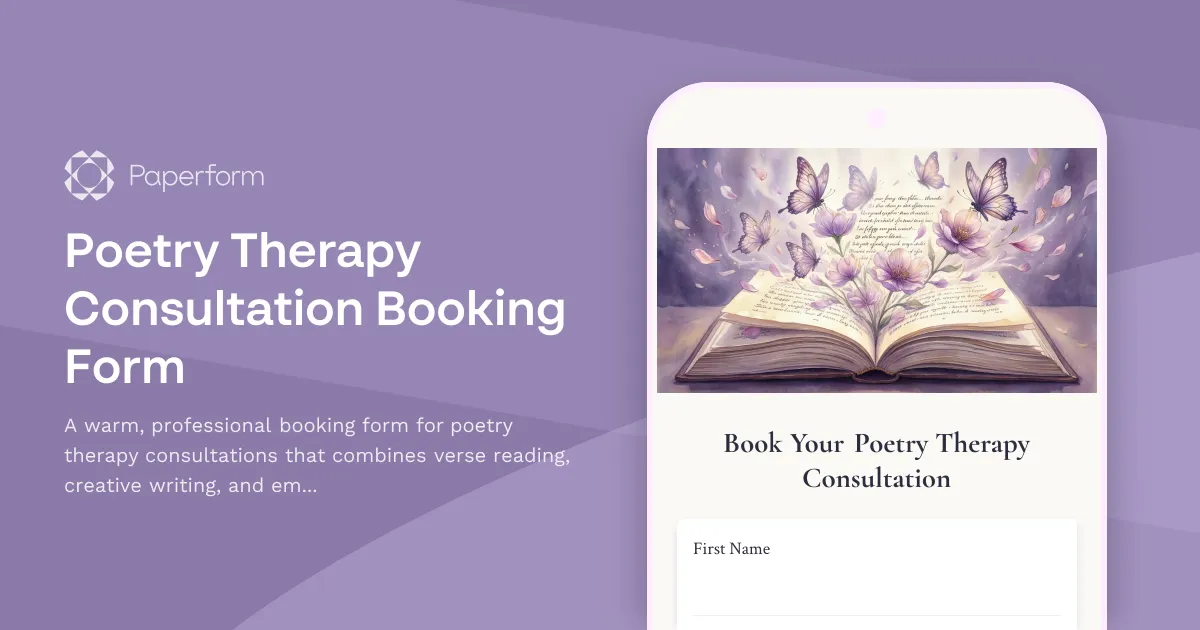
Poetry Therapy Consultation Booking Form
A warm, professional booking form for poetry therapy consultations that combines verse reading, creative writing, and emotional exploration to support healing and self-expression.
Positive Psychology Coaching Intake & Appointment Booking
A comprehensive coaching intake form that combines appointment scheduling with strengths identification, flourishing assessment, and gratitude practice introduction to help clients begin their positive psychology journey.
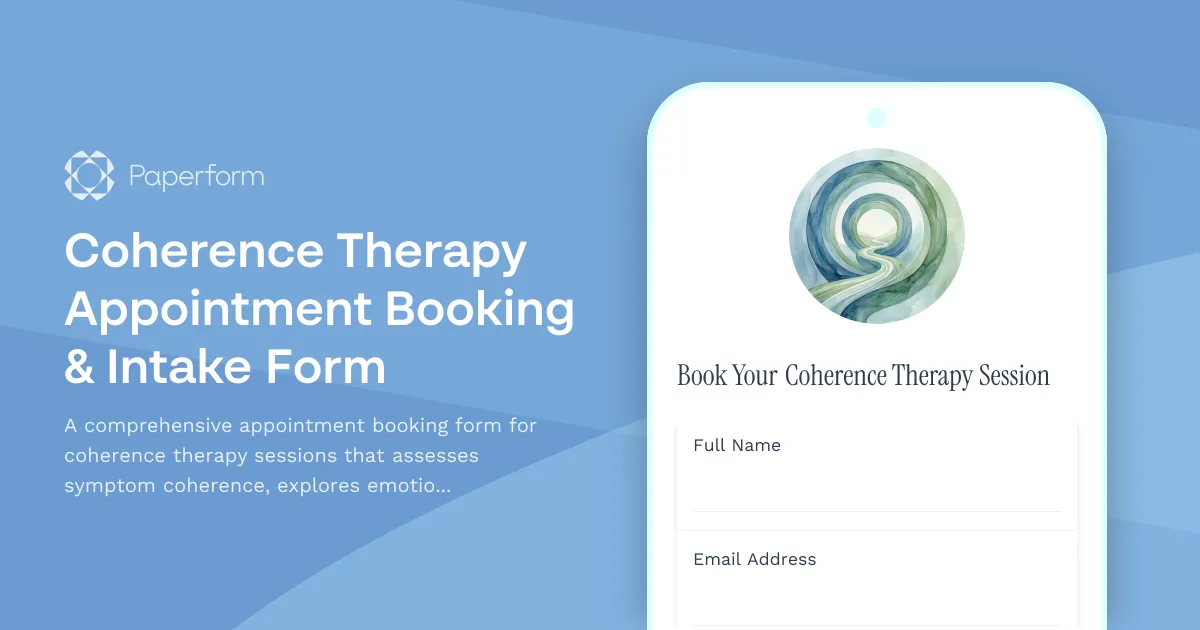
Coherence Therapy Appointment Booking & Intake Form
A comprehensive appointment booking form for coherence therapy sessions that assesses symptom coherence, explores emotional learning, and sets expectations for transformational change through memory reconsolidation.
Couples Therapy Intake & Appointment Booking Form
A comprehensive intake form for couples therapy that collects relationship history, individual concerns, therapy goals, and schedules appointments for both partners.
Gestalt Therapy Consultation Booking Form
A thoughtful consultation form for gestalt therapy appointments that explores client readiness for experiential techniques, here-and-now awareness work, and creative adjustment exploration.
Gottman Method Couples Therapy Intake & Assessment Form
A comprehensive intake form for couples seeking Gottman Method therapy, including relationship assessment, Love Maps quiz, Four Horsemen patterns identification, and weekend workshop registration.
Motivational Interviewing Intake & Session Booking
A compassionate intake and booking form for substance use counseling that explores ambivalence, elicits change talk, and supports client autonomy through a harm reduction lens.
Reality Therapy Session Booking Form
A comprehensive intake and booking form for reality therapy sessions that incorporates choice theory principles, the WDEP model, and quality world exploration to help therapists prepare for meaningful client work.
Acceptance and Commitment Therapy (ACT) Consultation Booking
Book your ACT therapy consultation and complete a psychological flexibility assessment to help your therapist understand your needs, values, and readiness for mindfulness-based committed action.
Brainspotting Therapy Consultation Booking Form
Book your initial brainspotting therapy consultation to explore trauma processing, dual attunement techniques, and personalized healing approaches.
Emotion-Focused Therapy Couples Intake & Booking
A comprehensive intake and booking form for couples seeking Emotion-Focused Therapy (EFT) to address attachment injuries, emotional accessibility issues, and relationship patterns.