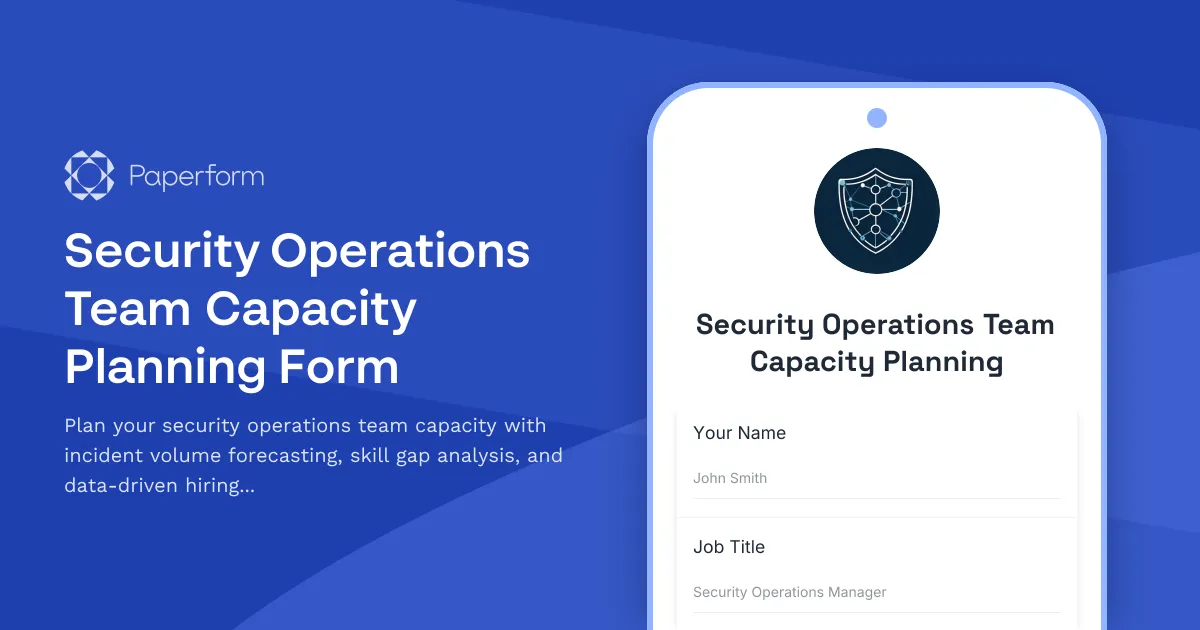
Security Operations Team Capacity Planning Form
Building and maintaining an effective security operations center (SOC) requires careful planning around team capacity, incident volumes, and skill requirements. This Security Operations Team Capacity Planning Form helps IT security leaders, SOC managers, and CISOs forecast staffing needs, identify skill gaps, and build data-driven justification for security team expansion.
Whether you're scaling a security team in response to growing incident volumes, planning for 24/7 coverage, or justifying additional headcount to leadership, this template guides you through the key metrics and analysis needed to make informed capacity planning decisions.
Who this form is for
This form is designed for IT professionals, security managers, SOC directors, CISOs, and IT managers who need to assess current security operations capacity and plan for future staffing requirements. It's particularly valuable for organisations experiencing growth, facing increased threat volumes, or looking to mature their security operations capabilities.
What this form covers
The form walks through essential capacity planning considerations including current team composition, incident volume analysis, shift coverage requirements, skill gap assessment, and hiring justification. You'll document current incident metrics, forecast future volumes based on business growth, identify critical skill shortages, and build a compelling case for additional security personnel.
How Paperform helps security teams plan capacity
With Paperform's conditional logic and calculation capabilities, this form adapts based on your responses—showing relevant follow-up questions about shift coverage when you indicate 24/7 operations, or diving deeper into specific skill gaps based on your team's focus areas. The form can be shared with finance teams, HR partners, and executive leadership to communicate staffing needs clearly.
For security teams looking to go beyond data collection, Stepper can automate what happens next. When a capacity planning request is submitted, Stepper workflows can notify stakeholders, create approval chains for hiring requests, update workforce planning spreadsheets, or kick off recruitment processes—turning your capacity analysis into actionable hiring plans without manual handoffs.
This form template gives security operations teams the structure to move from reactive hiring to proactive capacity planning, ensuring your SOC has the right people with the right skills to protect your organisation.

More templates like this
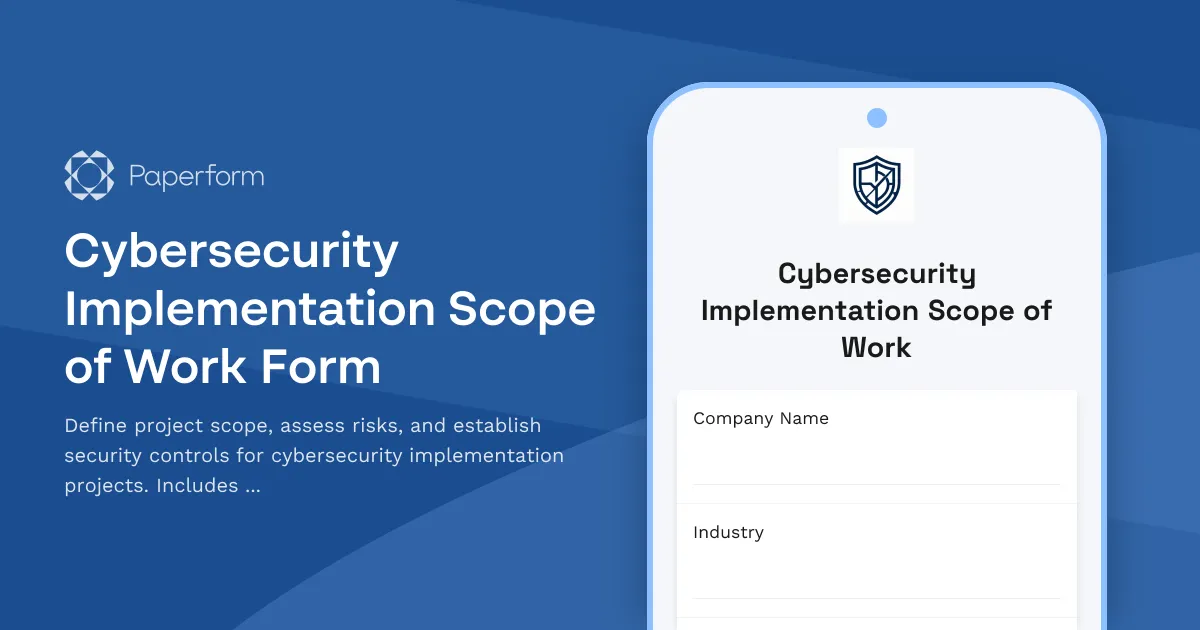
Cybersecurity Implementation Scope of Work Form
Define project scope, assess risks, and establish security controls for cybersecurity implementation projects. Includes training plans, incident response protocols, and monitoring requirements.
Cybersecurity Incident Post-Mortem Report
Conduct thorough post-incident analysis with attack vector documentation, response timeline tracking, and security gap identification to strengthen your organization's cybersecurity posture.
IT Secure Software Development Lifecycle Change Request Form
Comprehensive SDLC change request form with built-in security gates, testing requirements, and release criteria for secure software deployments.
Cloud Workload Protection Platform Effectiveness Review
Comprehensive assessment form for evaluating cloud workload protection platform performance, including container runtime security, serverless coverage, and threat detection capabilities.
Cybersecurity Breach Incident Report
Report and document cybersecurity breaches, data exposures, and security incidents with comprehensive system impact assessment and executive notification workflow.
Cybersecurity Exception Approval Request Form
A comprehensive form for requesting cybersecurity policy exceptions with risk assessment, compensating controls, business justification, and remediation plans requiring CISO authorization.
Data Breach Impact Assessment Form
A comprehensive GDPR-compliant form to assess data breach impact, track data subject notifications, and manage regulatory reporting workflows under Article 33 requirements.
Data Breach Incident Report Form
Document and manage data breach incidents with comprehensive system impact analysis, user assessment, response tracking, and regulatory notification timelines.

Ethical Hacking Consultant NDA & Engagement Agreement
Comprehensive non-disclosure agreement for ethical hacking consultants covering security assessment confidentiality, penetration test results protection, and remediation consulting payment terms.
Identity and Access Management Quarterly Review Form
Conduct comprehensive IAM quarterly reviews with user provisioning audits, role-based access validation, and orphaned account identification to maintain security compliance and minimize access risks.
IT Cloud Security Posture Management Change Request Form
A comprehensive cloud security change request form with automated misconfiguration detection, compliance validation, and remediation workflow triggers for IT teams managing cloud infrastructure security.
IT Red Team Exercise Approval Form
A comprehensive approval form for authorized security testing exercises, capturing attack scenarios, scope boundaries, team coordination, and approval workflows to ensure controlled and documented penetration testing activities.