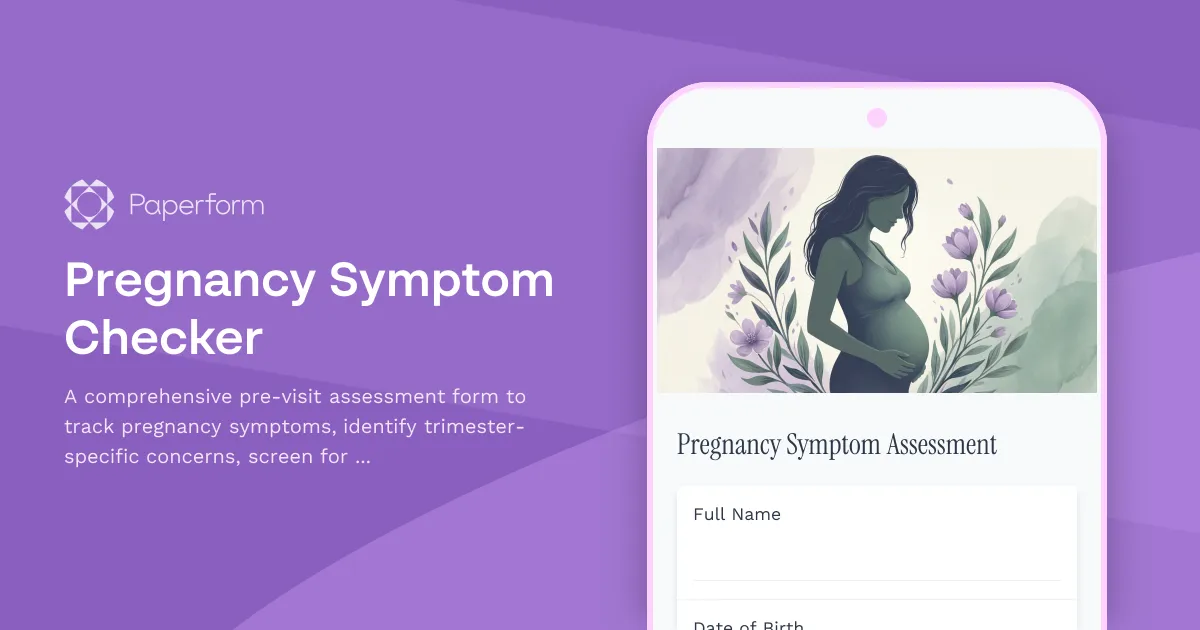
Pregnancy brings unique health considerations that change throughout each trimester. Whether you're managing routine prenatal care or monitoring concerning symptoms, having a systematic way to assess and communicate pregnancy-related health changes is essential for both expectant mothers and healthcare providers.
This Pregnancy Symptom Checker template helps healthcare practices, OB/GYN clinics, midwifery centers, and telehealth providers streamline pre-visit assessments with trimester-specific questions, high-risk factor screening, and emergency warning sign identification. Instead of relying on phone calls or incomplete paper forms, this digital assessment captures critical pregnancy health information before appointments, helping clinical teams triage concerns and prepare for each visit.
Built with Paperform, this template uses conditional logic to show relevant questions based on trimester and symptom severity, ensuring expectant mothers only answer what applies to their specific situation. The form can identify emergency warning signs and route urgent cases for immediate follow-up, while routine check-ins can be automatically logged into your practice management system.
For healthcare providers using Stepper (stepper.io), submissions can trigger automated workflows that notify triage nurses of high-priority cases, schedule follow-up appointments, send educational resources specific to reported symptoms, or update patient records in your EHR system—ensuring no concerning symptom falls through the cracks.
This template is ideal for obstetric practices, family medicine clinics offering prenatal care, certified nurse-midwives, maternal-fetal medicine specialists, and telehealth platforms focused on pregnancy care. It helps improve patient safety by standardizing symptom assessment, reduces administrative burden on clinical staff, and creates better documentation for continuity of care throughout pregnancy.



More templates like this
Restless Leg Syndrome Assessment Form
A comprehensive pre-visit symptom assessment for restless leg syndrome (RLS), evaluating symptom timing, movement relief patterns, and sleep disruption severity to help healthcare providers make informed diagnoses.
Anticoagulation Safety Checklist & Bleeding Risk Assessment
A comprehensive pre-visit assessment for patients on anticoagulation therapy to evaluate bleeding risk, fall frequency, medication compliance, and dietary vitamin K intake.
Asthma Action Plan Compliance & Symptom Tracker
Track asthma symptoms, peak flow readings, trigger exposure, and medication usage to help your healthcare provider assess control and adjust your treatment plan.
Autoimmune Disease Symptom Tracker
A comprehensive pre-visit symptom assessment form for tracking autoimmune disease symptoms, identifying flare patterns, and monitoring medication side effects across multiple organ systems.
Chronic Disease Self-Management Assessment
A comprehensive assessment form for patients managing chronic conditions, featuring goal-setting exercises, barrier identification, and personalized care plan agreements to support better health outcomes.
Endocrinology Diabetes Symptom Checker
A comprehensive pre-visit diabetes assessment form that tracks blood glucose levels, medication adherence, symptoms, and potential complications to help endocrinologists provide better care.

Erectile Dysfunction Evaluation Form
A confidential pre-visit assessment form for evaluating erectile dysfunction, including onset timing, psychological factors, and cardiovascular risk screening to help healthcare providers prepare for your consultation.
Heart Failure Symptom Monitoring Form
A comprehensive pre-visit assessment form for heart failure patients to track symptoms, weight changes, edema, and medication adherence between appointments.
Hematology Bleeding Disorder Screening Form
A comprehensive pre-visit assessment form for screening potential bleeding disorders, including bruising patterns, family history, and menstrual bleeding evaluation.
Infectious Disease Exposure & Symptom Assessment Form
A comprehensive pre-visit form for assessing infectious disease symptoms, exposure risk, travel history, and contact tracing to help healthcare providers screen patients efficiently.
Seizure Medication Assessment Form
A comprehensive pre-visit assessment form for patients taking seizure medications to document breakthrough seizures, medication adherence, cognitive side effects, and current symptom levels.
Achondroplasia Growth Monitoring & Care Coordination Form
A comprehensive telehealth form for monitoring growth patterns, assessing treatment options, screening for complications, and coordinating psychosocial support for patients with achondroplasia.