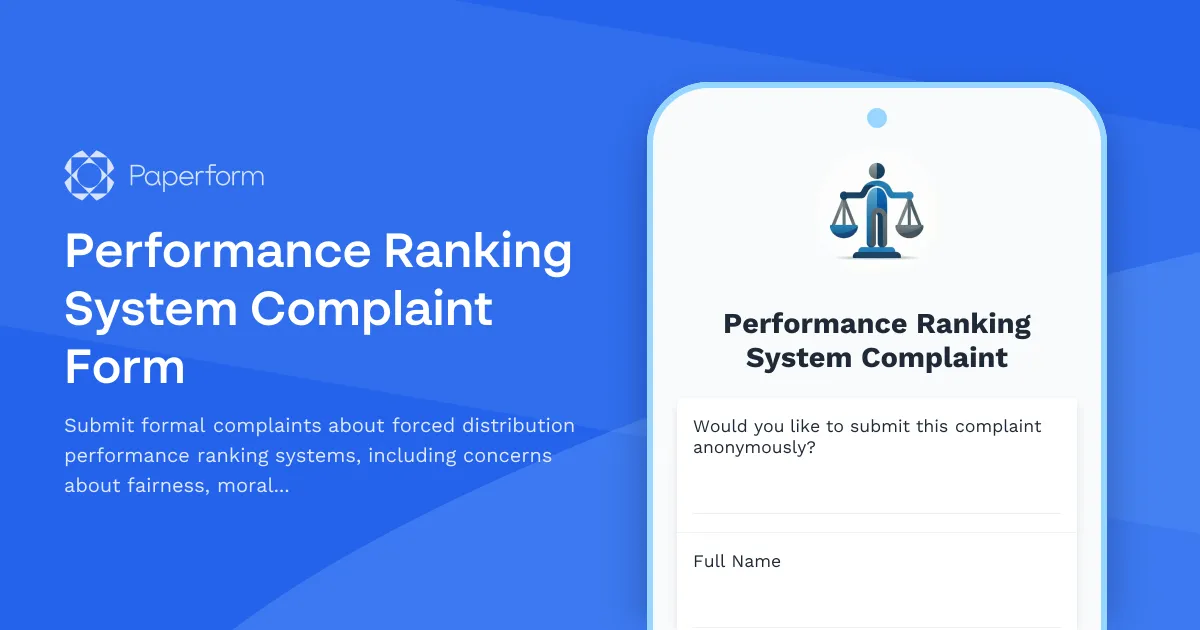
Fair Performance Reviews Start With Your Voice
Forced distribution ranking systems—where a fixed percentage of employees must be rated as underperformers regardless of actual performance—can create serious workplace issues. If you believe your organization's performance ranking system is unfair, damages team morale, or discourages collaboration, this Performance Ranking System Complaint Form gives you a structured, confidential channel to raise your concerns.
Why This Template Matters
Performance management should motivate and develop employees, not pit them against each other. When ranking systems force managers to label high performers as average or arbitrarily assign low ratings to meet quotas, it can:
- Undermine trust in leadership and HR processes
- Damage morale across teams and departments
- Discourage collaboration as colleagues compete for limited top ratings
- Create bias and inequity in how ratings are distributed
- Drive away top talent who feel undervalued
This form template helps HR teams, employee relations specialists, and people operations leaders collect detailed, actionable feedback about ranking system concerns—giving employees a voice and helping organizations identify when their performance processes need reform.
Designed for HR and Employee Relations Teams
Built with real workplace grievance processes in mind, this template captures:
- Specific concerns about forced distribution and quota systems
- Examples of unfair ranking outcomes and morale impact
- Details about how ranking systems affect collaboration and teamwork
- Impact on diversity, equity and inclusion
- Concrete suggestions for improvement
- Optional anonymity to encourage honest feedback
The form uses conditional logic to adapt questions based on the type of complaint, ensuring you gather relevant details without overwhelming the employee. You can embed this form in your intranet, link it from your employee handbook, or share it during performance review cycles to proactively gather feedback.
Automate Your Grievance Workflow
Paperform's built-in automations mean every complaint can trigger the right next steps:
- Route complaints to the appropriate HR business partner or employee relations lead based on department or concern type
- Create case tickets automatically in your HRIS or case management system
- Send acknowledgment emails confirming receipt and outlining next steps
- Trigger Stepper workflows to assign investigators, schedule meetings, and track resolution timelines
For organizations handling sensitive employee concerns, Paperform is SOC 2 Type II compliant with robust data security and access controls. You can also use Papersign to collect formal acknowledgments or settlement agreements as part of the resolution process, keeping everything linked to the original complaint.
Part of Your Employee Relations Toolkit
Whether you're responding to concerns about stack ranking, calibration practices, or forced curve grading, this template gives you a professional, empathetic starting point. Customize the questions, adjust the routing logic, and apply your organization's branding to create a form that employees trust and HR teams can act on.
Thousands of HR and people operations teams use Paperform to build confidential, compliant grievance processes that protect employees and help organizations improve. Get started today and turn feedback into meaningful change.
More templates like this
Employee Achievement Recognition Disparity Complaint Form
Document concerns about unfair recognition practices, award nomination bias, and visibility inequity in the workplace. Help HR address recognition disparities and improve morale.
Employee Benefits Denial Grievance Form
A comprehensive grievance form for employees to formally appeal denied benefits claims, including policy references, communication documentation, and appeals tracking.
Employee Intern Supervision Credit Grievance Form
A formal grievance form for employees seeking recognition and compensation for intern supervision responsibilities, workload impact, and career development contributions.
Employee Mentor Matching Bias Grievance Form
A confidential form for employees to report concerns about bias, inequity, or lack of transparency in mentor matching programs and their impact on career advancement opportunities.
Employee Professional Association Membership Reimbursement Dispute Form
A formal grievance form for employees disputing professional association membership reimbursement decisions, including sections for career development justification, networking value, and policy interpretation concerns.
Employee Recognition Budget Allocation Grievance Form
A formal grievance form for employees to raise concerns about inequitable distribution of recognition budgets, celebration funding, and morale investment across departments.
Employee Training Opportunity Grievance Form
A formal grievance form for employees to report denied training opportunities, career development barriers, and equal access violations that impact professional growth and advancement.
Hybrid Schedule Favoritism Grievance Form
A formal grievance form for employees to report concerns about unfair hybrid work schedule allocation, managerial favoritism, and inequitable remote work day distribution within their team.
Performance Bonus Dispute Form
A formal dispute resolution form for employees to challenge performance bonus calculations and request arbitration or mediation review of compensation plan metrics and achievement outcomes.
Professional Development Reimbursement Dispute Form
A structured form for employees to file disputes regarding professional development reimbursement denials or discrepancies, with policy references, documentation uploads, and HR mediation requests.
Remote Work Approval Fairness Complaint Form
Document concerns about inconsistent or discriminatory remote work approval practices. Report favoritism patterns, gather evidence, and request equity review.
Return from Leave Complaint Form
Document workplace issues following a return from protected leave, including allegations of demotion, FMLA interference, disability retaliation, position restoration failure, and benefits reduction.