
Running paid search campaigns without understanding your true ROI is like driving blindfolded. This Paid Search Campaign ROI Calculator helps marketers, agencies, and business owners make data-driven decisions about their Google Ads, Bing Ads, and other PPC campaigns.
Whether you're managing campaigns for clients or optimizing your own ad spend, this calculator provides instant insights into your customer acquisition costs, conversion efficiency, and overall campaign profitability. Simply input your campaign metrics—ad spend, clicks, conversions, and customer value—and get a clear picture of what's working and what needs adjustment.
Perfect for marketing agencies, PPC specialists, small business owners, and growth teams who need to justify ad budgets, optimize campaigns, or report ROI to stakeholders. The calculator handles all the complex formulas behind the scenes, giving you actionable metrics like cost per click, cost per acquisition, return on ad spend (ROAS), and net profit.
Paperform makes it easy to embed this calculator directly on your website or share it with clients as part of your reporting process. Want to take it further? Connect it to Stepper to automatically send results to your CRM, trigger follow-up emails based on ROI thresholds, or create custom dashboards that update in real-time as campaigns progress.
With Paperform's calculation engine and conditional logic, you can create sophisticated calculators that adapt to different campaign types, automatically flag underperforming metrics, and provide personalized recommendations—all without writing a single line of code.
More templates like this

Email List Segmentation ROI Calculator
Calculate the return on investment of segmented, personalized email campaigns versus generic email blasts. Compare engagement rates, conversion metrics, and revenue impact to make data-driven decisions about your email marketing strategy.
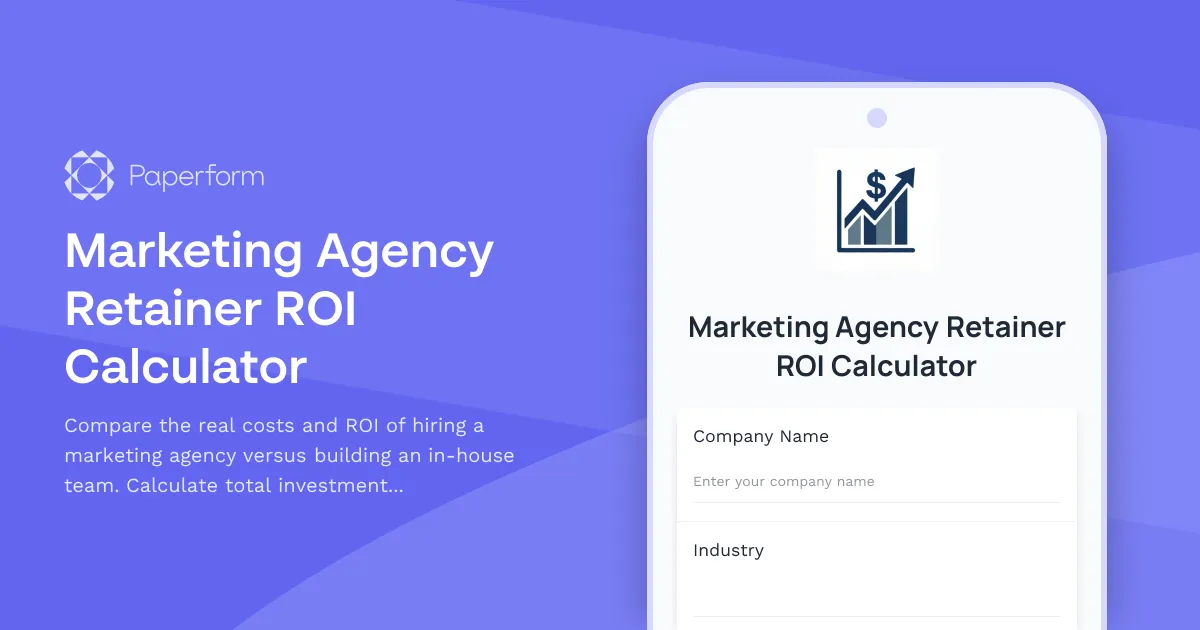
Marketing Agency Retainer ROI Calculator
Compare the real costs and ROI of hiring a marketing agency versus building an in-house team. Calculate total investment, assess expertise levels, and discover which approach delivers better results for your business.

Inbound Marketing ROI Calculator
Calculate the return on investment of your inbound marketing strategy by comparing content creation costs against organic lead generation, nurture efficiency, and sales outcomes.

Marketing Qualified Lead ROI Calculator
Calculate your marketing ROI by analyzing cost per MQL, conversion rates, and closed-won revenue. Understand the true value of your lead generation efforts.

Webinar Platform ROI Calculator
Calculate the return on investment of your webinar platform by measuring registration costs, attendance rates, engagement quality, and sales pipeline impact.

Affiliate Marketing Program Setup Quote Calculator
Get an instant quote for setting up a complete affiliate marketing program including commission structure, tracking system, promotional materials, and recruitment strategy tailored to your business needs.
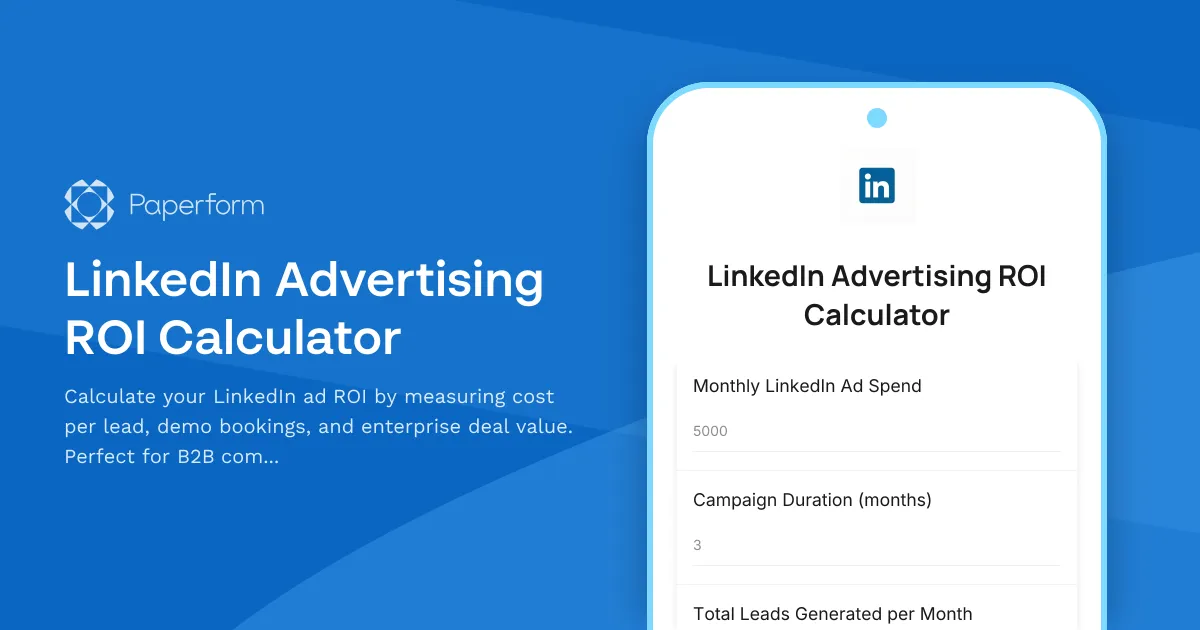
LinkedIn Advertising ROI Calculator
Calculate your LinkedIn ad ROI by measuring cost per lead, demo bookings, and enterprise deal value. Perfect for B2B companies optimizing their LinkedIn advertising strategy.

Marketing Partner Ecosystem ROI Calculator
Calculate the return on investment of your marketing partner ecosystem by measuring co-marketing reach, referral value, integration benefits, and relationship development efficiency.

Marketing Podcast Production ROI Calculator
Calculate the return on investment of launching a marketing podcast. Discover how thought leadership, audience growth, partnership opportunities, and content repurposing deliver measurable value across your marketing channels.

Marketing Workflow Automation ROI Calculator
Calculate the return on investment from automating your marketing workflows. Measure time savings, error reduction, approval efficiency, and creative team productivity gains.

Partnership Program ROI Calculator
Calculate the potential return on investment from strategic partnerships. Estimate value from co-marketing reach, lead sharing, product integrations, and revenue sharing opportunities.

Social Media Management Tool ROI Calculator
Calculate the return on investment for social media management tools by measuring time savings, posting consistency, engagement improvements, and team collaboration value.