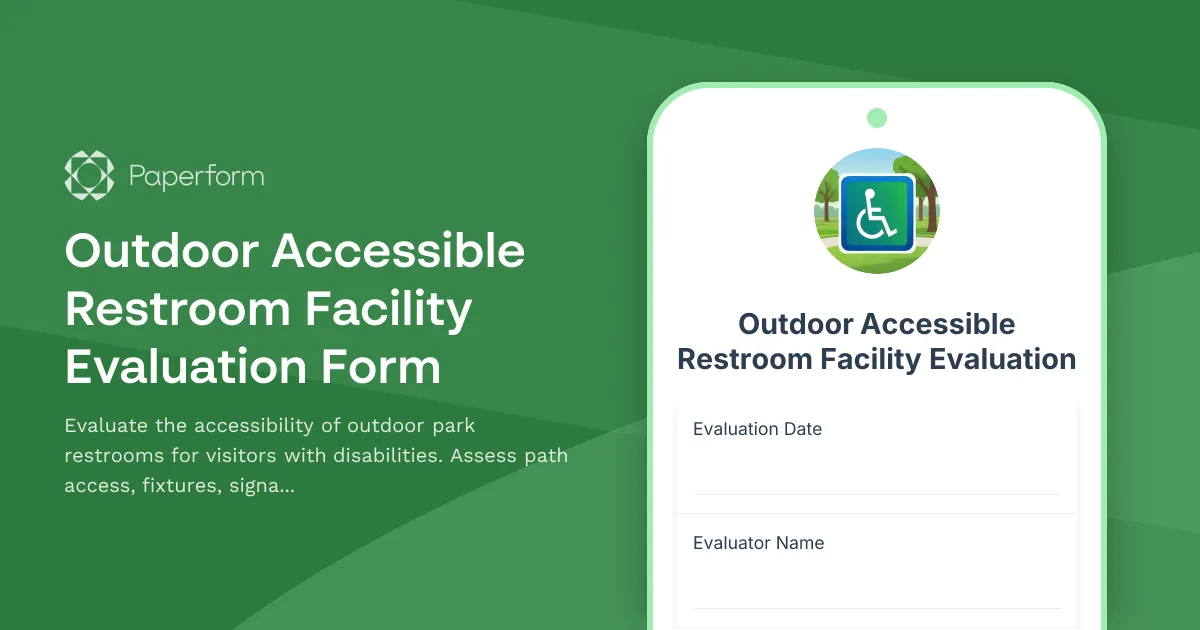
Ensure Accessible Outdoor Facilities with Comprehensive Restroom Evaluations
Creating inclusive outdoor spaces means ensuring that every visitor—regardless of mobility level or disability—can access essential facilities with dignity and independence. For parks, recreation areas, and public outdoor spaces, accessible restrooms are not just a legal requirement; they're a fundamental part of welcoming all community members.
This Outdoor Accessible Restroom Facility Evaluation Form provides park managers, accessibility coordinators, and facilities teams with a structured, systematic way to assess outdoor restroom accessibility. Whether you're conducting routine compliance checks, responding to visitor feedback, or planning accessibility improvements, this template helps you document path conditions, fixture placement, signage clarity, and maintenance issues that might create barriers for visitors with disabilities.
Why Accessibility Evaluations Matter for Outdoor Facilities
Outdoor restrooms present unique accessibility challenges compared to indoor facilities. Weather exposure, terrain variations, distance from parking, and maintenance schedules all impact whether a facility truly serves visitors with mobility limitations, visual impairments, or other disabilities.
Regular accessibility evaluations help you:
- Identify barriers before they become complaints – Proactive assessments catch issues like obstructed pathways, broken fixtures, or inadequate signage before they prevent someone from using the facility.
- Prioritize maintenance and upgrades – Systematic feedback helps facilities teams allocate resources to the most critical accessibility improvements.
- Meet ADA and regulatory standards – Documented evaluations demonstrate your commitment to compliance and help guide renovations to meet current accessibility codes.
- Improve visitor experience for everyone – Accessible design benefits parents with strollers, seniors, people recovering from injuries, and the broader community—not just those with permanent disabilities.
What This Form Evaluates
This comprehensive template covers all critical aspects of outdoor restroom accessibility:
Pathway and Approach: Assess the route from parking areas and main paths to the restroom entrance, including surface conditions, width, slopes, obstacles, and wayfinding signage.
Entrance and Door Access: Evaluate door width, opening mechanisms, thresholds, vestibules, and clearance space for wheelchair maneuvering.
Interior Layout and Fixtures: Review the accessibility of stalls, grab bars, toilet heights, sinks, dispensers, mirrors, and turning radius within the facility.
Signage and Wayfinding: Check for clear, compliant signage with Braille, pictograms, and proper mounting heights both outside and inside the facility.
Maintenance and Cleanliness: Document conditions that affect usability—broken fixtures, blocked access, inadequate lighting, or sanitation issues.
Emergency Features: Verify that emergency call buttons, lighting, and exit routes are accessible and functional.
The form uses a mix of yes/no questions, condition ratings, and open text fields to capture both objective compliance measures and subjective visitor experience insights.
Perfect for Parks, Recreation Areas, and Public Outdoor Spaces
This template is designed for organizations that manage outdoor facilities and are committed to accessibility:
- Municipal parks and recreation departments conducting routine ADA compliance audits
- State and national park services evaluating remote or backcountry facilities
- Accessibility coordinators responding to visitor feedback or conducting site assessments
- Facilities and maintenance teams prioritizing repair and improvement projects
- Advocacy groups and disability organizations partnering with parks to identify barriers
- Outdoor event venues and campgrounds ensuring festival, concert, or camping facilities meet accessibility standards
Turn Evaluations into Action with Paperform and Stepper
Paperform makes it easy to create accessible, mobile-friendly evaluation forms that work in the field—even in areas with limited connectivity. Evaluators can complete assessments on tablets or smartphones, attach photos of problem areas, and submit detailed reports from anywhere in the park.
Once submitted, the real power begins. Connect this form to Stepper to automatically route evaluation results based on severity:
- Critical issues (like blocked accessible stalls or broken grab bars) can trigger immediate work orders and alert facilities managers via email or Slack.
- Medium-priority items can be added to a maintenance backlog in Airtable, Notion, or your project management system.
- Trend reports can be compiled monthly to show patterns across multiple facilities, helping you justify budget requests for systematic improvements.
You can also set up automated follow-ups to ensure that reported issues are resolved and re-evaluated within specific timeframes, creating accountability and continuous improvement.
Customizable for Your Specific Facilities and Standards
Every park system has different facilities, compliance requirements, and reporting needs. This template is fully customizable in Paperform's intuitive editor:
- Add facility-specific questions about unique features like outdoor showers, changing tables, or family restrooms
- Include photo upload fields for visual documentation of barriers or exemplary features
- Adjust rating scales to match your internal maintenance standards
- Add conditional logic to ask detailed follow-up questions only when specific issues are identified
- Customize success messages and auto-responses to confirm that reports have been received and will be acted upon
You can also create different versions of the form for different facility types (e.g., vault toilets vs. flush facilities, or high-traffic vs. remote locations) while maintaining consistent data collection across your system.
Mobile-Friendly, Secure, and Compliant
Accessibility evaluations often happen in the field, far from desk computers. Paperform's mobile-responsive design ensures your form works perfectly on any device, with offline-friendly features that let evaluators start forms even when connectivity is spotty.
All data is stored securely with SOC 2 Type II compliance, so sensitive facility information and visitor feedback are protected. You can control access with permissions, ensuring only authorized staff can view or edit evaluation results.
Start Improving Accessibility Today
Inclusive outdoor spaces start with knowing where barriers exist. This Outdoor Accessible Restroom Facility Evaluation Form gives you a clear, actionable framework for documenting current conditions, prioritizing improvements, and ensuring that every visitor can enjoy your park with independence and dignity.
Whether you're managing a small community park or an extensive trail system, Paperform's flexibility and Stepper's automation capabilities help you move from evaluation to action—efficiently and systematically. Get started today and make your outdoor facilities truly welcoming for all.

More templates like this
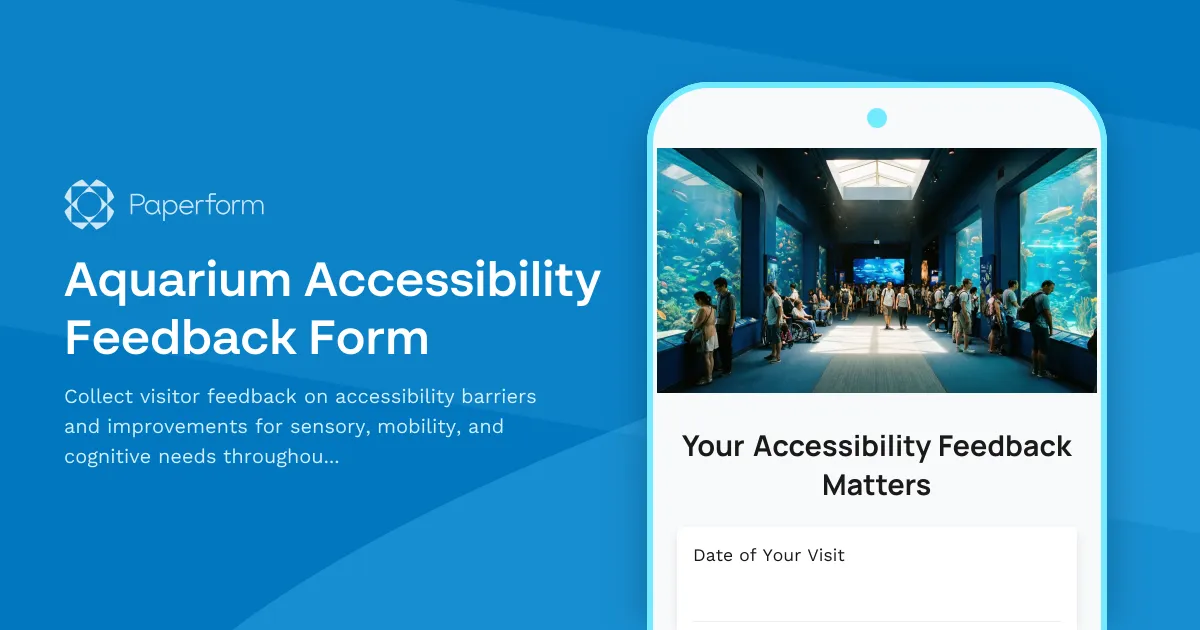
Aquarium Accessibility Feedback Form
Collect visitor feedback on accessibility barriers and improvements for sensory, mobility, and cognitive needs throughout your aquarium's exhibits, pathways, and programs.
Life-Size Board Game Accessibility Survey
Gather feedback from players with disabilities about the accessibility of life-size board game paths, including path width, movement methods, and game card access.
Multi-User Restroom Accessibility Feedback Form
Collect comprehensive feedback on multi-user restroom accessibility for individuals with disabilities requiring caregiver assistance. Evaluate stall size, fixture placement, privacy, and identify barriers to improve inclusive facility design.
Carpool Parking Priority Grievance Form
Submit formal concerns about carpool parking allocation, sustainability incentive fairness, and commute accommodation equity within workplace environmental programs.
Hybrid Schedule Accessibility Accommodation Request Form
A comprehensive form for employees to request accessibility accommodations, ergonomic support, and workplace modifications for hybrid work arrangements, ensuring inclusive and comfortable work environments.
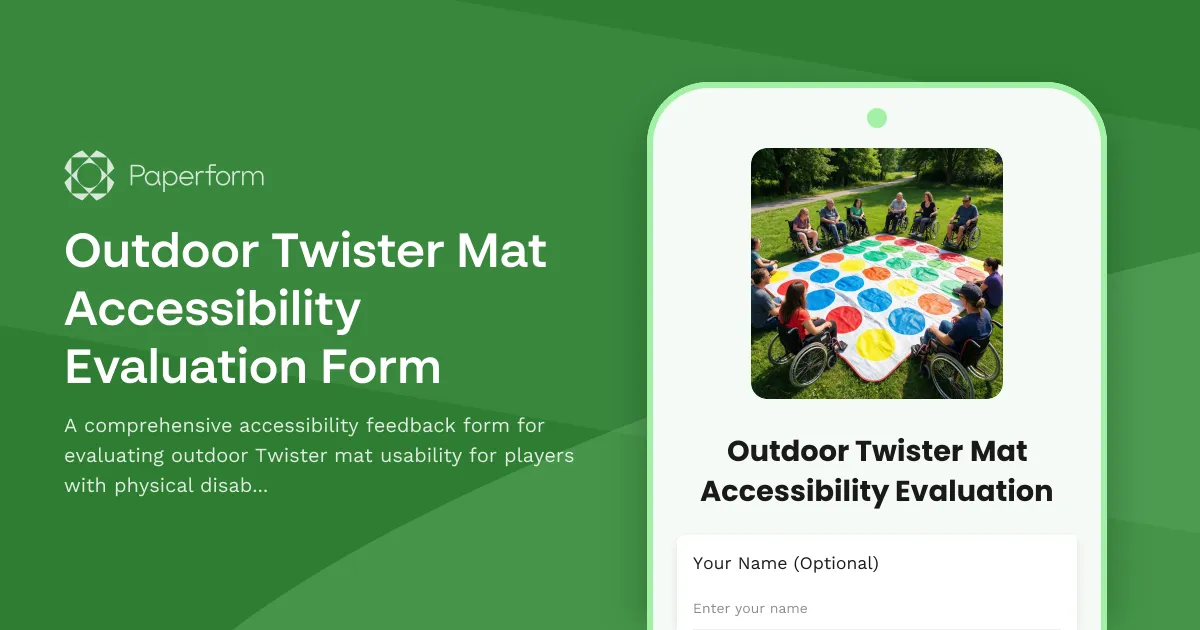
Outdoor Twister Mat Accessibility Evaluation Form
A comprehensive accessibility feedback form for evaluating outdoor Twister mat usability for players with physical disabilities, covering mat surface quality, position modifications, and spinner accessibility.
Plastic-Free Workplace Initiative Enrollment Form
Enroll your team in a plastic-free workplace initiative with a single-use plastic audit, alternative product preferences, and team challenge participation tracking.

Corporate Technology Hardware Donation Form
A comprehensive form for companies to donate unused technology hardware to nonprofit organizations, including device verification, data sanitization certificates, and nonprofit matching to ensure responsible tech recycling and community benefit.
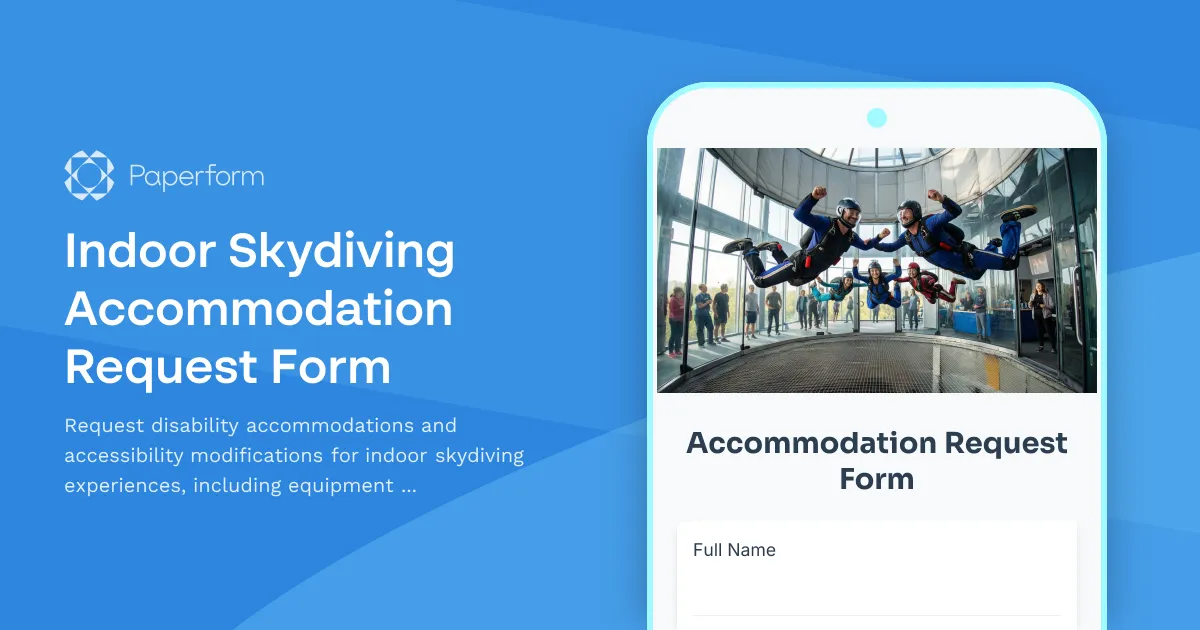
Indoor Skydiving Accommodation Request Form
Request disability accommodations and accessibility modifications for indoor skydiving experiences, including equipment adaptations, instruction alternatives, and customized safety protocols.
Ink Making Workshop Accommodation Request Form
Request accessibility accommodations for ink making workshops including workspace modifications, material handling assistance, and alternative instruction methods to ensure an inclusive creative experience.
Juggling Class Accommodation Request Form
A comprehensive form for requesting disability and accessibility accommodations in juggling classes, including equipment modifications, practice space adjustments, and instruction format preferences.
Kite Flying Lesson Accommodation Request Form
Request accessibility accommodations for kite flying lessons, including equipment modifications, instruction format alternatives, and field accessibility support to ensure an inclusive experience for all participants.