Professional Code of Conduct for Mobile Medical Unit Teams
Mobile medical units bring healthcare directly into communities, often operating in public spaces, underserved areas, and partner locations. This unique environment requires staff to maintain the highest standards of patient dignity, operational security, and community respect.
This Mobile Medical Unit Code of Conduct Agreement template helps healthcare organizations ensure their field teams understand and commit to the specific ethical and professional standards required when delivering care outside traditional clinical settings.
Why This Template Matters for Mobile Healthcare Teams
Mobile medical units face distinct challenges that traditional facilities don't encounter. Staff work in visible public settings where patient privacy must be actively protected, manage medical supplies in transit and in temporary locations, and represent their organization as ambassadors in diverse communities. This template addresses all three critical areas:
Patient Dignity in Public Settings – Clear guidelines for maintaining confidentiality, creating safe spaces for sensitive conversations, and ensuring respectful treatment when care is delivered in parking lots, community centers, or on the street.
Supply Security & Accountability – Protocols for securing medications, controlled substances, and medical equipment when working from mobile units, including inventory procedures and incident reporting.
Community Partnership Respect – Standards for interacting with host organizations, local residents, and community leaders to build trust and ensure mobile units are welcome in the neighborhoods they serve.
How Paperform Streamlines Mobile Healthcare Administration
Healthcare administrators can customize this template to reflect their organization's specific policies, service areas, and community partnerships. Use conditional logic to show role-specific responsibilities for nurses, physicians, drivers, and community health workers. Digital signatures through Papersign create a permanent record of staff acknowledgment, while Stepper can automate follow-up training reminders, route signed agreements to HR systems, and trigger compliance tracking workflows.
Mobile medical organizations, community health centers, outreach programs, and public health departments can use this template to maintain professional standards, protect vulnerable patients, and strengthen relationships with the communities they serve—all while keeping staff accountable in the field.



More templates like this
Hospice Care Provider Code of Conduct Agreement
A comprehensive code of conduct form for hospice care providers ensuring dignity in end-of-life care, family support boundaries, and advance directive compliance.
Addiction Recovery Center Staff Code of Conduct
A comprehensive code of conduct agreement for addiction recovery center staff covering professional boundaries, confidentiality standards, ethical guidelines, and relapse response protocols.
Behavioral Health Crisis Intervention NDA & Confidentiality Agreement
A comprehensive non-disclosure agreement for behavioral health crisis intervention teams, protecting patient episode confidentiality, treatment plans, and insurance authorization information.
Healthcare Facility Code of Conduct Acknowledgment Form
A comprehensive code of conduct and ethics acknowledgment form for healthcare professionals, covering HIPAA compliance, patient confidentiality, professional standards, and workplace conduct expectations.
Senior Care Day Program Staff Code of Conduct
A comprehensive code of conduct form for senior care day program staff covering dignity preservation, activity engagement protocols, and family communication standards.
ABA Therapy Insurance Claim Form
Professional ABA therapy insurance claim form for autism treatment reimbursement. Captures patient diagnosis, BCBA supervision details, treatment hours, progress data, and insurance mandate compliance documentation.
ACC Severe Injury Rehabilitation Plan
A comprehensive rehabilitation planning form for ACC severe injury cases, coordinating multi-disciplinary care teams, tracking long-term recovery goals, and monitoring milestone achievements throughout the rehabilitation journey.
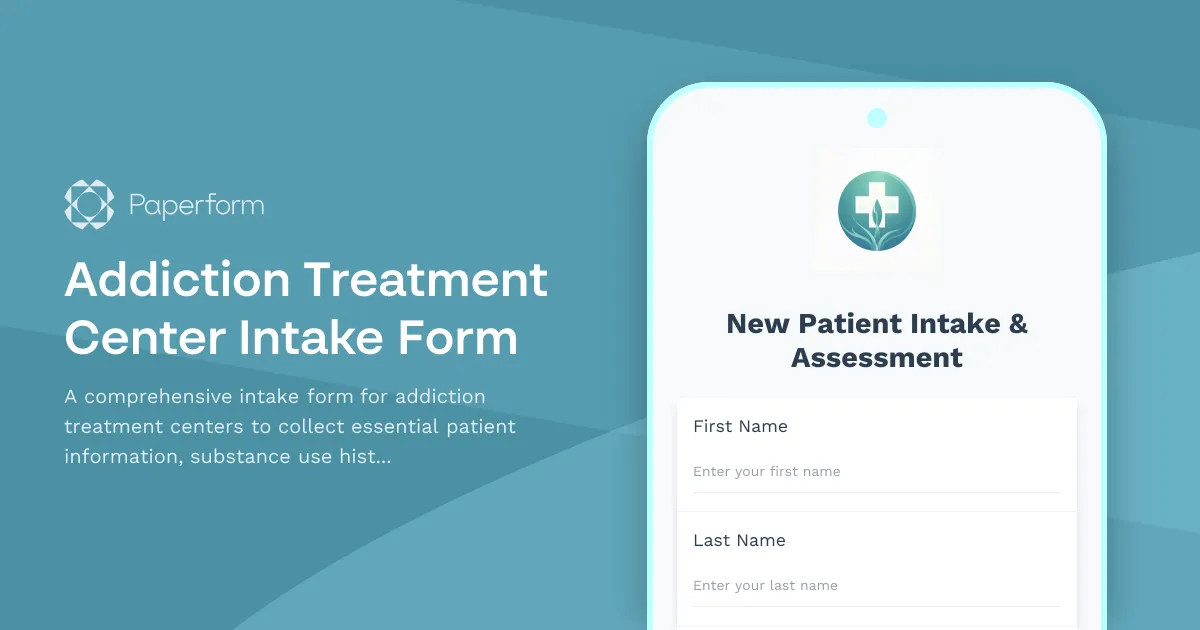
Addiction Treatment Center Intake Form
A comprehensive intake form for addiction treatment centers to collect essential patient information, substance use history, withdrawal symptoms, previous treatment attempts, and recovery support systems.
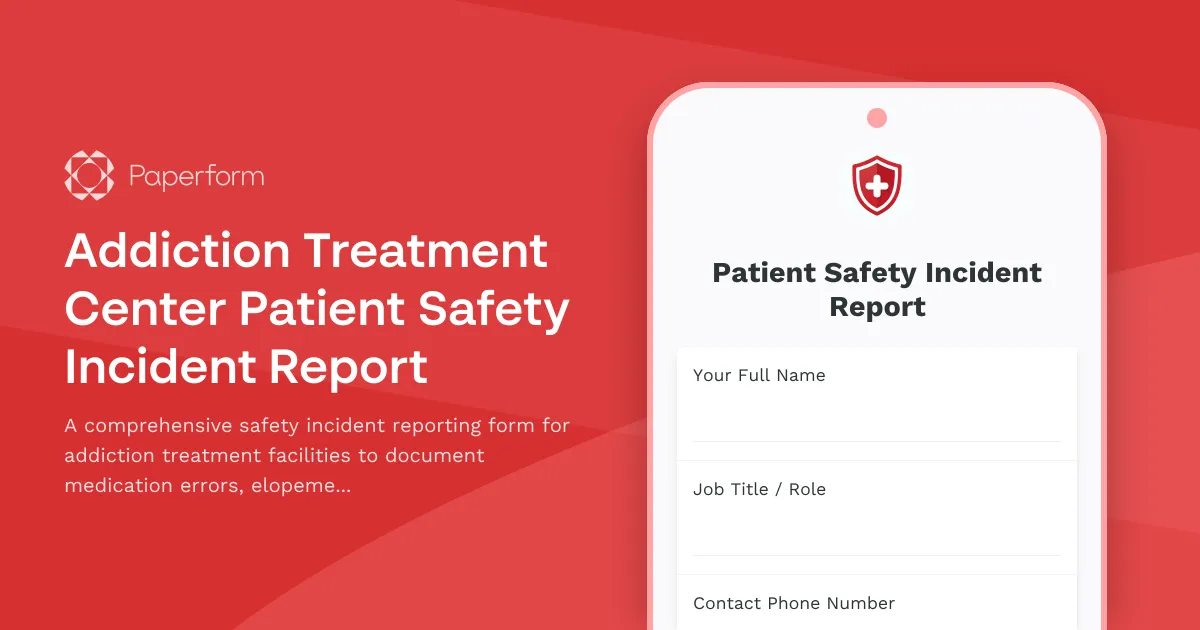
Addiction Treatment Center Patient Safety Incident Report
A comprehensive safety incident reporting form for addiction treatment facilities to document medication errors, elopement risks, patient safety concerns, and ensure proper state licensing notifications and regulatory compliance.
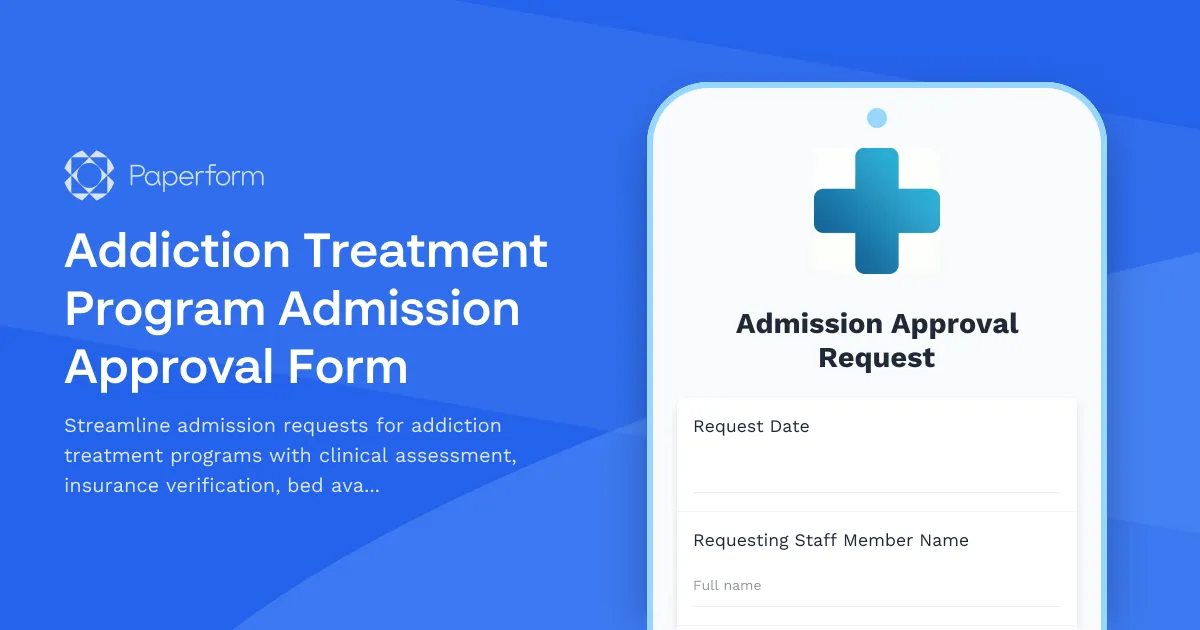
Addiction Treatment Program Admission Approval Form
Streamline admission requests for addiction treatment programs with clinical assessment, insurance verification, bed availability checks, and clinical director authorization in one comprehensive form.
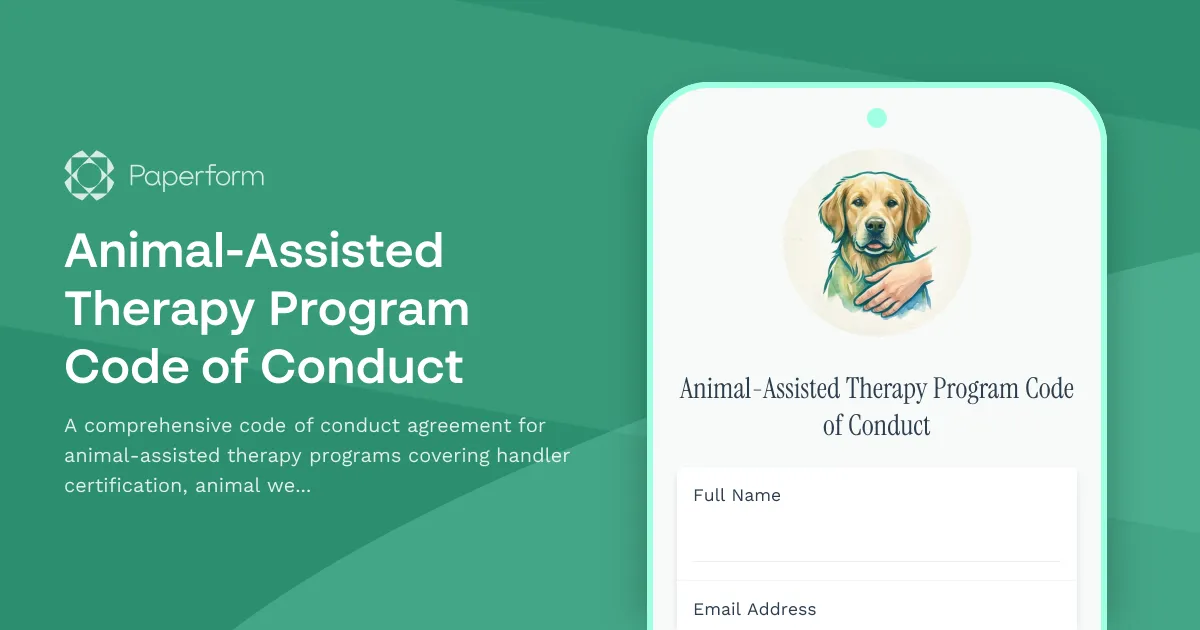
Animal-Assisted Therapy Program Code of Conduct
A comprehensive code of conduct agreement for animal-assisted therapy programs covering handler certification, animal welfare protocols, and participant safety requirements.

Anonymous Care Coordination Failure Report for ACOs
A confidential reporting form for Accountable Care Organizations (ACOs) to capture care coordination failures, CMS quality metrics issues, and patient outcome concerns while maintaining reporter anonymity.