Mobile Blood Collection Unit Safety Checklist Template
Operating a mobile blood collection unit requires meticulous attention to safety protocols, regulatory compliance, and equipment maintenance. This Mobile Blood Collection Unit Safety Checklist template helps blood banks, hospitals, and community health organizations ensure their mobile donation drives meet all safety standards and provide a secure environment for donors and staff.
Why Safety Checklists Matter for Mobile Blood Collection
Mobile blood donation units operate in varied environments—from community centers to corporate offices—making consistent safety protocols essential. Unlike fixed-location blood centers, mobile units face unique challenges including temperature control during transport, limited space for emergency response, and varying environmental conditions. A comprehensive safety checklist ensures that every mobile collection event maintains the same high standards, protects donor safety, prevents infection transmission, and keeps your organization in compliance with FDA regulations and AABB standards.
Key Features of This Blood Collection Safety Checklist
This template addresses the critical safety areas specific to mobile blood donation operations:
Refrigeration & Temperature Monitoring: Track blood product storage temperatures, refrigeration unit performance, and cold chain integrity to ensure collected blood remains viable and safe for transfusion.
Infection Control & Needle Stick Prevention: Document proper sharps disposal, needle safety device functionality, and personal protective equipment availability to protect both donors and phlebotomists from bloodborne pathogen exposure.
Donor Screening Compliance: Verify that all pre-donation screening procedures are followed, questionnaires are current, and staff are properly trained in donor eligibility criteria.
Biohazard Waste Management: Ensure proper segregation, labeling, and storage of medical waste, including used needles, blood-contaminated materials, and other biohazardous materials.
Emergency Medical Response Readiness: Confirm that emergency equipment, medications, and trained personnel are available to respond to donor reactions ranging from simple vasovagal episodes to severe allergic reactions.
Who Should Use This Template
This mobile blood collection safety checklist is designed for:
- Blood bank managers and supervisors overseeing mobile donation programs
- Mobile unit coordinators responsible for daily operations and compliance
- Quality assurance personnel conducting regular safety audits
- Phlebotomy supervisors ensuring staff follow proper protocols
- Hospital transfusion services operating community outreach programs
- Community blood centers running mobile collection drives
How Paperform Enhances Mobile Safety Inspections
Paperform transforms traditional paper safety checklists into dynamic, mobile-friendly digital forms that phlebotomists and supervisors can complete on tablets or smartphones right at the collection site. The platform's conditional logic can flag critical safety issues immediately, requiring photo documentation or supervisor sign-off before proceeding with donor collections.
With Paperform's offline mode capability, your team can complete safety checks even in locations with poor connectivity, with data syncing automatically once back online. The calculation features can track temperature readings over time, automatically flagging readings outside acceptable ranges. Signature fields allow supervisors to digitally sign off on inspections, creating a clear chain of accountability.
Streamline Compliance Reporting with Stepper
Once safety checklists are submitted, Stepper can automate your compliance workflow. Failed safety checks can trigger immediate notifications to quality managers, create corrective action tasks in your project management system, and generate incident reports that feed directly into your compliance database. Temperature excursions can automatically alert laboratory staff and initiate blood product quarantine protocols. This automation ensures that safety issues are addressed immediately rather than discovered during monthly audits.
Stepper can also compile weekly or monthly safety summary reports, track trends in equipment performance, and alert management when preventive maintenance is due—all without manual data entry or spreadsheet management.
Maintain Regulatory Compliance and Donor Trust
Mobile blood donation is built on community trust. Donors who take time to give blood deserve the assurance that your operation meets the highest safety standards. This comprehensive checklist template helps you maintain FDA compliance, prepare for AABB accreditation inspections, and demonstrate your commitment to donor safety at every collection event.
By digitizing your safety inspection process with Paperform, you create verifiable audit trails, improve data accuracy by eliminating handwriting interpretation issues, and ensure that no critical safety check is overlooked. The result is safer blood collection operations, reduced risk of regulatory citations, and continued community confidence in your mobile donation program.
Whether you're running weekly workplace blood drives or seasonal community collection events, this template provides the structured safety framework that protects donors, staff, and ultimately the patients who depend on a safe blood supply.
Start using this Mobile Blood Collection Unit Safety Checklist template today and bring professional-grade safety documentation to every mobile donation drive your organization operates.



More templates like this
Blood Bank & Transfusion Service Safety Checklist
Comprehensive safety inspection checklist for blood banks and transfusion services covering refrigeration monitoring, contamination prevention, emergency systems, specimen handling, and biohazard disposal compliance.
Healthcare Emergency Operations Center Activation Checklist
A comprehensive checklist form for activating healthcare emergency operations centers during critical incidents. Streamlines incident classification, resource coordination, and communication protocols.
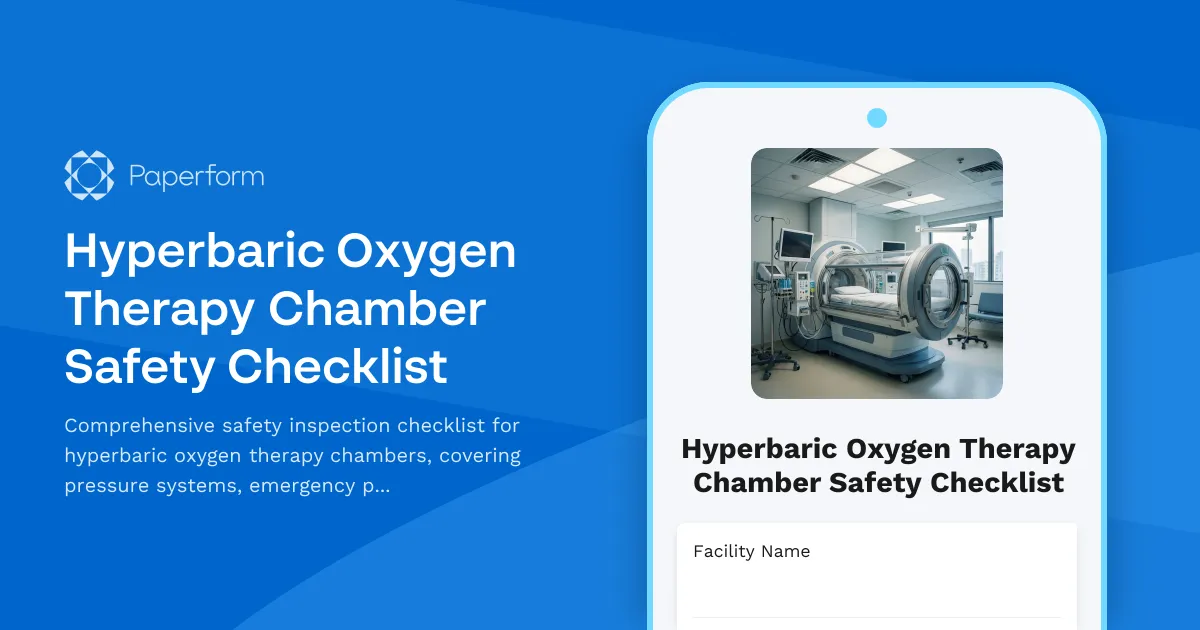
Hyperbaric Oxygen Therapy Chamber Safety Checklist
Comprehensive safety inspection checklist for hyperbaric oxygen therapy chambers, covering pressure systems, emergency protocols, fire prevention, and patient monitoring equipment.
Mobile COVID-19 Testing Site Safety Checklist
Comprehensive safety inspection checklist for mobile COVID-19 testing sites covering PPE availability, donning procedures, specimen handling, waste disposal, and emergency decontamination protocols.
Mobile Mammography Unit Safety Checklist
Comprehensive safety inspection checklist for mobile mammography units covering radiation shielding, electrical systems, patient privacy, equipment calibration, and emergency preparedness.
Psychiatric Seclusion Room Safety Equipment Maintenance Checklist
A comprehensive maintenance checklist for psychiatric hospital seclusion room safety equipment, including door mechanisms, observation windows, emergency systems, and restraint equipment verification.
Compressed Gas Cylinder Storage Safety Checklist
A comprehensive safety inspection checklist for compressed gas cylinder storage areas, covering securing mechanisms, valve caps, separation protocols, ventilation, and gas compatibility.

Cryogenic Storage Facility Safety Inspection Checklist
Comprehensive safety inspection checklist for cryogenic storage facilities covering oxygen deficiency monitoring, pressure systems, PPE, emergency protocols, and thermal insulation integrity.
Hospital Patient Room Safety Inspection Checklist
Comprehensive patient room safety inspection checklist covering fall prevention, call systems, oxygen supply, infection control, and hazardous materials compliance for healthcare facilities.
Mobile Cardiac Screening Unit Safety Checklist
Comprehensive safety and compliance checklist for mobile cardiac screening units covering EKG equipment calibration, patient privacy, emergency equipment, staff certification, and referral protocols.
Mobile Dental Clinic Safety Checklist
A comprehensive safety inspection and compliance checklist for mobile dental clinics covering sterilization, radiation safety, sharps disposal, water line sanitation, and emergency equipment.
Mobile MRI Unit Safety Inspection Checklist
Comprehensive safety inspection checklist for mobile MRI units covering magnetic field warnings, metal detection, emergency procedures, patient screening, and cryogen storage compliance.