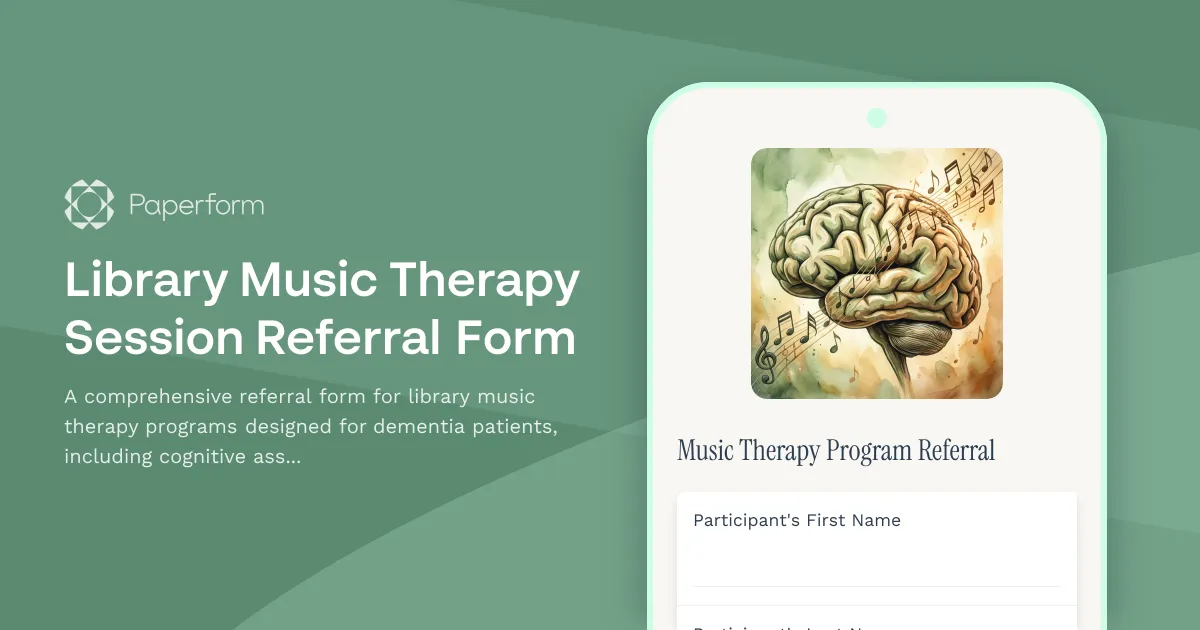
Library Music Therapy Session Referral Form
Library music therapy programs provide valuable non-pharmacological interventions for individuals living with dementia, offering cognitive stimulation, emotional expression, and social connection through the power of music. This Library Music Therapy Session Referral Form template streamlines the referral process for healthcare providers, caregivers, and library staff to connect dementia patients with specialized therapeutic music programming.
Who is this form for?
This template is designed for public libraries, senior centers, memory care facilities, and healthcare providers who offer or coordinate music therapy services for dementia patients. It's particularly valuable for librarians, therapeutic recreation specialists, social workers, and occupational therapists who need to assess participant needs, coordinate with caregivers, and establish meaningful session goals.
Key features of this form
The form captures essential information across several areas:
- Participant and caregiver details with emergency contact information
- Medical history and dementia staging to tailor therapeutic approaches
- Cognitive and functional assessment to establish baseline abilities
- Music preferences and background to personalize sessions
- Caregiver involvement preferences to support family engagement
- Session goals and expectations aligned with therapeutic outcomes
- Consent and authorization for program participation
Why Paperform works perfectly for library programs
With Paperform, libraries can create forms that feel warm, welcoming and accessible—matching the community-centered values of your programming. The doc-style editor lets you add explanatory text, images of your music therapy space, and videos showing what a typical session looks like, helping caregivers feel confident about referring their loved ones.
Conditional logic shows relevant questions based on dementia stage or mobility needs, while calculations can help prioritize referrals based on assessment scores. Submissions automatically populate Google Sheets or Airtable for your program coordinator to review, and you can trigger email confirmations to caregivers with next steps and what to expect.
For libraries managing multiple therapeutic programs, Stepper can automate your intake workflow—sending referrals to the music therapist for review, scheduling initial assessments, adding participants to session rosters, and sending reminder emails before each session. This keeps your small team focused on delivering meaningful experiences rather than administrative coordination.
Built with accessibility in mind and trusted by community organizations worldwide, this template helps libraries extend their mission of connection and lifelong learning to those living with dementia and their caregivers.



More templates like this
Dementia-Friendly Book Group Enrollment Form
Join our inclusive book club designed for individuals living with dementia and their caregivers, featuring simplified texts and meaningful discussions in a supportive environment.
Hospice Care Emotional Competency Self-Evaluation
A comprehensive self-assessment tool for hospice care professionals to evaluate their emotional competencies, grief support skills, family dynamics navigation abilities, and capacity for compassionate presence.
Animal-Assisted Therapy Program Code of Conduct
A comprehensive code of conduct agreement for animal-assisted therapy programs covering handler certification, animal welfare protocols, and participant safety requirements.
Autism Spectrum Support Services Intake Form
A comprehensive intake form for autism spectrum support services that captures sensory profiles, communication preferences, social skills assessments, and behavior patterns to create personalized support plans.
Eating Disorder Treatment Training Application Form
A comprehensive application form for healthcare professionals seeking specialized training in eating disorder treatment, covering approaches, supervision preferences, and certification pathways.
Elder Care Consulting Service Compliance Audit Checklist
A comprehensive compliance audit checklist for elder care consulting services to evaluate client assessment quality, referral tracking, care plan standards, confidentiality protocols, and outcome measurements.
Geriatric Care Assessment Appointment Form
Schedule a comprehensive geriatric care assessment appointment with cognitive screening, fall risk evaluation, medication review, and caregiver support assessment.
Geriatric Medicine Comprehensive Assessment Form
A thorough new patient intake form for geriatric medicine practices covering medical history, fall risk screening, cognitive assessment, medication reconciliation, functional status, and advance care planning.
Home Healthcare Alzheimer's & Dementia Care Specialist Training Acknowledgment
Comprehensive training acknowledgment form for home healthcare professionals completing Alzheimer's and dementia care specialist certification, covering validation techniques, wandering prevention, and memory care coordinator competency verification.
Horticultural Therapy Session Booking Form
Book horticultural therapy sessions with personalized nature connection goals, mobility assessments, and seasonal program matching for therapeutic gardening experiences.
Hospice Missing Patient Report Form
A compassionate and detailed form for reporting missing hospice patients with terminal illness, including DNR status, comfort care requirements, and family notification protocols.
Memory Care Facility Activity & Engagement Platform Deployment Status Report
Track deployment progress of memory care activity platforms with resident engagement metrics, program scheduling updates, family communication status, and quality of life assessments.