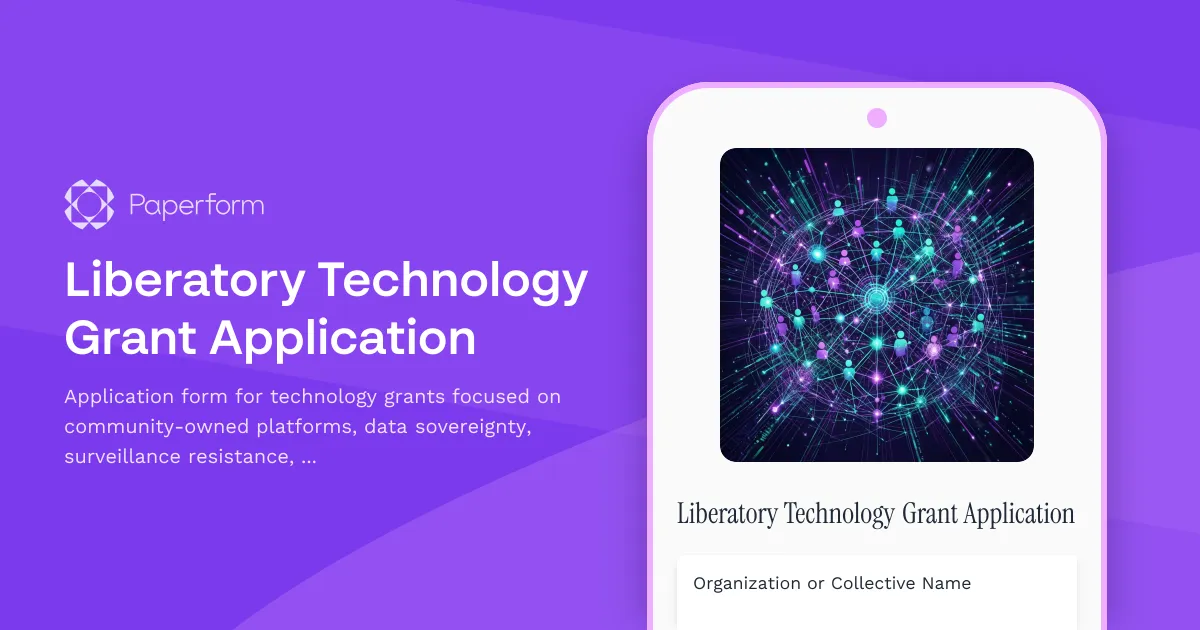
Fund Community-Centered Technology with a Purpose-Built Grant Application
Digital liberation starts with equitable access to technology that serves communities rather than extracting value from them. Whether you're a grassroots collective building community-owned platforms, a nonprofit developing data sovereignty tools, or a cooperative creating surveillance-resistant infrastructure, securing grant funding shouldn't require navigating complicated, inaccessible forms.
This Liberatory Technology Grant Application template is designed specifically for funders supporting projects that prioritize digital commons, community ownership, and technological sovereignty. Built on Paperform, it combines a thoughtful, human-centered application experience with powerful backend automation—letting you focus on evaluating transformative projects rather than wrestling with form logistics.
Why this template works for liberatory tech funding
Traditional grant applications often replicate the same power dynamics that liberatory technology seeks to dismantle. This template takes a different approach, designed with both applicants and reviewers in mind:
Clear, accessible questions guide applicants through articulating their vision, community impact, technical approach, and sustainability plans without requiring jargon or academic language. The form recognizes that the most important innovations often come from communities directly impacted by technological harm.
Conditional logic adapts the form based on project type—whether applicants are building cooperative platforms, data sovereignty tools, surveillance resistance systems, or digital commons infrastructure. This ensures everyone answers relevant questions without wading through irrelevant sections.
File upload fields make it simple to collect supporting materials like project roadmaps, letters of community support, and budget breakdowns, keeping everything organized in one place rather than scattered across email threads.
Built-in calculations can help applicants understand funding tiers and requirements before submitting, reducing back-and-forth and setting clear expectations from the start.
Streamline review and collaboration with automation
Once applications start flowing in, Paperform's integrations and automation capabilities help your team manage the process efficiently:
Connect submissions to Airtable or Google Sheets for collaborative review dashboards where committee members can score applications, leave notes, and track decisions. Use Stepper (stepper.io) workflows to automatically route applications to different reviewers based on focus area, send acknowledgment emails with next steps, and trigger reminders for missing documentation.
For funders working with fiscal sponsors or partner organizations, Papersign (papersign.com) makes it seamless to turn approved applications into grant agreements with embedded eSignatures—no need for separate contract tools or printing and scanning.
Conditional confirmation pages let you show different next steps based on whether an application is complete, needs clarification, or qualifies for an expedited review track.
Designed for the organizations doing this work
This template is ideal for:
- Philanthropic foundations funding digital justice, data sovereignty, and community technology projects
- Nonprofit fiscal sponsors managing grant programs for grassroots tech collectives
- Cooperative networks distributing member funds to community-owned platform development
- Digital rights organizations supporting surveillance resistance and privacy-preserving tools
- Community development finance institutions backing tech projects with measurable social impact
The form balances depth and accessibility—gathering enough information to evaluate technical feasibility, community alignment, and sustainability without creating unnecessary barriers for applicants working with limited capacity.
Why Paperform for grant applications
Unlike rigid survey tools or clunky nonprofit software, Paperform gives you complete control over your application's look, feel, and flow. The doc-style editor means you can write your form like you'd write to a colleague—adding context, explanations, and encouragement inline—then apply your organization's branding with custom fonts, colors, and imagery.
For grant programs committed to accessibility and inclusion, Paperform's design flexibility ensures your form works for everyone: mobile-responsive layouts, screen-reader compatibility, and clear visual hierarchy make the application process more equitable from the start.
SOC 2 Type II compliance and GDPR readiness mean applicant data is protected with enterprise-grade security, while data residency controls let you meet requirements for storing information in specific regions—critical for international funding programs.
As your grant program grows, Paperform scales with you. Add team members with different permission levels, create variations of your application for different funding tracks, and use AI Insights to analyze trends across hundreds of submissions—identifying common challenges, emerging themes, and gaps in your funding focus areas.
Get started in minutes, not months
Rather than building a grant application from scratch or settling for a generic template, you can customize this form to reflect your specific funding priorities, evaluation criteria, and values. Add questions about specific technologies, adjust scoring rubrics, include your own guidance and examples, or integrate directly with your existing grant management tools.
Whether you're launching a new funding initiative or modernizing an existing grant program, this template provides the foundation for a more accessible, efficient, and dignified application process—one that honors the transformative work of communities building technology for liberation.
Trusted by 500K+ teams worldwide and SOC2 Type II compliant, Paperform helps funders and changemakers create grant applications that work as hard as the communities they serve. Combine this template with Stepper for automated application routing and Papersign for seamless grant agreements, and you'll have a complete, no-code grant management stack that puts equity and efficiency first.

More templates like this
Civic Technology Grant Application
Apply for funding to develop civic technology projects focused on open data platforms, resident engagement, language accessibility, and privacy protections.
Democratic Media Grant Application
Apply for grant funding to support democratic media initiatives including community radio, cooperative journalism, media literacy programs, and platform cooperative technology projects.
Digital Equity Grant Application
Apply for funding to bridge the digital divide through affordable internet access, device distribution, digital navigator programs, and online privacy training in underserved communities.
Abolitionist Grant Application Form
A comprehensive grant application form for organizations working toward decarceration, prison abolition, community-based accountability systems, and reinvestment in community resources.
After-School Program Grant Application
Apply for funding to launch or expand an after-school program with comprehensive activity schedules, academic support, STEM enrichment, and student care services.
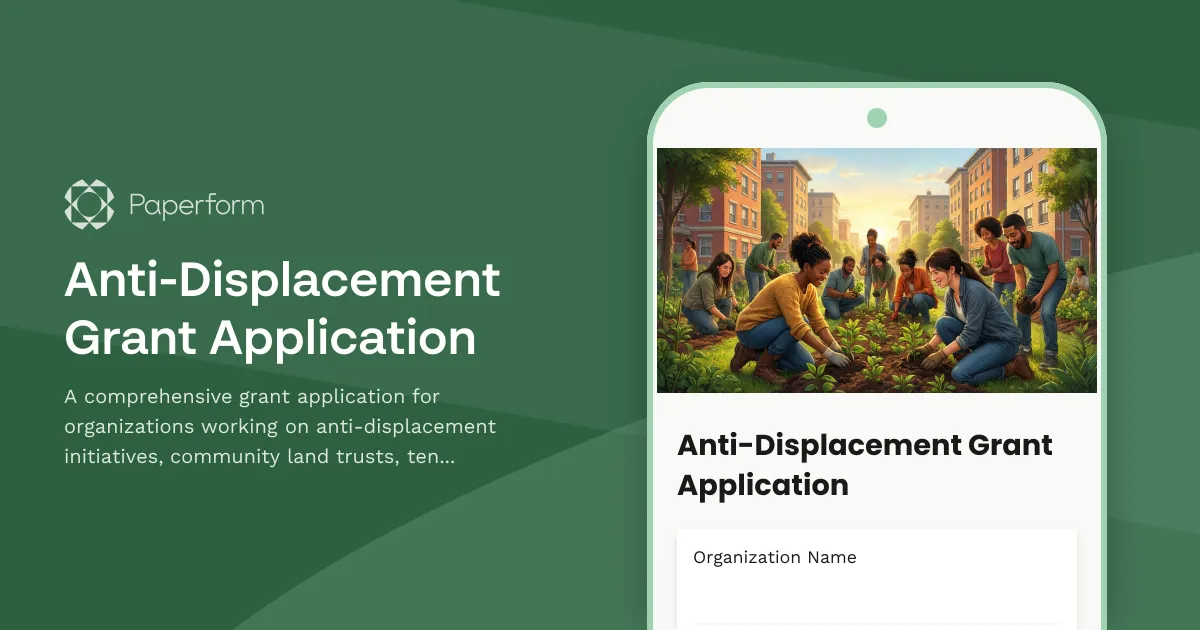
Anti-Displacement Grant Application
A comprehensive grant application for organizations working on anti-displacement initiatives, community land trusts, tenant protections, and affordable housing preservation in communities facing gentrification.
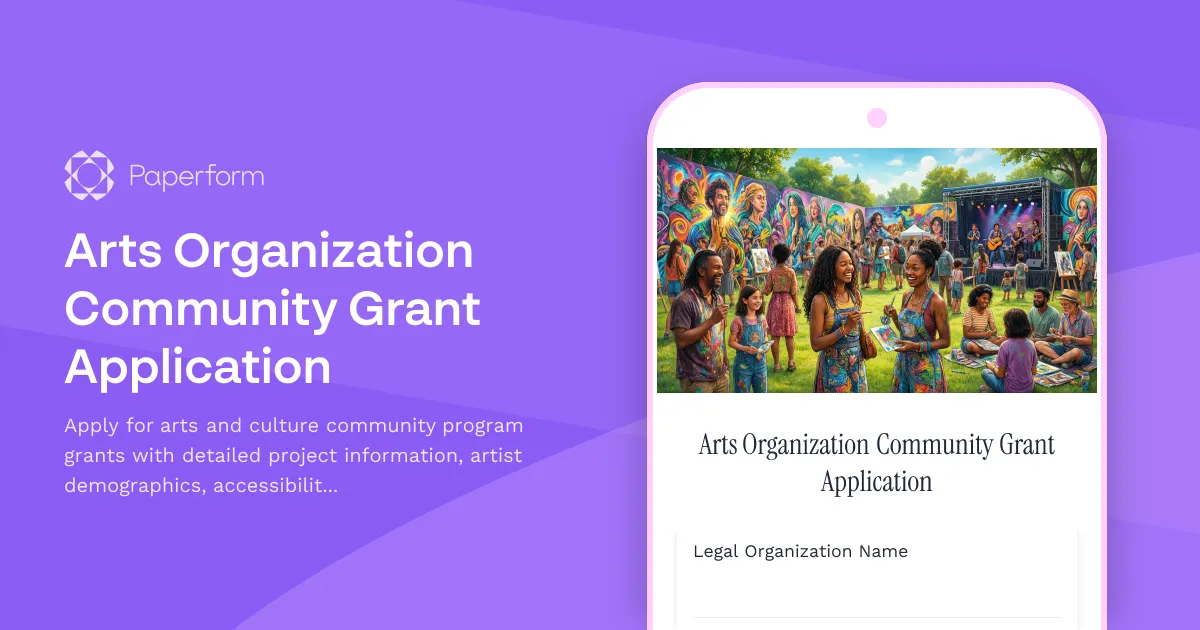
Arts Organization Community Grant Application
Apply for arts and culture community program grants with detailed project information, artist demographics, accessibility plans, work samples, and letters of support.
Assistive Technology Grant Application
A comprehensive application form for individuals and organizations seeking funding for assistive technology devices, including needs assessment, device requests, training plans, and outcome measurement tools.
Cash Transfer Program Grant Application
A comprehensive application form for unconditional cash transfer programs, designed to collect applicant information, verify eligibility criteria, and establish payment preferences for direct financial assistance.
Civic Engagement Grant Application
Apply for funding to support civic engagement initiatives including voter registration, community organizing, civic education, and language access programs in your community.
Climate Adaptation Grant Application
Apply for climate adaptation funding with comprehensive vulnerability assessment, resilience strategies, stakeholder consultation records, and monitoring framework documentation.
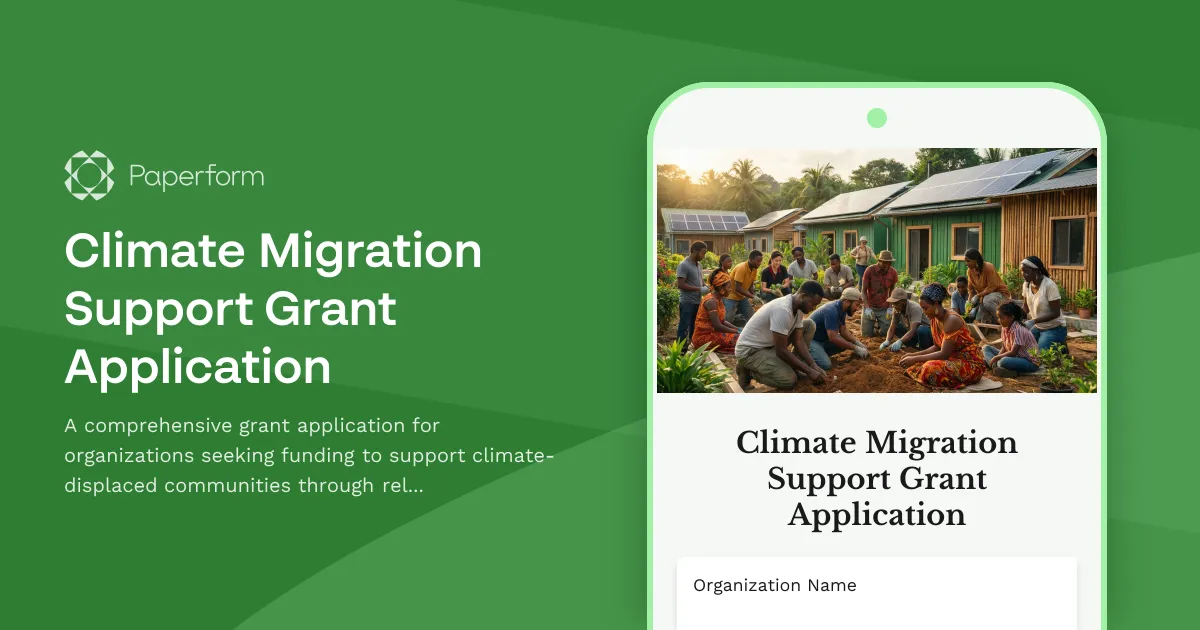
Climate Migration Support Grant Application
A comprehensive grant application for organizations seeking funding to support climate-displaced communities through relocation assistance, cultural preservation, community reception planning, and trauma-informed services.