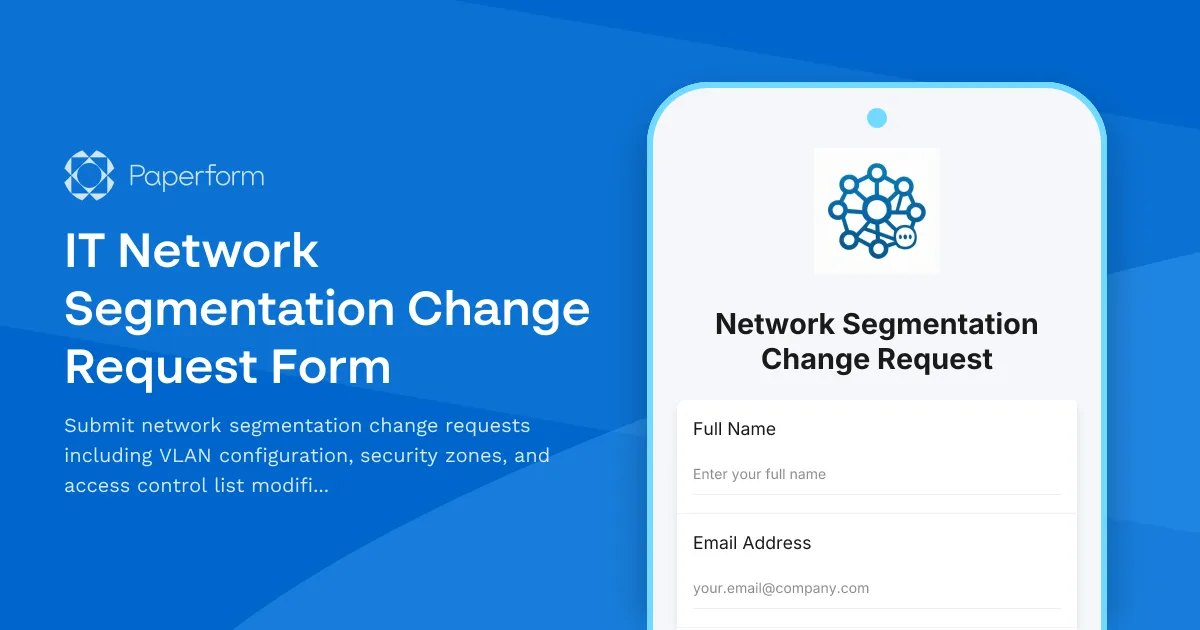
Streamline Network Infrastructure Changes with Paperform
Managing network segmentation changes doesn't have to mean chasing down email threads and struggling with confusing approval processes. This IT Network Segmentation Change Request Form template gives IT teams, network administrators, and security professionals a structured, professional way to submit, review, and approve critical network infrastructure modifications.
Why Network Change Management Matters
Network segmentation is a cornerstone of modern IT security architecture. Whether you're implementing VLAN configurations, defining security zones, or updating access control lists (ACLs), every change needs proper documentation, technical review, and stakeholder approval. Poorly managed network changes can lead to security vulnerabilities, service disruptions, and compliance issues.
This form template creates a clear submission process that captures all the technical details your team needs—from VLAN IDs and IP ranges to firewall rules and rollback plans—while routing requests through the right approval channels.
What This Template Includes
The form is designed to capture comprehensive technical information while remaining accessible to network engineers, security analysts, and IT managers:
- Requester and project information to establish accountability and business context
- Detailed network segmentation specifications including VLAN configuration, subnet design, and security zone classification
- Access control list (ACL) documentation for traffic rules, source/destination definitions, and protocol specifications
- Security and compliance requirements to ensure changes meet organizational standards
- Implementation planning with scheduling, testing procedures, and rollback strategies
- Technical documentation upload for network diagrams, configuration files, and change specifications
- Approval workflow sections to route requests to network, security, and management stakeholders
This structured approach ensures nothing falls through the cracks and provides an audit trail for every network infrastructure change.
Perfect for IT Teams and Network Operations
Whether you're working in a corporate IT department, managing infrastructure for a software company, or supporting network operations for a healthcare or financial services organization, this template adapts to your change management needs:
- Network Administrators can submit detailed VLAN and subnet configuration requests with all technical specifications
- Security Teams can review proposed changes for compliance with security policies and zone segmentation standards
- IT Managers gain visibility into network infrastructure changes and can approve requests based on business impact
- Compliance Officers benefit from comprehensive documentation that supports audit requirements
The form works equally well for new network segment creation, VLAN reconfiguration, security zone modifications, or ACL updates across your infrastructure.
Automate Your Network Change Workflow with Stepper
Once a network change request is submitted through Paperform, you can use Stepper to automate what happens next. Connect your form to your IT service management (ITSM) platform, project management tools, and communication channels to create an end-to-end workflow:
- Automatically create tickets in ServiceNow, Jira Service Management, or your ITSM platform with all technical details
- Route approvals to network leads, security teams, and IT management based on change impact level
- Send notifications via Slack or Microsoft Teams when change requests are submitted, approved, or require additional information
- Update documentation systems like Confluence or Notion with approved network configuration changes
- Schedule implementation by adding approved changes to your change calendar or project management tool
Stepper's AI-native automation means you can describe your workflow in plain language and have it built in minutes—no code required.
Why Paperform for IT Change Management
Traditional change request systems can be rigid, difficult to customize, and frustrating for technical teams to use. Paperform gives you the flexibility to create forms that match your exact network change management process while maintaining a professional, on-brand experience.
The conditional logic engine lets you show or hide fields based on change type—for example, displaying VLAN-specific questions only when VLAN changes are selected, or showing additional security review fields for high-impact changes. Calculation fields can automatically assess risk levels or determine required approval tiers based on the scope of the proposed change.
File upload capabilities let requesters attach network diagrams, configuration files, and technical documentation directly to their submission, keeping everything organized in one place. And with Paperform's integration ecosystem, you can connect your change request process to the rest of your IT operations stack seamlessly.
Built for IT Professionals Who Value Security
IT teams trust Paperform because it's built with security and compliance in mind. SOC 2 Type II compliance, data residency controls, and enterprise-grade security features mean you can confidently use this form for sensitive network infrastructure information. Role-based permissions ensure only authorized team members can access change request data, and the audit trail provides complete visibility into who submitted, reviewed, and approved each change.
For organizations managing multiple environments or operating in regulated industries, Paperform scales to meet your needs without sacrificing the simplicity that makes it powerful.
Get Started in Minutes
This template is ready to use out of the box, or you can customize it to match your organization's specific network architecture, security policies, and approval workflows. Add your branding, adjust field labels to match your terminology, and configure integrations with your existing IT tools.
Whether you're formalizing an ad-hoc change process or replacing a legacy system, this IT Network Segmentation Change Request Form helps your team manage network infrastructure changes with confidence, clarity, and control.

More templates like this
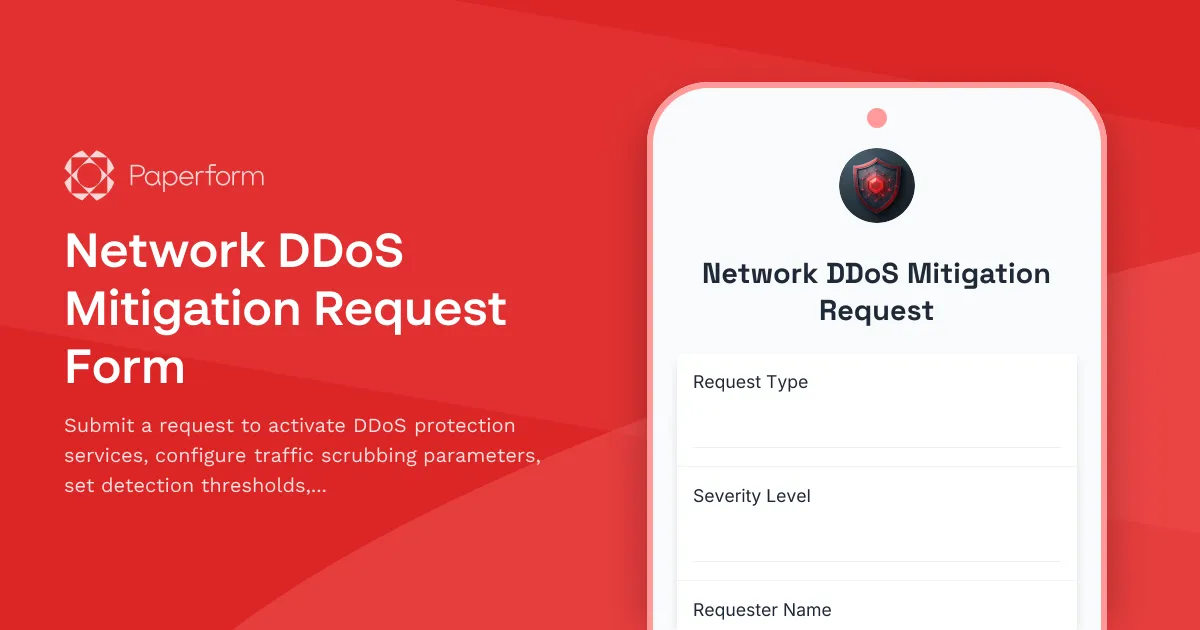
Network DDoS Mitigation Request Form
Submit a request to activate DDoS protection services, configure traffic scrubbing parameters, set detection thresholds, and whitelist legitimate traffic sources for your network infrastructure.
Data Center Server Room Access Request Form
Request secure access to data center server rooms with two-factor authentication setup, equipment authorization, and compliance acknowledgment for IT professionals and technicians.
IT Security Architecture Decision Record (ADR) Change Request
Document security architecture decisions, technical choices, and rationale with structured approval workflows for IT change management and governance.
IT Security Architecture Exception Approval Form
Request and approve security architecture exceptions with technical justifications, alternative approaches, risk assessments, and time-bound permissions for IT change management.
Data Breach Incident Report Form
Document and manage data breach incidents with comprehensive system impact analysis, user assessment, response tracking, and regulatory notification timelines.
IT Attack Surface Management Change Request Form
Comprehensive IT change request form for managing attack surface changes, with asset discovery, exposure assessment, and risk prioritization capabilities.
IT Security Architecture Review Board Submission Form
Submit security architecture proposals to the review board for evaluation, approval, and decision documentation with comprehensive risk assessments and compliance considerations.
IT Security Control Testing Evidence Collection Change Request
Streamline security control testing evidence collection with structured change requests, artifact management, retention policies, and complete audit trails for compliance and governance.
IT Security Incident Response Team Capability Assessment & Change Request
Assess security incident response team capabilities, identify skill gaps, and request training or resource changes to strengthen your organization's security posture.
Privileged Access Management Change Request Form
Streamline privileged access requests with automated approval workflows, audit trails, and time-based access controls for enhanced security compliance.
Quantum-Safe Cryptography Readiness Assessment
Evaluate your organization's preparedness for post-quantum cryptography threats with a comprehensive assessment of current cryptographic algorithms, migration planning, and implementation roadmap.
Security Incident Lessons Learned Report
Comprehensive post-incident analysis form for documenting security incident timelines, decision points, root causes, and process improvements to strengthen future incident response.