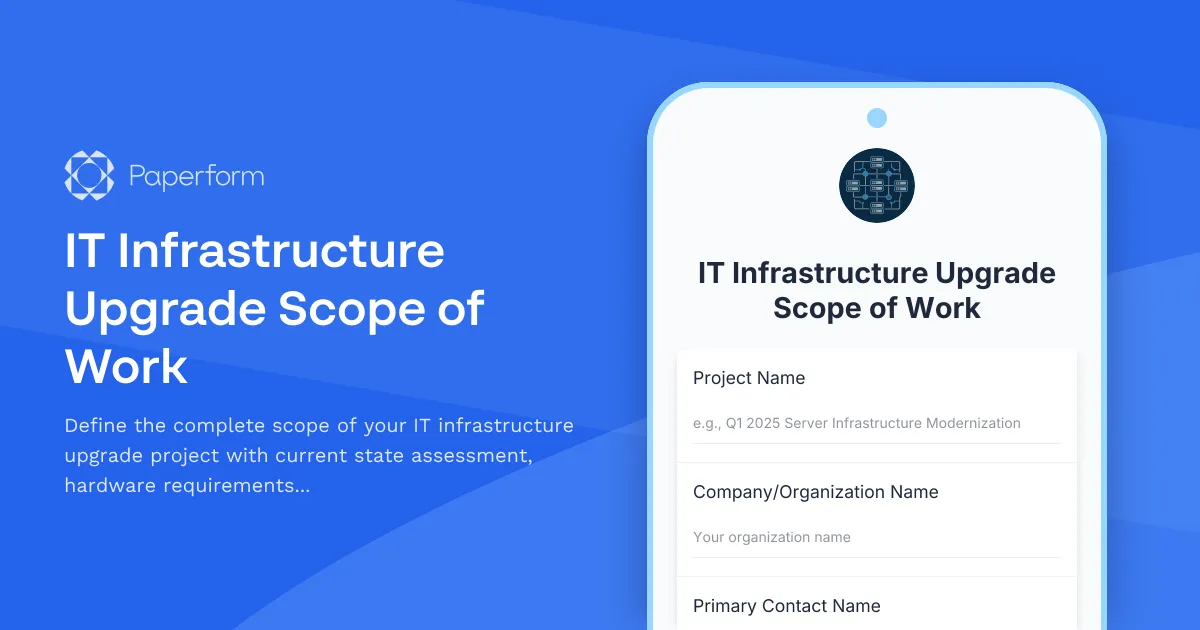
IT Infrastructure Upgrade Scope of Work Template
Planning an IT infrastructure upgrade requires meticulous documentation of current systems, future requirements, and a detailed migration strategy. This IT Infrastructure Upgrade Scope of Work template helps IT professionals, MSPs, and technology consultants create comprehensive project scopes that align stakeholders, manage expectations, and ensure smooth implementations.
Why use Paperform for IT project scopes?
Traditional SOW documents live in static PDFs that are hard to update and impossible to track. With Paperform, your scope of work becomes an interactive, branded experience that captures all the technical details you need—from current state assessments to hardware specifications and training requirements—while automatically routing information to your project management tools.
The conditional logic built into this template means you only ask relevant questions based on the project type, ensuring stakeholders aren't overwhelmed while still capturing critical technical details. Whether you're planning server upgrades, network refreshes, or complete infrastructure overhauls, this template adapts to your specific needs.
Automate your IT project workflows with Stepper
Once you've captured your scope of work, use Stepper to turn each submission into a complete project workflow. Automatically create project tickets in your PSA tool, notify technical teams, generate proposal documents, schedule kickoff meetings, and keep stakeholders updated throughout the implementation—all without manual handoffs.
For IT service providers and consultants managing multiple clients, Paperform's Agency+ plan lets you create branded scope forms for each client while maintaining centralized control over templates and submissions. Combined with SOC 2 Type II compliance and enterprise-grade security, you can confidently handle sensitive infrastructure documentation for clients across industries.
Start documenting your IT infrastructure upgrades with clarity and confidence using Paperform's flexible, secure platform.
More templates like this
Agile Transformation Stakeholder Interview
Gather critical insights from development teams, product owners, and executives about current process pain points, collaboration challenges, and requirements for a successful agile transformation.
Cloud Migration Project Brief
A comprehensive project brief template for planning cloud migration initiatives, covering application inventory, compliance requirements, security protocols, and migration planning.
Cybersecurity Implementation Scope of Work Form
Define project scope, assess risks, and establish security controls for cybersecurity implementation projects. Includes training plans, incident response protocols, and monitoring requirements.
API Development Project Brief
A comprehensive project brief template for planning API development projects, covering endpoint specifications, authentication, rate limiting, documentation standards, and versioning strategies.
Blockchain Development Project Continuity Form
Manage blockchain project continuity during disruptions with smart contract timeline adjustments, security audit coordination, and milestone tracking.
Cloud Infrastructure Modernization Progress Tracker
Track cloud migration progress, security hardening, disaster recovery implementation, and cost optimization initiatives with comprehensive weekly status reporting.
CMS Migration Stakeholder Interview Form
Gather comprehensive stakeholder feedback on CMS migration requirements, workflow needs, integration priorities, and training expectations from marketing, IT, content, and executive teams.
Cybersecurity Incident Post-Mortem Report
Conduct thorough post-incident analysis with attack vector documentation, response timeline tracking, and security gap identification to strengthen your organization's cybersecurity posture.
E-commerce Platform Migration Project Brief
A comprehensive project brief template for businesses planning an e-commerce platform migration, capturing current platform limitations, catalog size, data requirements, and integration needs.
Legacy System Modernization Project Kickoff Form
Comprehensive project brief template for legacy system modernization initiatives, capturing technical debt assessment, business process analysis, technology evaluation, implementation planning, and change management requirements.
Municipal Permitting System Modernization Milestone Report
Track progress on your municipal permitting system modernization project with this comprehensive milestone report template designed for government technology initiatives.
Software Implementation Kickoff Cancellation Request
Request to cancel, postpone, or reschedule a software implementation project kickoff with coordination for go-live dates, training schedules, data migration, and legacy system decommissioning.