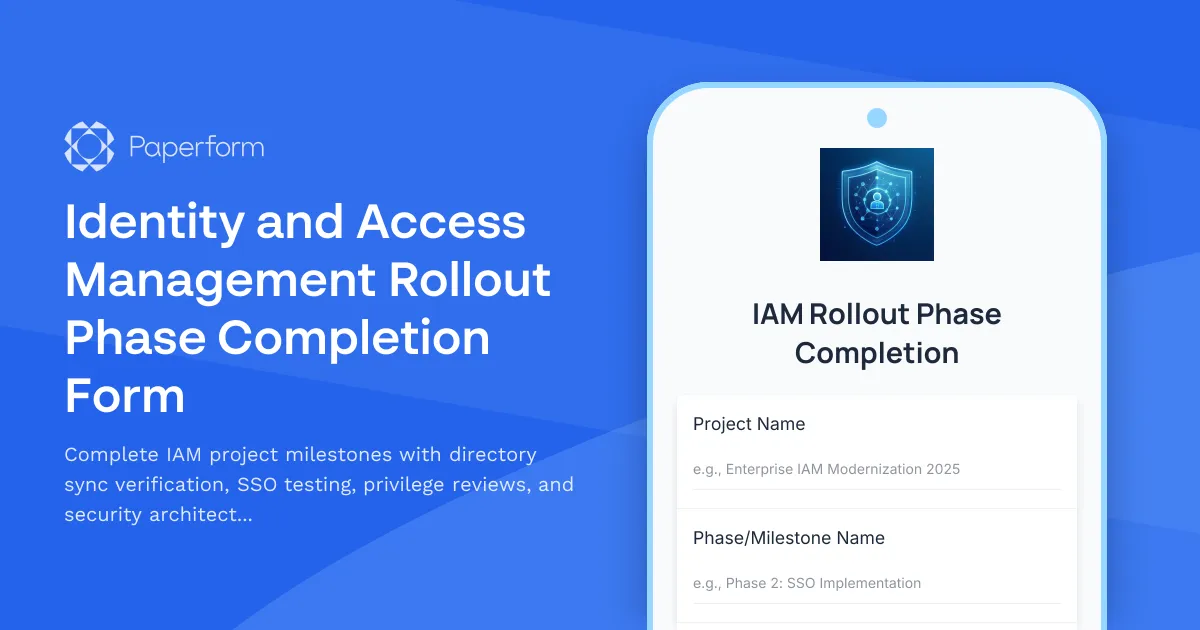
Rolling out a comprehensive Identity and Access Management (IAM) system requires rigorous phase-by-phase validation to ensure secure, compliant deployment. This IAM Rollout Phase Completion Form provides IT teams, security architects, and project managers with a structured approval process covering directory synchronization verification, single sign-on testing, privilege review completion, and final security sign-off.
Whether you're implementing Azure AD, Okta, OneLogin, or another enterprise IAM solution, this form ensures every critical milestone is documented, tested, and approved before moving forward. Capture detailed verification results, test outcomes, security reviews, and stakeholder approvals in one centralized workflow.
Paperform makes it easy to customize conditional logic for different deployment phases, calculate compliance scores, and automatically route approvals to security architects and project stakeholders. Connect your form to project management tools like Jira, Asana, or Monday.com, sync data to documentation repositories in Confluence or Notion, and trigger Stepper workflows to notify teams, create audit logs, and kick off the next deployment phase.
With SOC 2 Type II compliance, role-based permissions, and secure data handling, Paperform gives enterprise IT and security teams the controls they need for sensitive infrastructure rollouts. Use this template to maintain visibility, ensure accountability, and deliver IAM deployments that meet your organization's security standards from day one.
More templates like this
Cybersecurity Incident Post-Mortem Report
Conduct thorough post-incident analysis with attack vector documentation, response timeline tracking, and security gap identification to strengthen your organization's cybersecurity posture.
IT Secure Software Development Lifecycle Change Request Form
Comprehensive SDLC change request form with built-in security gates, testing requirements, and release criteria for secure software deployments.

Blockchain Integration Project Milestone Sign-Off Form
A comprehensive milestone approval form for blockchain integration projects that captures smart contract audits, node deployment verification, security testing results, and architect sign-off.
Business Continuity Planning Software Request Form
Streamline business continuity software requests with impact analysis, recovery procedures, emergency contacts, and testing schedules to ensure organizational resilience.
Cloud Migration Project Brief
A comprehensive project brief template for planning cloud migration initiatives, covering application inventory, compliance requirements, security protocols, and migration planning.
Corporate Identity and Access Management Implementation Milestone Report
A comprehensive IAM implementation milestone report for tracking directory integration, application SSO, MFA deployment, and security policy enforcement progress across enterprise identity management projects.
Cybersecurity Transformation Stakeholder Briefing
Comprehensive cybersecurity update form for executives and stakeholders covering vulnerability remediation, incident metrics, compliance gaps, and budget requirements.
Data Center Migration Progress Report
Track and report on data center migration progress including server inventory, application migration status, network reconfiguration, and disaster recovery testing with this comprehensive weekly update form.
Disaster Recovery Site Setup Request Form
Request form for disaster recovery infrastructure setup with RTO/RPO requirements, replication methods, failover testing schedules, and runbook documentation for business continuity planning.
Disaster Recovery Test Request Form
Request and plan disaster recovery tests with recovery scenarios, RTO/RPO validation, participant coordination, and comprehensive post-test documentation requirements.
Enterprise Master Data Management Stakeholder Update
A comprehensive form for communicating master data management progress, data quality improvements, golden record creation, stewardship activities, and system integration updates to enterprise stakeholders.
Infrastructure Emerging Technology Evaluation Form
Evaluate new infrastructure technologies with structured use case analysis, pilot planning, success metrics, and production readiness assessments.