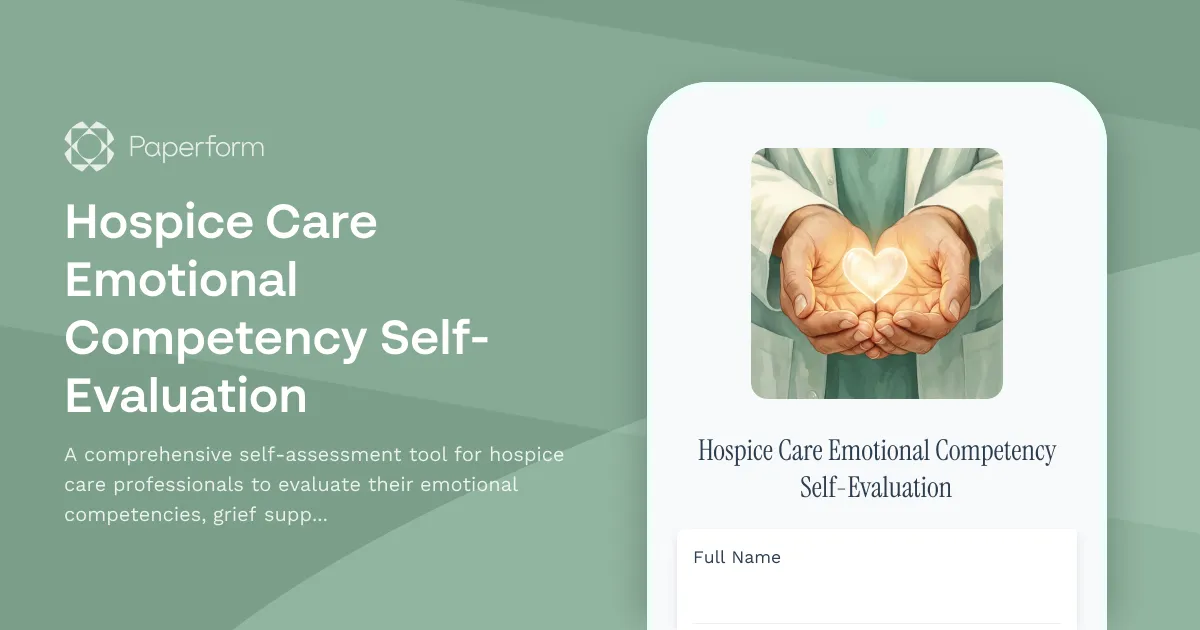
Hospice Care Emotional Competency Self-Evaluation
Working in hospice and palliative care requires exceptional emotional intelligence, resilience, and interpersonal skills. This Hospice Care Emotional Competency Self-Evaluation template helps healthcare professionals, chaplains, social workers, and caregivers assess their readiness and capacity to provide compassionate end-of-life care.
Who This Template Is For
This self-assessment is designed for hospice nurses, palliative care physicians, social workers, chaplains, bereavement counselors, nursing assistants, and anyone working directly with terminally ill patients and their families. It's also valuable for healthcare organizations conducting competency reviews, continuing education programs, and professional development initiatives.
What This Template Includes
The evaluation covers four critical dimensions of hospice care competency:
- Grief Support Skills: Your ability to recognize different grief responses, provide appropriate emotional support, and guide families through anticipatory grief and bereavement
- Family System Navigation: Skills in understanding family dynamics, managing difficult conversations, mediating conflicts, and supporting caregivers
- Compassionate Presence: Your capacity to be fully present with suffering, maintain appropriate boundaries, and offer comfort without fixing
- Emotional Resilience & Self-Care: Your strategies for preventing burnout, processing vicarious trauma, and sustaining your own wellbeing
Why Use Paperform for Hospice Self-Assessments
Paperform makes it easy to create professional, confidential self-evaluation forms that feel supportive rather than clinical. With conditional logic, you can tailor follow-up questions based on responses, helping professionals identify specific areas for growth. The AI Insights feature can help managers and training coordinators spot patterns across multiple team members' submissions, identifying common training needs or support gaps.
After submission, you can use Stepper (stepper.io) to automatically route results to supervisors for review, trigger personalized professional development plans, or schedule follow-up coaching sessions—creating a complete competency development workflow.
Whether you're conducting annual reviews, preparing for certification, onboarding new team members, or simply checking in on your own emotional capacity, this template provides a structured, compassionate framework for self-reflection and growth in one of healthcare's most emotionally demanding specialties.
More templates like this
Mental Health Self-Assessment Form
A confidential mental health screening tool featuring the PHQ-9 depression scale and GAD-7 anxiety assessment, with personalized resource recommendations based on your responses.
Workplace Compassion Fatigue Accommodation Request Form
A confidential form for healthcare workers experiencing compassion fatigue, secondary traumatic stress, or burnout to request workplace accommodations and mental health support.
Addiction Treatment Center Patient Safety Incident Report
A comprehensive safety incident reporting form for addiction treatment facilities to document medication errors, elopement risks, patient safety concerns, and ensure proper state licensing notifications and regulatory compliance.
Addiction Treatment Program Admission Approval Form
Streamline admission requests for addiction treatment programs with clinical assessment, insurance verification, bed availability checks, and clinical director authorization in one comprehensive form.
Behavioral Health Crisis Intervention NDA & Confidentiality Agreement
A comprehensive non-disclosure agreement for behavioral health crisis intervention teams, protecting patient episode confidentiality, treatment plans, and insurance authorization information.
Collaborative Care Model Enrollment Form
A comprehensive enrollment form for integrated behavioral health programs combining primary care, psychiatric consultation, and care management services into a unified treatment approach.
Horticultural Therapy Session Booking Form
Book horticultural therapy sessions with personalized nature connection goals, mobility assessments, and seasonal program matching for therapeutic gardening experiences.
Hospice Missing Patient Report Form
A compassionate and detailed form for reporting missing hospice patients with terminal illness, including DNR status, comfort care requirements, and family notification protocols.
Integrated Behavioral Health Screening & Coordination Form
A comprehensive behavioral health screening form for primary care settings, enabling warm handoffs to mental health specialists and coordinated treatment planning between providers.
Maternal Mental Health Screening Form
A comprehensive maternal mental health screening tool featuring the Edinburgh Postnatal Depression Scale (EPDS), infant bonding assessment, and breastfeeding support evaluation for new mothers.
Mental Health Crisis Response Records Request Form
A comprehensive form for requesting mental health crisis records to support coordinated care. Includes previous hospitalizations, medication history, treatment team details, and authorization for release of protected health information.
Palliative Care Medication Consultation Form
A comprehensive pharmacist consultation form for palliative care patients to assess medication effectiveness, manage drug interactions, provide family education, and optimize comfort at end of life.