Streamline Population Health Referrals with Smart Risk Assessment
Managing patient referrals while identifying care gaps and stratifying risk levels is critical for modern healthcare systems transitioning from retail health to comprehensive population health management. This Healthcare Population Health Analytics Referral Form template gives providers, care coordinators, and health systems a structured way to capture essential patient information, assess risk factors, identify care gaps, and recommend data-driven interventions—all in one streamlined digital form.
Built specifically for healthcare providers, population health managers, care coordinators, and medical practices implementing value-based care models, this template replaces fragmented referral processes with a unified approach that supports predictive modeling and intervention targeting.
Capture comprehensive patient data for better outcomes
This form guides referring providers through capturing demographic information, clinical history, current diagnoses, medication lists, social determinants of health, and recent utilization patterns. By systematically collecting this information upfront, receiving specialists and care teams can immediately assess patient complexity, identify gaps in preventive care, and prioritize interventions based on risk stratification.
The template includes conditional logic to reveal relevant follow-up questions based on chronic conditions, ensuring you capture the depth of clinical context needed for accurate risk assessment without overwhelming providers with unnecessary fields.
Risk stratification and care gap identification
Healthcare organizations using this template can implement standardized risk scoring methodologies by collecting key indicators including chronic disease burden, recent hospitalizations, ER utilization, medication adherence challenges, and social barriers to care. The structured format supports both manual clinical judgment and integration with predictive analytics platforms.
Care gap identification sections prompt referring providers to flag missing preventive services, overdue screenings, medication management issues, and follow-up appointments that haven't occurred—creating immediate visibility into opportunities for intervention and care coordination.
Designed for population health workflows
Whether you're managing ACO populations, implementing chronic care management programs, coordinating transitions of care, or running high-risk patient interventions, this form template provides the foundation for data-driven care coordination. The structured submission data integrates seamlessly with care management platforms, EHR systems, and population health analytics tools.
Automate referral workflows with Stepper
Connect this referral form to Stepper to automatically route referrals based on risk level, trigger care coordinator assignments for high-risk patients, create follow-up tasks in your project management system, update patient records in your EHR or CRM, and send customized care plans to patients and providers. Stepper's AI-native workflow automation ensures no referral falls through the cracks and high-risk patients receive immediate attention.
Secure, compliant, and ready to deploy
Built on Paperform's SOC 2 Type II compliant platform, this template supports secure patient data collection with the professional appearance and conditional logic healthcare organizations need. Customize the risk assessment criteria, care gap categories, and intervention options to match your organization's protocols, then embed the form in your patient portal, provider website, or care coordination platform.
Start transforming your referral process from simple handoffs to strategic, data-informed care coordination that improves outcomes and supports your population health objectives.



More templates like this
Care Coordination to Super-Utilizer Intervention Referral Form
A comprehensive referral form for care coordination teams to refer high-cost, frequent hospital users with complex medical and social needs to specialized super-utilizer intervention programs for intensive care management.
Primary Care to Cultural Competency Health Center Referral Form
A comprehensive referral form designed to facilitate seamless care transitions from primary care to culturally competent health centers, capturing language needs, health beliefs, traditional practices, and cultural preferences.
Primary Care to Palliative Care Referral Form
Comprehensive referral form for primary care providers to connect patients with palliative care services, including diagnosis details, symptom assessment, advance directives, and quality of life goals.
Primary Care to Whole Health Referral Form for Veterans
A comprehensive veteran-centric referral form that connects primary care providers to whole health services, integrating complementary and integrative health approaches with personal health inventory assessments.
Clinical Research Coordinator to Principal Investigator Referral Form
A comprehensive referral form for clinical research coordinators to refer potential participants to principal investigators, including trial screening, inclusion criteria verification, and protocol enrollment details.
Community Paramedicine Frequent User Intervention Referral Form
A comprehensive referral form for emergency services to connect frequent EMS users with community paramedicine programs, addressing root causes and reducing emergency healthcare costs through alternative care pathways.
Community Paramedicine Home Monitoring Referral Form
A comprehensive referral form for community paramedicine programs to connect patients with chronic disease home monitoring, medication management, telehealth setup, and mobile integrated healthcare services.
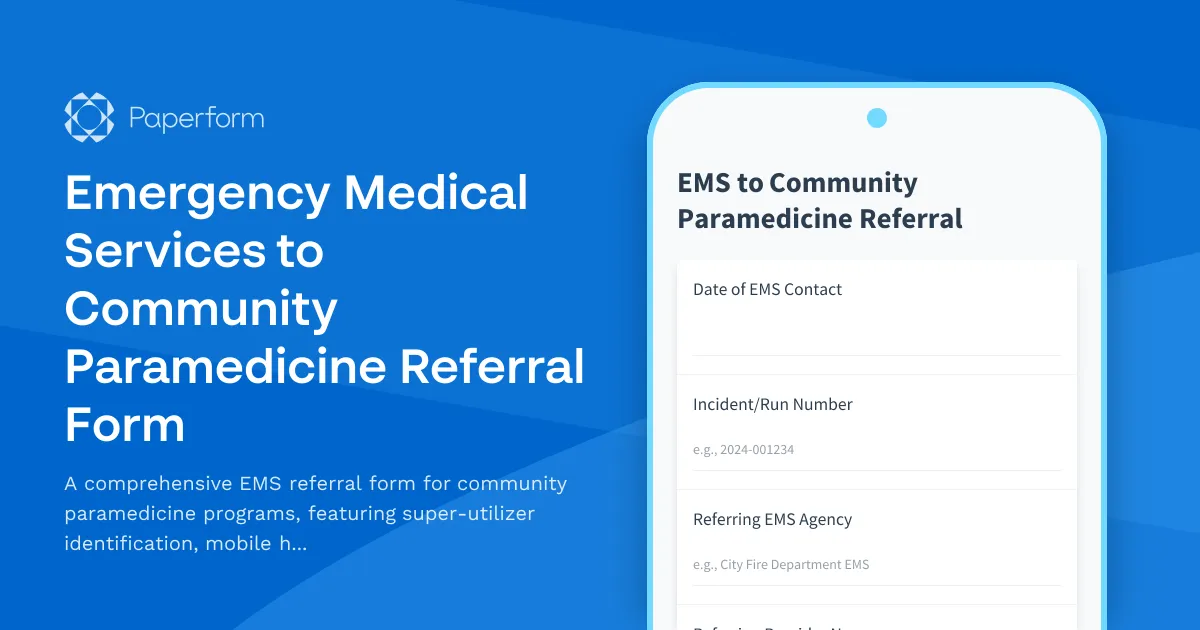
Emergency Medical Services to Community Paramedicine Referral Form
A comprehensive EMS referral form for community paramedicine programs, featuring super-utilizer identification, mobile health services coordination, alternative destination transport options, and emergency department diversion pathways.
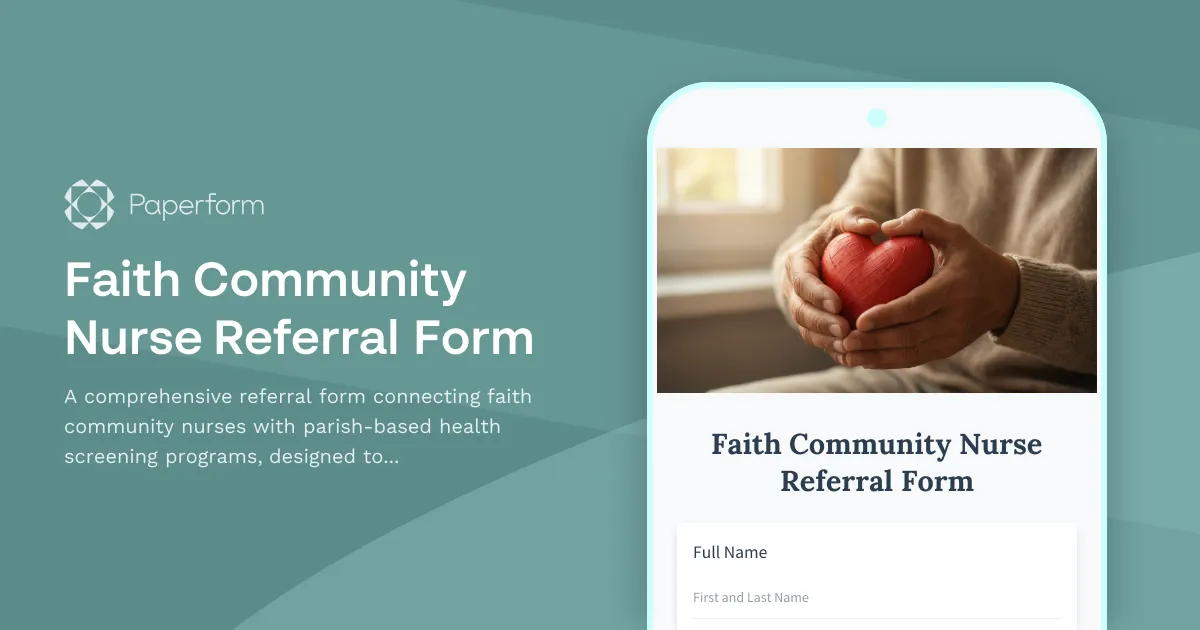
Faith Community Nurse Referral Form
A comprehensive referral form connecting faith community nurses with parish-based health screening programs, designed to support congregation wellness through integrated spiritual and physical care.
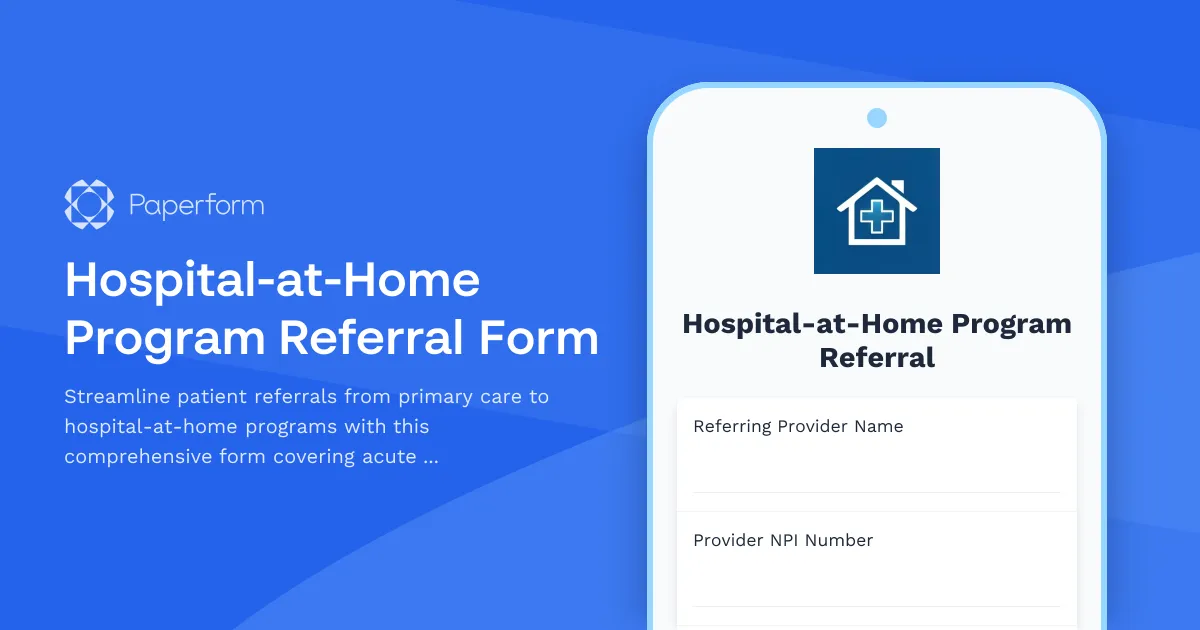
Hospital-at-Home Program Referral Form
Streamline patient referrals from primary care to hospital-at-home programs with this comprehensive form covering acute care eligibility, remote monitoring setup, and mobile nursing coordination.
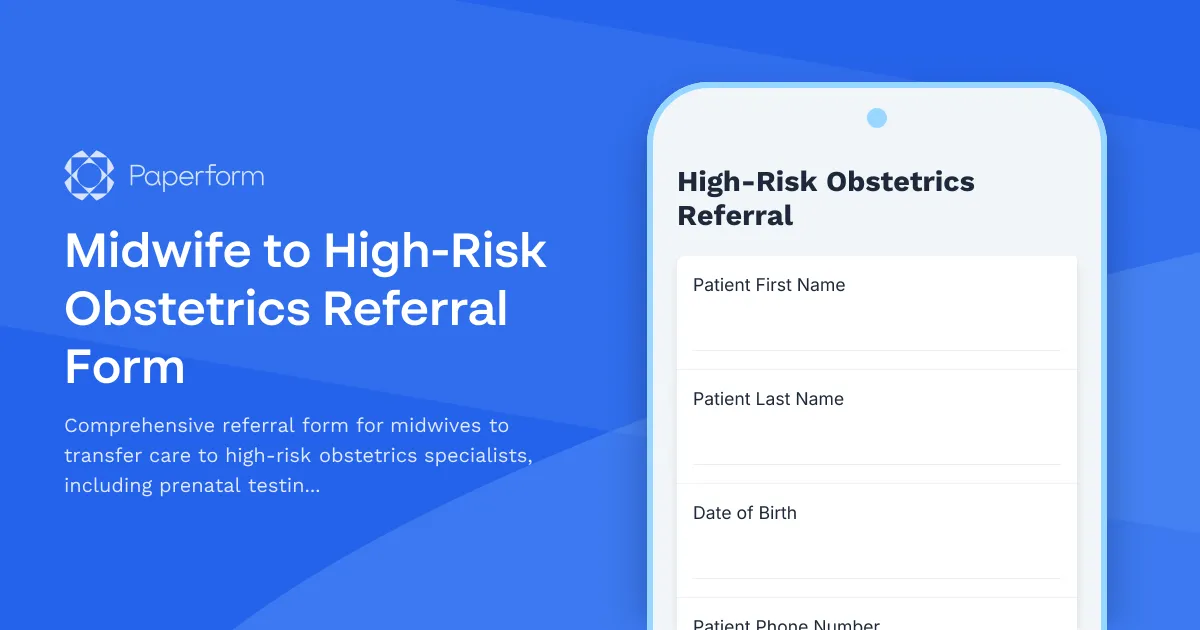
Midwife to High-Risk Obstetrics Referral Form
Comprehensive referral form for midwives to transfer care to high-risk obstetrics specialists, including prenatal testing, maternal health conditions, and delivery planning details.
Physical Therapy Referral Form
A comprehensive referral form for physicians to submit patient physical therapy referrals, including diagnosis codes, treatment authorization details, and scheduling preferences.