Managing excavation safety requires daily vigilance and proper documentation to protect workers and maintain OSHA compliance. This Excavation Competent Person Designation & Daily Inspection Log provides construction companies, site supervisors, and safety managers with a structured digital form to designate qualified competent persons and conduct thorough daily inspections of excavation sites.
Excavation and trenching work is among the most hazardous construction operations, with cave-ins posing serious risks to workers. OSHA Standard 1926.650 requires that a competent person conduct daily inspections before work begins and throughout the shift as conditions change. This template helps you maintain proper records of trench box installations, protective systems, ladder placements, spoil pile distances, atmospheric conditions, and access/egress points.
Why Paperform for excavation safety compliance?
Construction teams need inspection forms that work in the field—not buried in filing cabinets. With Paperform, your competent person can complete inspections on mobile devices directly at the job site, capturing photos of conditions, recording measurements, and flagging hazards in real-time. Conditional logic ensures inspectors address all relevant safety elements based on excavation depth and protection systems in use.
Use Stepper (stepper.io) to automatically route failed inspections or identified hazards to safety managers for immediate review, trigger corrective action workflows, and create daily safety briefing summaries for your crew. Connect your form to project management tools, safety management systems, or Google Sheets to maintain comprehensive audit trails that demonstrate your commitment to worker protection during OSHA inspections or incident investigations.
Whether you're a general contractor, excavation specialist, utility contractor, or civil construction firm, this template helps you standardize your excavation safety program, empower your competent persons with clear inspection protocols, and protect your most valuable asset—your people.



More templates like this

Blasting and Explosives Safety Inspection Form
Comprehensive safety inspection form for blasting operations, explosives storage, and blast site compliance. Covers magazine security, lightning protection, blast area clearance, and regulatory compliance requirements.
Compressed Gas Cylinder Storage Inspection Form
A comprehensive safety inspection checklist for compressed gas cylinder storage, covering segregation requirements, securing methods, ventilation adequacy, and regulatory compliance for workplace safety.
Construction Site Lighting Adequacy Inspection Form
A professional inspection form for assessing construction site lighting levels, emergency systems, and placement compliance to ensure worker safety and regulatory standards.

Crane Lift Plan and Safety Inspection Form
A comprehensive crane lift plan and safety inspection form for construction sites. Includes load calculations, rigging inspection checklists, exclusion zone documentation, and safety compliance verification for crane operations.

Dust Suppression System Inspection Form
A comprehensive safety inspection form for evaluating dust suppression systems, water spray functionality, coverage adequacy, and runoff collection compliance on construction sites.

Electrical Temporary Lighting and Power Cord Inspection Form
Comprehensive inspection form for temporary electrical installations including lighting, power cords, strain relief, gauge verification, and overload protection assessment. Ensure job site electrical safety compliance.
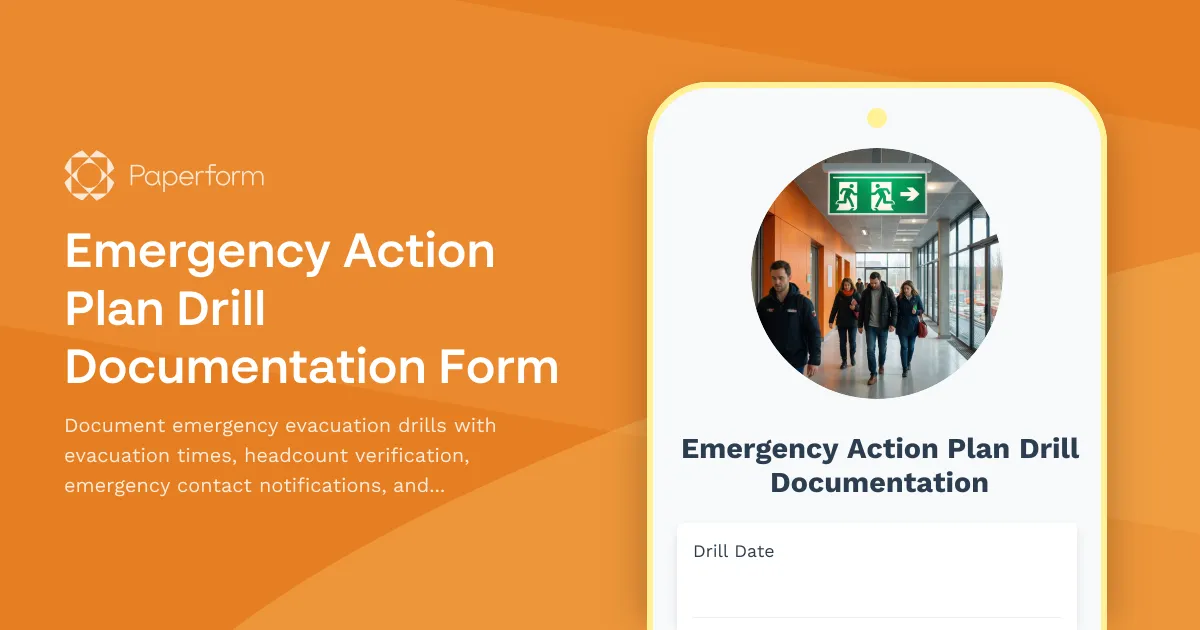
Emergency Action Plan Drill Documentation Form
Document emergency evacuation drills with evacuation times, headcount verification, emergency contact notifications, and areas for improvement to ensure workplace safety compliance.
Excavator and Backhoe Daily Safety Inspection Form
Comprehensive daily safety inspection checklist for excavators and backhoes, covering bucket pin security, hydraulic systems, visibility checks, and essential safety compliance requirements.

Hand and Power Tool Inspection Form
Comprehensive tool safety inspection form for evaluating hand and power tools, including guard functionality, cord integrity, grounding verification, and storage compliance.

Housekeeping and Waste Management Inspection Form
A comprehensive construction site housekeeping and waste management inspection form with debris removal tracking, material segregation verification, and dumpster placement safety checks.

Material Handling and Storage Area Inspection Form
A comprehensive inspection form for evaluating material handling and storage areas, including weight limits, stacking stability, and aisle clearance verification to ensure workplace safety compliance.

Material Handling Equipment Installation Form
A comprehensive installation form for material handling equipment that covers floor load verification, anchor placement, electrical requirements, safety features, and operator training documentation.