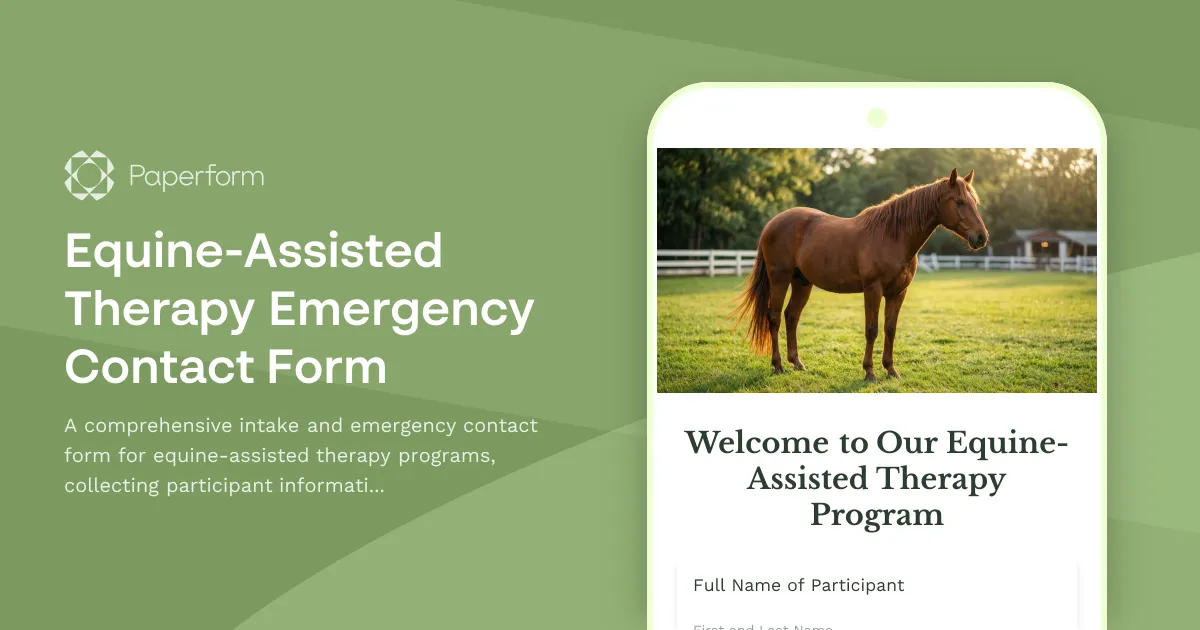
Equine-Assisted Therapy Emergency Contact Form Template
Equine-assisted therapy programs require detailed participant information to ensure safety, match appropriate horses with clients, and design effective therapeutic interventions. This Equine-Assisted Therapy Emergency Contact Form helps mental health professionals, therapeutic riding centers, and wellness facilities collect critical intake data—from emergency contacts and medical conditions to riding experience and emotional regulation goals.
Why This Form Matters for Equine Therapy Programs
Running a safe and effective equine-assisted therapy program means knowing your participants inside and out. You need to understand their physical health, emotional needs, comfort level around horses, and who to contact in an emergency. Traditional paper intake packets often get lost, filled out incompletely, or buried in filing cabinets when you need them most.
This Paperform template streamlines the entire intake process into one professional, mobile-friendly form that participants can complete before their first session. Conditional logic shows relevant questions based on previous answers, automated email confirmations keep everyone informed, and all responses flow into your practice management system or CRM automatically.
Who This Template Is For
This form is designed for:
- Therapists and counselors offering equine-assisted psychotherapy (EAP) or equine-facilitated learning
- Therapeutic riding centers providing mental health and wellness programs
- Equine therapy programs at treatment centers, hospitals, and wellness facilities
- Mental health professionals incorporating animal-assisted interventions
- Coaches and facilitators running equine-guided leadership and personal development programs
- Nonprofit organizations offering equine therapy for veterans, at-risk youth, or trauma survivors
Whether you're a solo practitioner or managing a team at a larger facility, this template helps you collect consistent, complete information from every participant while maintaining HIPAA-friendly practices through secure data handling.
What This Form Collects
The template is thoughtfully organized to gather:
Participant Information: Full name, date of birth, contact details, and guardian information for minors
Emergency Contact Details: Multiple emergency contacts with phone numbers and relationships—critical when working with horses and outdoor environments
Medical & Health Screening: Current medications, allergies (especially horse and hay allergies), physical limitations, and conditions that might affect participation
Horse Experience & Comfort Level: Previous riding experience, comfort around large animals, and any fears or concerns about horses
Mental Health & Therapeutic Goals: Current emotional challenges, therapy objectives, emotional regulation goals, and what participants hope to gain from equine-assisted therapy
Safety & Consent: Acknowledgment of risks, emergency medical authorization, and photo release for program documentation
How Paperform Elevates Your Equine Therapy Intake
Unlike static PDFs or generic form builders, Paperform gives you a professional, on-brand intake experience that:
- Adapts as participants respond: Conditional logic reveals follow-up questions only when relevant (e.g., asking about specific allergies only if they indicate an allergy concern)
- Works beautifully on any device: Families can complete the form on their phone while their child is getting ready for the first session
- Saves time with calculations: Automatically calculate age from date of birth or tally risk assessment scores
- Syncs with your existing tools: Send intake data directly to Google Sheets, Airtable, your CRM, or practice management software
- Maintains confidentiality: SOC 2 Type II compliance and secure data handling protect sensitive health information
- Creates a better first impression: A polished, easy-to-complete form reflects the quality and professionalism of your program
Automate Follow-Up with Stepper
Once someone submits their intake form, the real work begins—and that's where Stepper comes in. This AI-native workflow builder lets you automate everything that happens after "Submit":
- Send a personalized welcome email with program details, directions to the facility, and what to bring
- Create a client record in your practice management system with all intake details
- Notify your equine therapy team about the new participant and flag any special considerations (allergies, fears, mobility concerns)
- Schedule a pre-program consultation call or orientation session
- Trigger different onboarding sequences based on experience level or therapeutic goals
- Add the participant to your email newsletter or program updates list
Stepper connects Paperform to thousands of apps without code, so your intake process runs smoothly from first contact through ongoing care.
Customize for Your Unique Program
Every equine therapy program is different. Use Paperform's intuitive editor to:
- Add your facility's logo, brand colors, and background imagery of your horses and grounds
- Include video introductions to your therapy horses or facility tour
- Adjust questions to match your specific therapeutic approach (PATH-certified programs, EAGALA model, or custom frameworks)
- Add payment fields if you're collecting session fees or program deposits
- Include additional assessments or screening tools specific to your population
- Embed the form on your website or send it via custom link
The form works like editing a document—just click, type, and format exactly how you want it.
Built for Mental Health and Wellness Professionals
Whether you're a licensed therapist, certified therapeutic riding instructor, or wellness coach, this template helps you gather the critical information you need while creating a welcoming, professional first touchpoint with clients and their families.
Paperform is trusted by over 500,000 teams worldwide and is SOC 2 Type II compliant, ensuring your participant data is handled securely. While Paperform is not HIPAA compliant, it offers the security features and data controls that mental health professionals need for safe, confidential intake processes.
Get Started in Minutes
Start with this template, customize it for your program, and begin collecting complete, organized intake information from every participant. With Paperform, you'll spend less time chasing missing forms and more time doing the transformative work that equine-assisted therapy makes possible.



More templates like this
Horticulture Therapy Program Emergency Contact Form
A comprehensive emergency contact form for horticulture therapy programs that captures participant information, plant allergies, outdoor tolerance levels, gardening experience, and therapeutic goals.
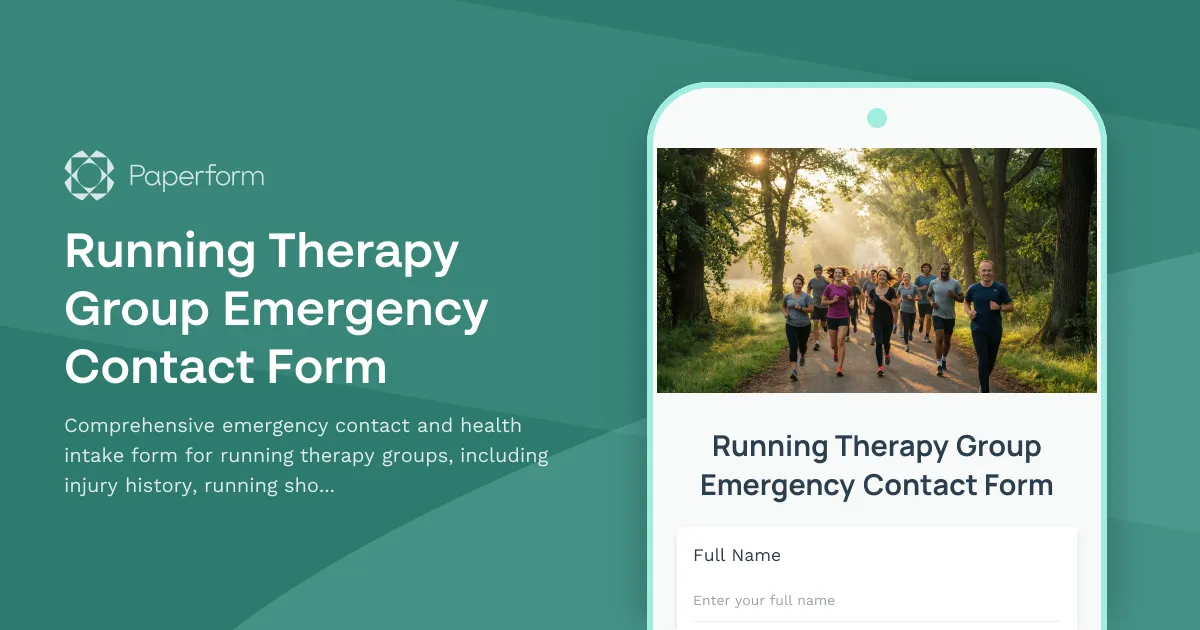
Running Therapy Group Emergency Contact Form
Comprehensive emergency contact and health intake form for running therapy groups, including injury history, running shoe assessment, pace preferences, and mental health crisis protocol information.
Adventure Therapy Program Emergency Contact Form
Comprehensive emergency contact and participant information form for adventure therapy programs, capturing outdoor experience, medical clearance, risk assessment, and group dynamics history for challenge-based therapeutic activities.
Cycling Therapy Program Emergency Contact Form
A comprehensive emergency contact form for cycling therapy programs that captures participant details, bike fitting information, road safety knowledge, group ride preferences, and emergency contacts.
Drama Therapy Group Emergency Contact Form
A comprehensive intake form for drama therapy groups that collects emergency contacts, performance anxiety levels, role-play comfort, psychodrama experience, and confidentiality agreements to ensure safe and effective therapeutic sessions.
Sexual Assault Survivor Support Emergency Contact Form
A compassionate and secure emergency contact form designed for sexual assault survivor support groups to collect vital information including crisis contacts, treatment details, trigger warnings, and safety preferences.
Chronic Illness Support Group Emergency Contact Form
A comprehensive emergency contact form for chronic illness support groups that captures critical medical information, treatment status, disability accommodations, and specialist coordination details to ensure proper care during emergencies.
Community Mental Health Worker Wellness Check
A comprehensive wellness check form for community mental health workers to assess client wellbeing, safety risks, medication compliance, and caseload concerns with structured risk assessment protocols.
Crisis Hotline Counselor Wellness Check
A comprehensive wellness assessment for crisis hotline counselors addressing call volume stress, vicarious trauma, boundary maintenance, and supervision needs to support mental health professionals in high-stress roles.

Crisis Intervention Specialist Supervisor Wellness Check
A comprehensive wellness check form for crisis intervention supervisors to assess staff trauma exposure, facilitate critical incident debriefing, and monitor supervisor wellbeing.
Domestic Violence Shelter Resident Wellness Check
A compassionate wellness check form for domestic violence shelter residents to assess safety, wellbeing, trauma symptoms, children's needs, and connection to support services.
Mass Violence Response Counselor Wellness Check
A comprehensive wellness assessment for crisis counselors and mental health professionals responding to mass violence events, focusing on community trauma healing, media exposure, anniversary stress, and cumulative disaster fatigue.