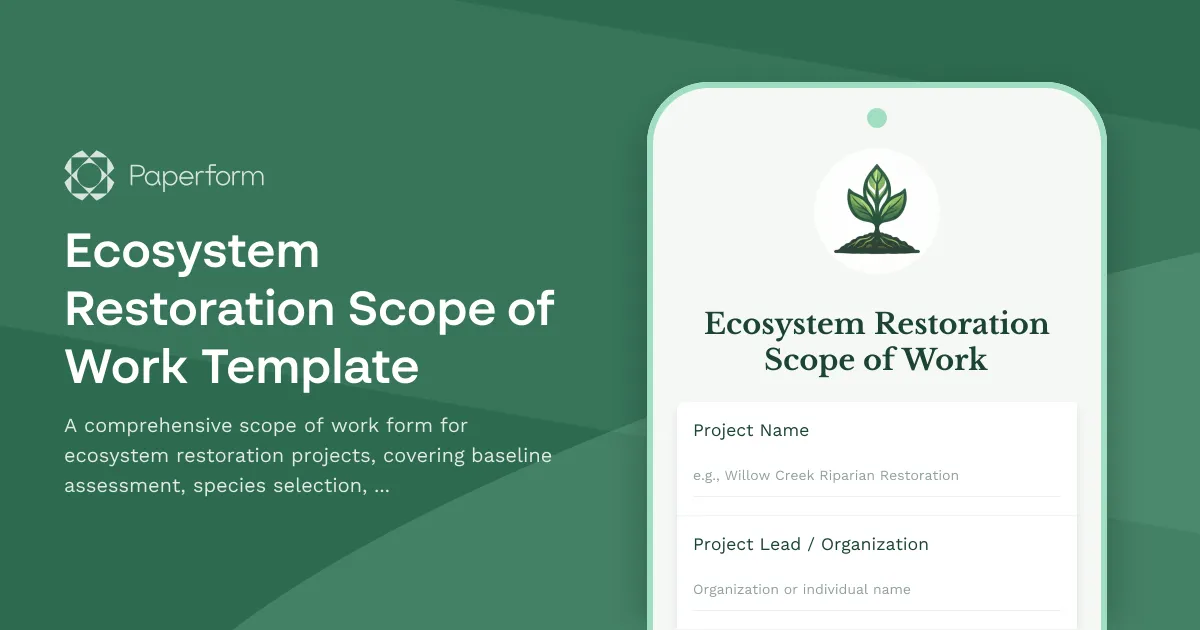
Streamline Your Ecosystem Restoration Projects with Paperform
Planning an ecosystem restoration project requires careful coordination between environmental consultants, conservation organizations, land managers, and project stakeholders. This Ecosystem Restoration Scope of Work Template helps you capture all the critical details—from baseline habitat assessments to long-term monitoring protocols—in a single, professional document.
Whether you're restoring wetlands, native grasslands, coastal habitats, or degraded forests, this template guides you through the essential components of a comprehensive scope of work. Define project objectives, document site conditions, select appropriate native species, outline planting strategies, establish monitoring protocols, and plan for adaptive management—all in one structured workflow.
Built for environmental professionals who need clarity and collaboration
Environmental consultants, restoration ecologists, land trusts, government agencies, and conservation nonprofits rely on clear scope of work documents to align stakeholders, secure funding, and guide implementation. This template helps you:
- Document baseline conditions with structured fields for habitat type, soil characteristics, hydrology, and existing vegetation
- Select appropriate species based on site conditions, restoration goals, and ecological function
- Define planting strategies including density, timing, and installation methods
- Establish monitoring protocols to track success metrics and ecosystem health indicators
- Build in adaptive management to respond to changing conditions and project learnings
The form captures technical details while remaining accessible to project partners and funders who need to understand the approach without wading through jargon.
Automate your restoration workflow with Stepper
Once your scope of work is submitted through Paperform, you can use Stepper to automate what happens next. Route the SOW for internal review, send it to clients or partners for approval via Papersign eSignatures, generate project timelines, trigger task assignments in your project management tool, and keep your team in sync as the project moves from planning to implementation.
This template is designed for restoration professionals who need to document complex projects clearly, collaborate across disciplines, and maintain the flexibility to adapt as conditions change. Start with a structured foundation and customize it to match your organization's methods, regional ecosystems, and project requirements.

More templates like this
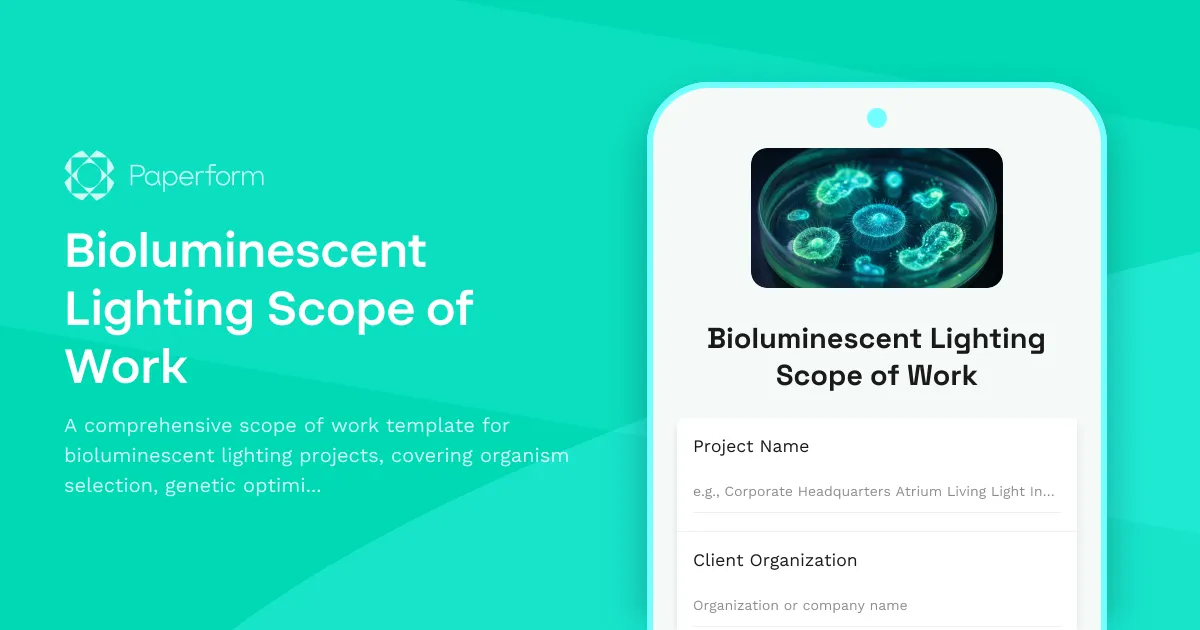
Bioluminescent Lighting Scope of Work
A comprehensive scope of work template for bioluminescent lighting projects, covering organism selection, genetic optimization, emission control, lifecycle management, and architectural integration planning.

Arctic Infrastructure Scope of Work Template
A comprehensive scope of work template for Arctic infrastructure projects, covering permafrost assessment, climate adaptation measures, logistics planning, environmental protection protocols, and indigenous consultation requirements.

Atmospheric Chemistry Modeling Scope of Work Form
Define project scope for atmospheric chemistry modeling projects including emission inventories, chemical mechanisms, meteorological coupling, validation campaigns, and policy scenario analysis.
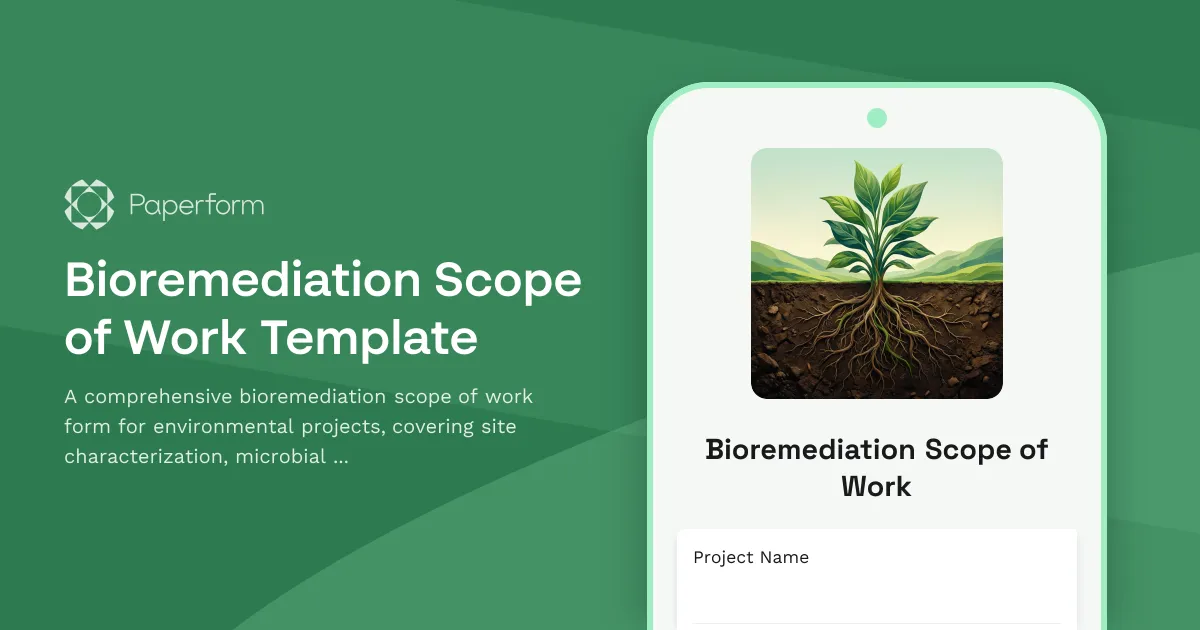
Bioremediation Scope of Work Template
A comprehensive bioremediation scope of work form for environmental projects, covering site characterization, microbial selection, treatment design, monitoring protocols, and efficacy validation requirements.

Clinical Trial Recruitment Scope of Work Form
A comprehensive scope of work template for clinical trial recruitment projects, covering eligibility screening criteria, participant outreach strategies, enrollment targets, retention plans, and regulatory compliance requirements.
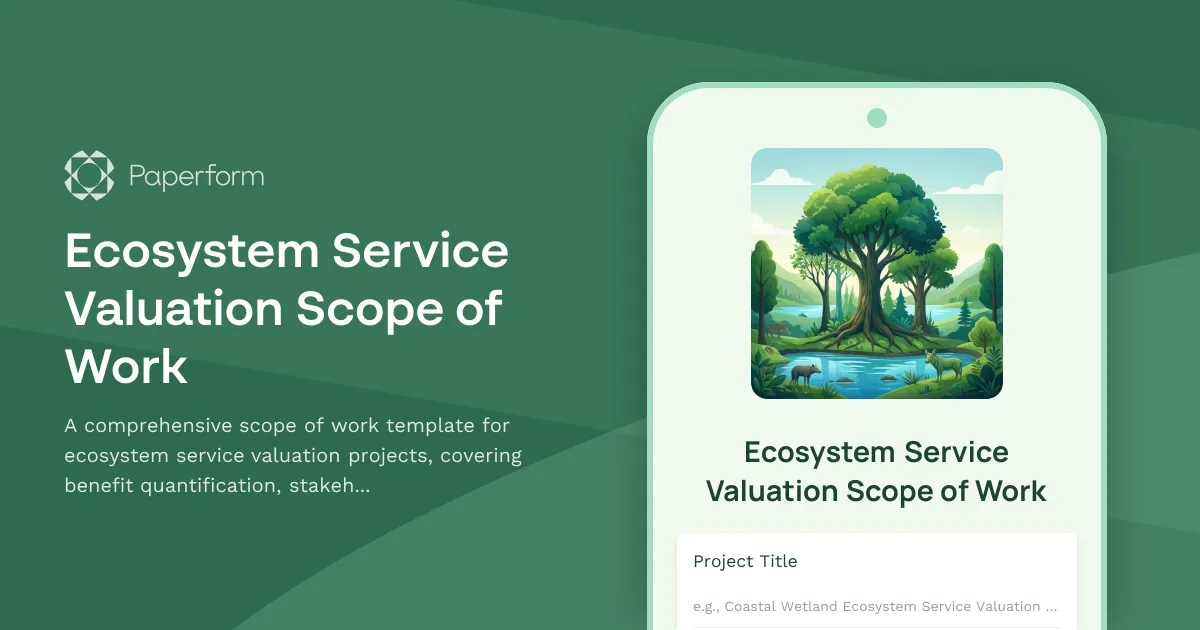
Ecosystem Service Valuation Scope of Work
A comprehensive scope of work template for ecosystem service valuation projects, covering benefit quantification, stakeholder analysis, payment mechanisms, monitoring frameworks, and policy integration for environmental consulting and conservation initiatives.

Holographic Data Storage Scope of Work Template
Define project scope for holographic data storage system development, covering medium selection, encoding methods, read/write specifications, error correction protocols, and capacity scaling requirements.

Microfluidics Development Scope of Work Form
A comprehensive scope of work form for microfluidics development projects, covering chip design, fabrication processes, fluid dynamics simulation, biological validation, and manufacturing scale-up planning.
Nuclear Decommissioning Scope of Work Form
Comprehensive scope of work template for nuclear facility decommissioning projects, covering site characterization, waste management planning, decontamination procedures, regulatory coordination, and final status surveys.

Rare Disease Drug Development Scope of Work Template
A comprehensive scope of work template for rare disease drug development projects, covering natural history studies, biomarker identification, clinical trial design, regulatory strategy, and patient advocacy partnerships.
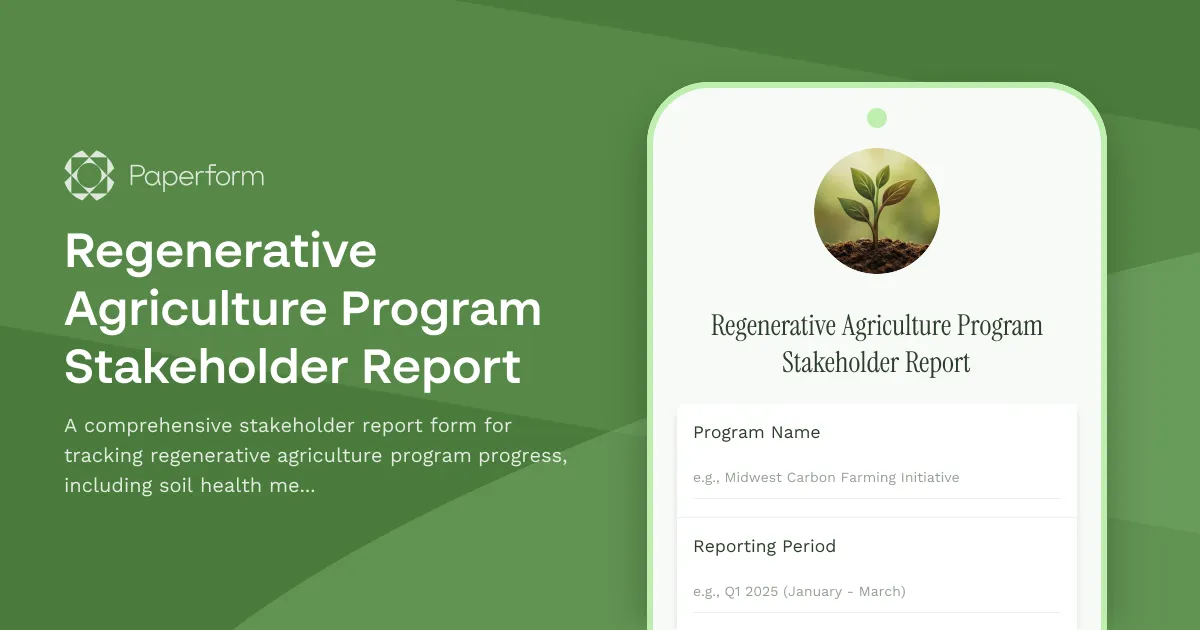
Regenerative Agriculture Program Stakeholder Report
A comprehensive stakeholder report form for tracking regenerative agriculture program progress, including soil health metrics, carbon sequestration data, farmer participation, crop yields, and certification milestones.
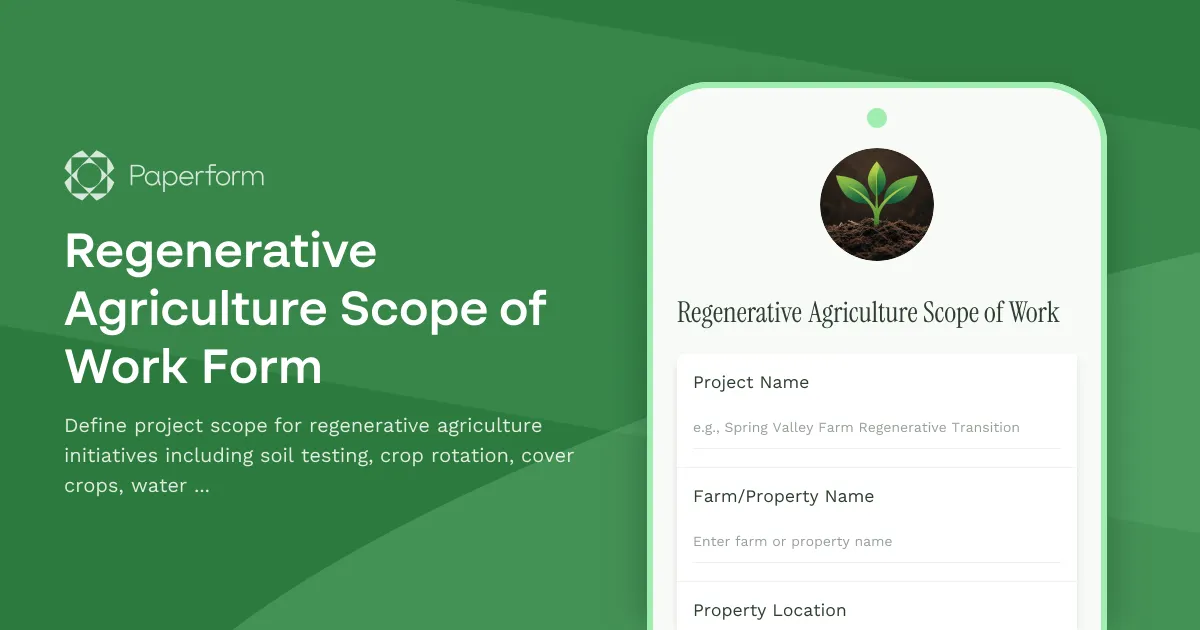
Regenerative Agriculture Scope of Work Form
Define project scope for regenerative agriculture initiatives including soil testing, crop rotation, cover crops, water management, and carbon sequestration measurement planning.