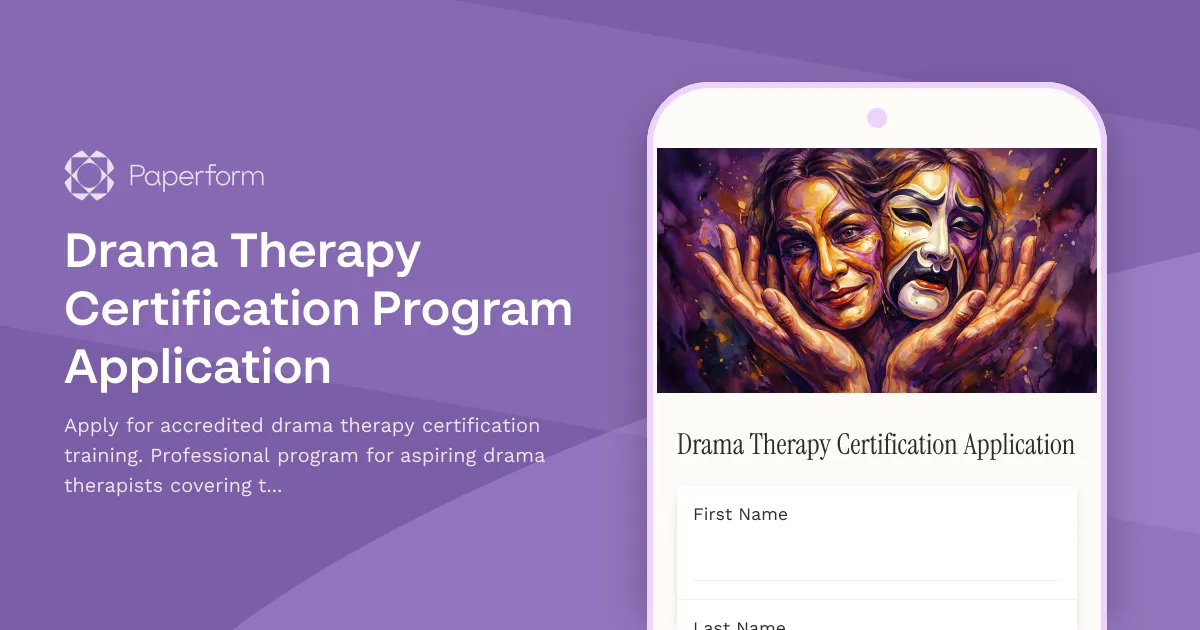
Professional Drama Therapy Certification Made Simple
Are you passionate about healing through the creative arts? Drama therapy combines the transformative power of theater with evidence-based therapeutic practice to help clients process emotions, develop insights, and create meaningful change. If you're ready to turn this calling into a career, finding the right certification program is your first step—and this drama therapy certification program application helps training programs identify candidates who will thrive in this unique field.
Why Drama Therapy Certification Matters
Drama therapy is a specialized mental health profession that requires extensive training in both theatrical arts and clinical practice. Certified drama therapists work in hospitals, schools, rehabilitation centers, private practice, and community mental health settings, serving diverse populations from children with autism to veterans with PTSD, from incarcerated individuals to seniors with dementia.
Accredited certification programs ensure graduates meet rigorous standards set by professional bodies like the North American Drama Therapy Association (NADTA), preparing them for board certification and licensure. This application template is designed for drama therapy training programs seeking candidates with the right blend of artistic background, clinical aptitude, and commitment to supervised practice.
What Makes This Application Template Different
Most generic application forms miss the nuances that matter in creative arts therapy admissions. This template was built specifically for drama therapy programs and captures the essential elements that admissions committees need to evaluate:
Theater and Performance Background
Drama therapy isn't just counseling—it's rooted in theatrical practice. The form collects detailed information about an applicant's experience with acting, directing, improvisation, playback theater, and other dramatic arts. Whether someone trained formally at a conservatory or developed skills through community theater, programs need to understand the depth and breadth of theatrical competency.
Therapeutic Relationship Skills
Working therapeutically requires empathy, boundaries, cultural humility, and the ability to hold space for others. The application explores prior experience in helping roles—whether in peer support, coaching, teaching, or other caregiving contexts—to assess readiness for clinical training and client relationships.
Population Specialization Interests
Every drama therapist eventually develops areas of expertise. This form asks applicants about the populations they hope to serve and why, helping programs match students with relevant practicum placements and coursework. Understanding whether a candidate is drawn to youth trauma, geriatric care, or addiction recovery informs everything from cohort composition to faculty mentorship.
Supervised Practice Commitment
Certification requires substantial supervised clinical hours, often 500+ over multiple years. This template ensures applicants understand the time, emotional labor, and logistical requirements of practicum work, including background checks, liability insurance, and weekend or evening scheduling.
Board Exam Eligibility Planning
Completing a program is just one step toward professional credentialing. The application helps programs assess whether candidates understand the pathway to registration or licensure in their region, and whether they're prepared for the multi-year journey from student to board-certified drama therapist.
Perfect for Mental Health Training Programs
This template is ideal for:
- Drama Therapy Training Institutes offering NADTA-approved certification programs
- Graduate Programs in Creative Arts Therapies at universities and colleges
- Continuing Education Providers offering post-graduate drama therapy credentials
- Mental Health Organizations running in-house drama therapy training tracks
- International Training Programs seeking qualified candidates from diverse backgrounds
How Drama Therapy Programs Use This Form
Admissions to creative arts therapy programs is deeply personal. Program directors aren't just checking boxes—they're looking for candidates who will bring authenticity, resilience, and creativity to vulnerable client populations. This form streamlines that evaluation process by:
- Pre-Screening for Prerequisites – Quickly identifying whether applicants meet baseline requirements for theater training, education level, and mental health awareness
- Understanding Motivation and Fit – Gathering narrative responses that reveal why someone is called to drama therapy specifically, not just general counseling
- Assessing Readiness for Rigor – Ensuring candidates understand the intensity of clinical training, personal therapy requirements, and ethical responsibilities
- Building Diverse Cohorts – Collecting demographic and experiential information that helps create rich, intersectional learning communities
The structured format ensures every applicant provides the same core information, making side-by-side comparisons fair and efficient during admissions review.
Built for the Healthcare and Education Industries
Drama therapy sits at the intersection of healthcare, mental health, and education. Training programs often operate within universities, hospitals, or nonprofit mental health organizations, each with distinct compliance and documentation needs. This template works seamlessly for:
- Healthcare Providers and Mental Health Clinics launching training divisions
- Educational Institutions with graduate counseling, psychology, or arts programs
- Nonprofit Organizations focused on trauma recovery, youth development, or community mental health
- Private Training Institutes specializing in expressive and creative arts therapies
Flexible, Professional, and Paperform-Powered
Because this template is built on Paperform, you get so much more than a static PDF. You can:
- Customize Questions and Sections to match your program's unique philosophy, prerequisites, or regional credentialing requirements
- Collect Application Fees Securely via Stripe, PayPal, or Square, right in the form
- Automate Confirmation Emails with next steps, interview scheduling links, or supplementary materials
- Integrate with Your CRM or Spreadsheet to automatically log applicant data in HubSpot, Airtable, Google Sheets, or your student information system
- Trigger Workflows with Stepper to route applications to faculty reviewers, schedule interviews, request references, or send status updates—all without manual work
If you need to collect portfolio materials, video auditions, or reference letters, you can add file upload fields. If you want to embed the form on your program website or send it as a standalone link, Paperform makes that seamless.
Automate Your Admissions Workflow
Why stop at data collection? With Stepper (stepper.io), Paperform's AI-native workflow builder, you can turn every application submission into a smooth, multi-step admissions process:
- Route applications to different reviewers based on specialization or location
- Send automatic reminders to applicants who haven't completed reference checks
- Update application status in your database as candidates move through interview rounds
- Generate offer letters or waitlist notifications based on admissions decisions
This means your admissions team spends less time on repetitive admin work and more time engaging meaningfully with prospective students.
Trusted by Mental Health and Education Professionals
Paperform is trusted by over 500,000 teams worldwide, including mental health practices, universities, and nonprofit organizations. With SOC 2 Type II compliance and GDPR readiness, your applicant data is handled with the security and privacy standards that healthcare and education require. (Note: Paperform is not HIPAA-compliant, so avoid collecting protected health information in application forms.)
Start Building Your Next Cohort
Finding the right students is the foundation of a transformative drama therapy program. This application template helps you identify candidates with the artistic skill, clinical readiness, and personal commitment to become exceptional drama therapists.
Whether you're launching a new program or refining an established admissions process, this template saves you time, ensures consistency, and creates a welcoming first impression for applicants. Customize it to reflect your program's values, automate follow-ups, and start building the next generation of creative arts therapists today.
More templates like this
Animal-Assisted Therapy Certification Scholarship Application
A comprehensive scholarship application for aspiring animal-assisted therapy practitioners seeking certification funding, including therapy animal handling experience, special populations interest, and professional recommendations.
Animal-Assisted Therapy Handler Program Application
Apply to become a certified animal-assisted therapy handler. This comprehensive application collects information about your animal partner, therapy experience, specialization preferences, and training requirements.
Adventure Therapy Practitioner Training Application
Professional training application for adventure therapy practitioners to assess outdoor leadership credentials, mental health background, risk management qualifications, and supervision experience for program admission.
Crisis Intervention Specialist Training Application
Apply for crisis intervention specialist training with this comprehensive application form that collects mental health credentials, de-escalation experience, trauma exposure history, and availability information.
Equine Assisted Learning Facilitator Training Application
Apply for professional certification training in equine assisted learning. Complete application includes horse experience assessment, educational background, and population focus areas.

Peer Support Specialist Training Application
A comprehensive application form for individuals with lived mental health experience seeking to become certified peer support specialists through training and certification.
Residential Treatment Application for Adolescent Bipolar Disorder
Comprehensive application for adolescent residential treatment programs specializing in bipolar disorder management, mood tracking, and circadian rhythm stabilization.
Trauma-Informed Yoga Teacher Training Scholarship Application
A compassionate scholarship application for individuals seeking funding to complete trauma-informed yoga teacher training, with focus on mental health awareness and survivor support.
Wilderness Therapy Guide Training Application
A comprehensive application form for wilderness therapy guide training programs, covering outdoor leadership experience, mental health qualifications, risk management certifications, and seasonal availability.
Addiction Counseling Certification Scholarship Application
A comprehensive scholarship application for individuals pursuing Certified Alcohol and Drug Counselor (CADC) certification, designed for those with recovery support experience and commitment to trauma-informed care.
Infant Mental Health Specialist Program Application
Comprehensive application for infant mental health specialist training and endorsement, covering early childhood credentials, attachment theory expertise, and reflective practice commitment.
Peer Recovery Coach Training Application
Comprehensive application for individuals seeking to become certified peer recovery coaches in substance use recovery services.