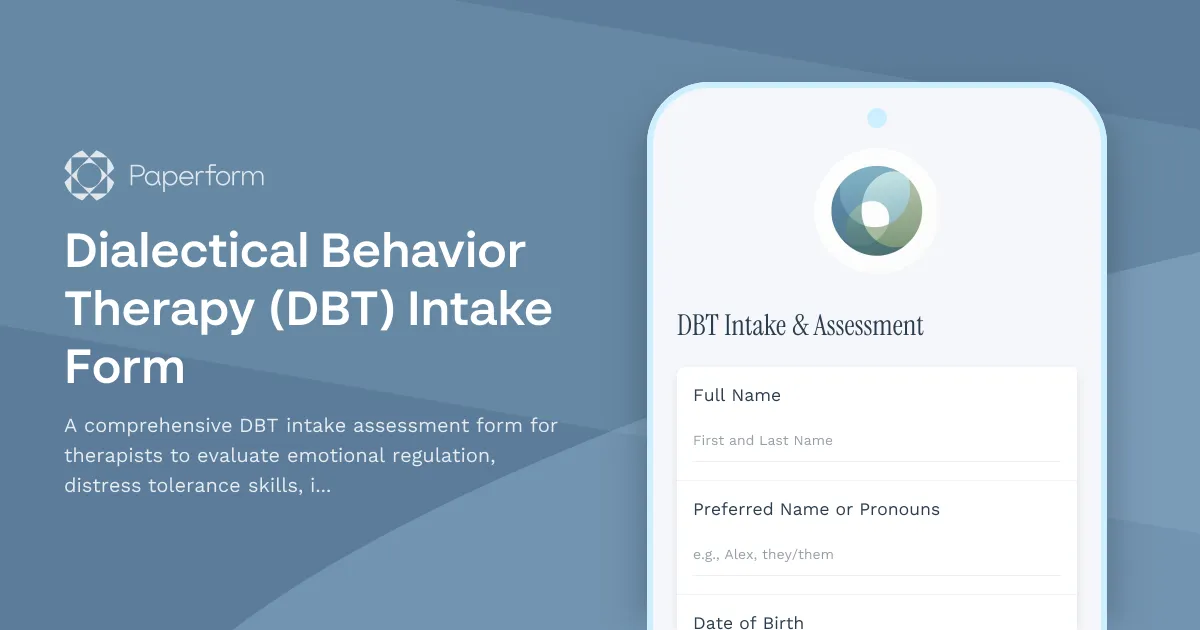
Start DBT Therapy with a Structured, Client-Centered Intake
Dialectical Behavior Therapy (DBT) is one of the most evidence-based treatments for emotional dysregulation, borderline personality disorder, self-harm behaviors, and complex trauma. But before therapy begins, you need a clear picture of your client's current functioning, coping skills, and crisis vulnerabilities.
This DBT Intake Form is designed specifically for mental health professionals offering dialectical behavior therapy. It walks new clients through a structured assessment covering the four core DBT skill modules—mindfulness, distress tolerance, emotion regulation, and interpersonal effectiveness—while gathering critical information about current symptoms, treatment history, and safety planning.
Why Paperform for DBT intake?
Built for therapists who want forms that feel professional, compassionate, and easy to complete, Paperform lets you create intake experiences that match your practice brand. Use conditional logic to reveal follow-up questions based on client responses, ensure sensitive information is collected securely, and sync submissions directly into your practice management software or EHR.
With Paperform's SOC 2 Type II compliance and enterprise-grade security, you can confidently collect PHI (Personal Health Information) in a HIPAA-aware manner when paired with appropriate BAA-covered infrastructure. The form adapts to each client's needs, showing relevant sections and skipping unnecessary questions.
Automate your DBT practice workflow
Once a client submits their intake form, use Stepper to automate what happens next. Trigger a welcome email, create a client folder in your secure file storage, add the client to your scheduling system, and notify your clinical team—all without manual data entry. You can route high-risk cases to supervisors, flag clients who need immediate crisis follow-up, and keep your practice running smoothly as you scale.
Whether you're a solo DBT practitioner, running a group practice, or managing an intensive outpatient program, this template gives you a strong foundation to assess, onboard, and support clients from day one. Customize questions, adjust logic, and make the form feel like an extension of your therapeutic approach—all without writing a line of code.
Trusted by mental health professionals worldwide, Paperform combines thoughtful design, powerful automation, and the security your practice needs to deliver care with confidence.



More templates like this
Acceptance and Commitment Therapy (ACT) Intake Form
Comprehensive ACT therapy intake form with psychological flexibility assessment, values clarification exercises, and committed action planning to help therapists understand client needs and therapeutic goals.
Borderline Personality Disorder Assessment Form
A comprehensive clinical assessment tool for screening borderline personality disorder symptoms, including emotion dysregulation, relationship patterns, and behavioral indicators.
Child & Adolescent Mental Health Intake Form
A comprehensive mental health intake form for children and adolescents, collecting developmental history, school performance, family dynamics, and behavioral concerns to support effective treatment planning.
Cognitive Behavioral Therapy Intake Form
A comprehensive CBT intake form with depression screening, anxiety assessment, and therapy goals to help mental health professionals understand new clients and establish treatment plans.
Couples Therapy Intake Form
A comprehensive couples therapy intake form that assesses relationship dynamics, communication patterns, and individual mental health to help therapists understand and support couples seeking counseling.
Degenerative Disease Counseling Intake Form
A compassionate intake form for counselors supporting clients facing degenerative diseases, covering progressive symptoms, advance care planning, caregiver concerns, and emotional well-being.
Elder Abuse Counseling Intake Form
A comprehensive intake form for mental health professionals providing counseling services to older adults who have experienced abuse, capturing critical information about the abuse, safety concerns, and reporting considerations.

Emotionally Focused Therapy (EFT) Couples Intake Form
Comprehensive EFT intake form for couples therapy that assesses attachment patterns, identifies negative interaction cycles, and explores bonding moments to inform therapeutic intervention.
Grief Counseling Intake Form
A compassionate intake form for grief counseling that gathers essential information about your loss, current coping strategies, and support network to help provide personalized bereavement support.
Miscarriage and Pregnancy Loss Therapy Intake Form
A compassionate intake form for mental health professionals supporting clients through miscarriage and pregnancy loss, covering loss history, grief symptoms, support systems, and concerns about future pregnancy.

Palliative Care Mental Health Intake Form
A compassionate intake form for mental health professionals supporting palliative care patients, covering illness severity, symptom management, existential concerns, and legacy planning.
Psychosis Early Intervention Assessment Form
A comprehensive first-episode psychosis screening and coordinated specialty care enrollment form for mental health services, including clinical assessment, family education needs, and treatment planning.