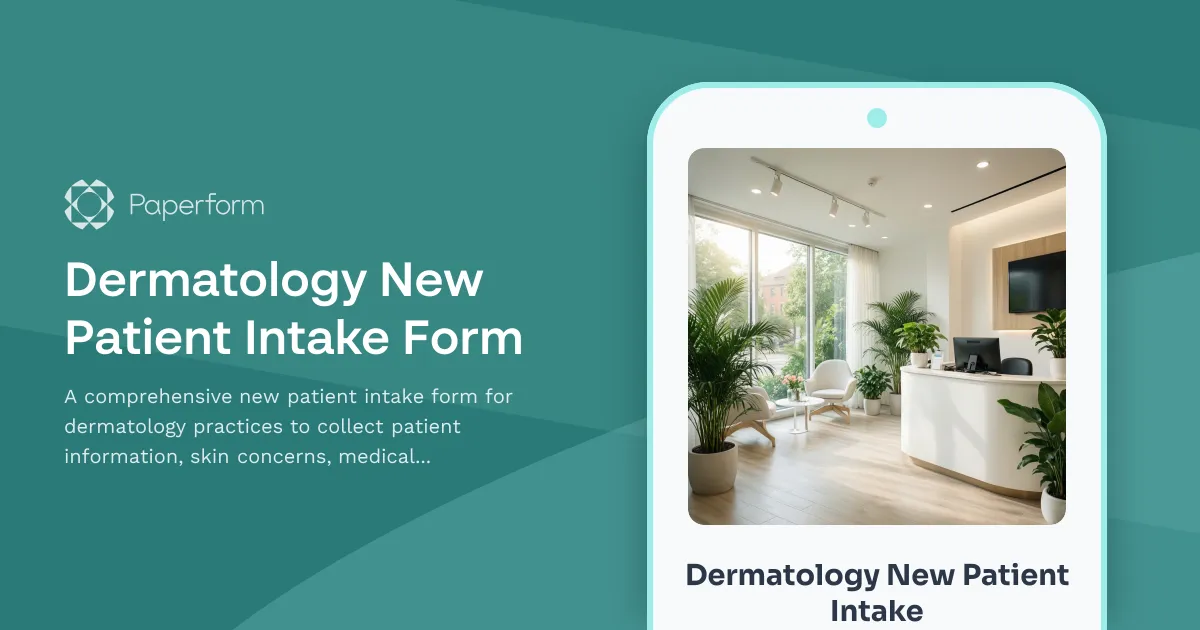
Welcome to Modern Dermatology Care with Paperform
Starting care with a new dermatologist shouldn't feel like filling out endless paperwork. This Dermatology New Patient Intake Form template helps dermatology clinics and skin care practices collect everything they need—from medical history and current skin concerns to sun exposure patterns and cosmetic treatment interests—all in one professional, mobile-friendly form.
Why Digital Patient Intake Transforms Your Practice
Moving your dermatology intake online means patients can complete forms from home before their appointment, reducing wait times, eliminating clipboard chaos, and giving your clinical team clean, structured data before the patient walks through the door. With Paperform, you get a form that actually looks and feels like your brand—not a sterile survey tool—while capturing photos, signatures, insurance details and complex medical histories with conditional logic that shows the right questions at the right time.
What Makes This Template Perfect for Dermatology
This template is built specifically for dermatologists, medical aestheticians, and skin care clinics. It includes fields for:
- Patient demographics and contact details with emergency contact information
- Insurance verification to streamline billing
- Detailed medical history including current medications, allergies, and past skin conditions
- Skin concern documentation with image upload fields so patients can share photos of moles, rashes, acne or other areas of concern before their visit
- Sun exposure and protection habits to assess risk factors for skin cancer and premature aging
- Family history of skin conditions and skin cancer
- Current skincare routine to understand what products patients are already using
- Cosmetic procedure interest to identify patients interested in Botox, fillers, chemical peels, laser treatments and other aesthetic services
The form uses conditional logic to show follow-up questions only when relevant—for example, asking about pregnancy status only for patients who indicate interest in certain cosmetic procedures, or diving deeper into sun exposure history if a patient reports frequent outdoor activities.
Built for Healthcare Workflows (Without the HIPAA Complexity)
While Paperform is not HIPAA compliant and should not be used for protected health information requiring HIPAA safeguards, it's an excellent solution for initial patient intake, appointment booking, cosmetic consultation requests, and general inquiries where practices have obtained appropriate consent and are following their compliance protocols.
For practices that need to convert intake submissions into consent forms or treatment agreements, Papersign integrates seamlessly to turn form data into legally binding eSignature documents. Capture the patient information in Paperform, then automatically generate a treatment consent form or cosmetic procedure agreement in Papersign for secure digital signature—keeping your entire patient onboarding workflow connected and paperless.
Automation That Supports Your Front Desk Team
Once a patient submits their intake form, Stepper can orchestrate everything that happens next. Automatically:
- Add the new patient to your practice management system or CRM
- Send confirmation emails with appointment details and pre-visit instructions
- Route high-priority cases (like suspicious moles or urgent skin concerns) to clinical staff for immediate review
- Flag patients interested in cosmetic procedures for follow-up by your aesthetic coordinator
- Update your scheduling system and sync patient details across tools
This means your front desk team spends less time on data entry and more time providing excellent patient care, while nothing falls through the cracks.
Who This Template Is For
This template is designed for:
- Dermatology clinics seeing patients for medical and cosmetic skin concerns
- Medical spas and aesthetic practices offering both clinical dermatology and cosmetic treatments
- Dermatopathology practices requiring detailed patient history and lesion documentation
- Telemedicine dermatology services that rely on photo uploads for virtual consultations
- Cosmetic dermatology practices specializing in anti-aging treatments, injectables, and skin rejuvenation
Whether you're a solo practitioner or a multi-provider clinic, this form adapts to your practice style while maintaining a professional, patient-friendly experience.
Design and Patient Experience
Patients expect modern, mobile-friendly experiences in every part of their lives—and healthcare is no exception. This template uses Paperform's doc-style editor to create a clean, logical flow that guides patients through each section without feeling overwhelming. You can customize fonts, colors, and add your practice logo and photos to match your brand identity, or embed the form directly into your website for a seamless booking experience.
The multi-page format breaks the intake process into manageable sections (Personal Information → Medical History → Skin Concerns → Cosmetic Interests), reducing form abandonment and making it easy for patients to save progress and return later on mobile devices.
Getting Started
With over 500,000 teams worldwide using Paperform and trusted by healthcare practices across the globe, this template gives you a professional starting point that you can customize in minutes. Add or remove fields, adjust conditional logic, change the theme to match your practice branding, and connect your favorite tools—no coding required.
Paperform is SOC 2 Type II compliant and offers robust security controls, making it a trusted platform for medical practices that prioritize patient data protection within appropriate use cases.
Transform your patient intake process from paperwork bottleneck to streamlined digital workflow, and create a first impression that reflects the modern, patient-centered care your dermatology practice provides.



More templates like this
Raynaud's Phenomenon Screening Questionnaire
A comprehensive screening tool for Raynaud's phenomenon that documents color changes, identifies triggers, assesses underlying conditions, and determines the need for rheumatology consultation.
Age-Related Macular Degeneration Screening Form
Screen patients for AMD risk factors, assess visual changes, conduct Amsler grid testing, and facilitate retinal specialist referrals with this comprehensive eye health assessment form.
Ambulatory Surgery Center Pre-Operative Intake Form
Complete pre-operative assessment for ambulatory surgery patients including anesthesia history, NPO compliance verification, medication management, and same-day discharge planning.
Bariatric Surgery Patient Intake Form
Comprehensive intake form for bariatric surgery candidates to document weight history, previous weight loss attempts, obesity-related health conditions, and surgical readiness.
Benign Paroxysmal Positional Vertigo (BPPV) Screening Form
A comprehensive BPPV screening form with Dix-Hallpike test documentation, symptom trigger assessment, fall risk evaluation, and vestibular rehabilitation referral recommendations for healthcare providers.
Chronic Pansinusitis Assessment & ENT Consultation Form
A comprehensive assessment form for patients with chronic pansinusitis including symptom evaluation, quality of life questionnaire, treatment history, and FESS candidacy screening.
Chronic Venous Insufficiency Screening Form
A comprehensive screening form for chronic venous insufficiency (CVI) that assesses leg swelling, varicose veins, symptoms, and determines whether compression therapy or vascular surgery consultation is needed.
Chronic Venous Thromboembolism Screening Form
Comprehensive post-DVT assessment form for chronic venous thromboembolism screening, capturing leg symptoms, imaging studies, anticoagulation history, and vascular surgery consultation needs.

Cleft Lip and Palate Team Evaluation Form
A comprehensive telehealth evaluation form for cleft lip and palate patients, enabling multidisciplinary team assessment with speech recordings, orthodontic photos, feeding evaluations, and surgical revision planning.
Dermatology Pre-Appointment Skin Assessment Form
A comprehensive pre-visit form for dermatology patients to document skin conditions, symptoms, affected areas, and upload photos before their appointment.
Diabetic Peripheral Neuropathy Screening Form
A comprehensive screening tool for detecting peripheral neuropathy in diabetic patients, including monofilament testing, vibration sense assessment, symptom evaluation, and automated podiatry referral pathway.
Geriatric Medicine Comprehensive Assessment Form
A thorough new patient intake form for geriatric medicine practices covering medical history, fall risk screening, cognitive assessment, medication reconciliation, functional status, and advance care planning.