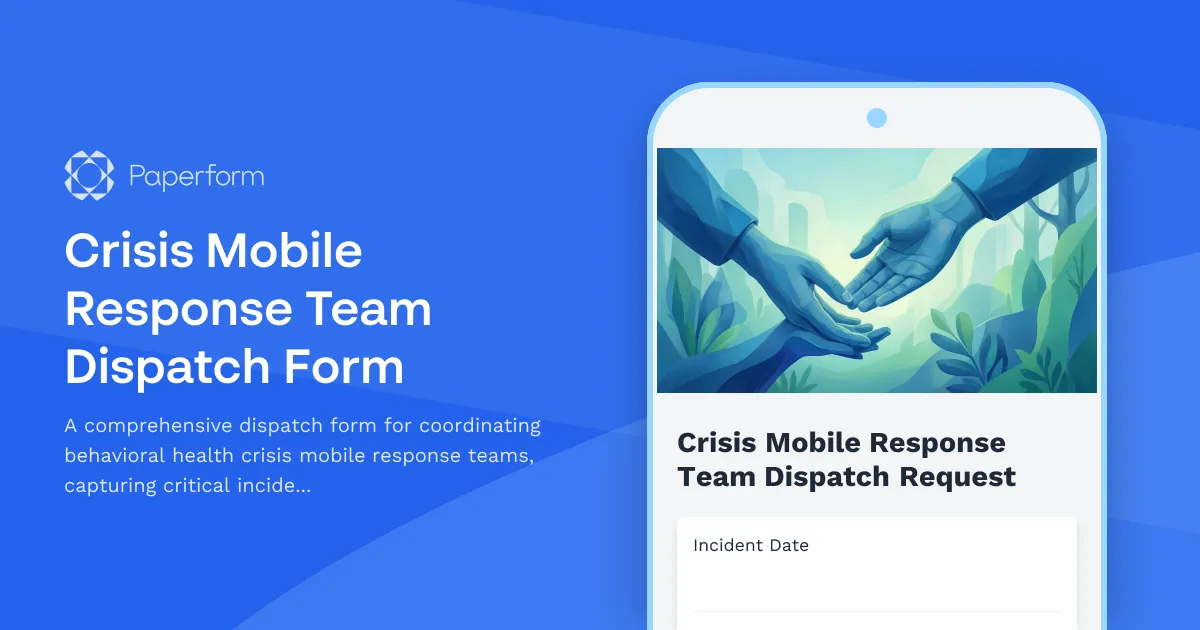
When behavioral health emergencies arise, every second counts—and so does every detail. This Crisis Mobile Response Team Dispatch Form is designed for social services agencies, community mental health programs, crisis intervention teams, and municipal behavioral health departments that need a fast, structured way to coordinate mobile crisis responses.
Instead of relying on scattered phone notes or radio logs, this form captures the essential information responders need before they arrive on scene: precise location data, individual identifiers and descriptors, escalation levels, prior mental health involvement, transport requirements, and real-time de-escalation outcomes. It's built to support the growing shift toward community-based crisis care—getting trained behavioral health professionals to people in crisis, rather than defaulting to emergency rooms or law enforcement alone.
Paperform makes this workflow seamless. The form works on any device, so dispatchers, call center staff, or field coordinators can submit requests from desktops, tablets, or phones. Conditional logic ensures the right follow-up questions appear based on escalation level and transport need, keeping the form quick to complete while still gathering critical detail. Once submitted, you can route dispatch requests into your CAD system, ping your mobile crisis team via Slack or SMS, log incidents in Airtable or your case management platform, or trigger multi-step workflows in Stepper to coordinate handoffs between responders, follow-up counselors, and administrative staff.
For agencies managing sensitive information, Paperform is SOC 2 Type II compliant and supports role-based permissions, encrypted submissions, and data residency controls—so you can meet compliance standards while keeping your team nimble and responsive.
Whether you're operating a county crisis hotline, a regional behavioral health network, or a pilot mobile crisis program, this template gives you a structured, compassionate starting point that scales with your mission.



More templates like this
Crisis Youth Mobile Response Request Form
Request immediate crisis intervention for child behavioral emergencies. Connect with mobile response teams for in-home stabilization, safety assessment, and family support services.
Refugee Trauma Counseling Intake Form
A compassionate intake form for refugee trauma counseling services that assesses mental health needs, resettlement experiences, and matches clients with culturally responsive therapists.
Crisis Intervention Services Intake Form
A comprehensive intake form for crisis intervention services with mental health emergency screening, suicide risk assessment, substance use evaluation, and voluntary commitment acknowledgment.
Crisis Intervention Team (CIT) Dispatch Form
A comprehensive dispatch form for crisis intervention teams responding to mental health emergencies, including risk assessment, safety indicators, and coordination protocols for immediate psychiatric intervention.
Crisis Psychiatric Emergency Services Intake & Assessment Form
Comprehensive intake form for crisis psychiatric emergency services including voluntary and involuntary admissions, dangerousness assessment, medication stabilization, peer support coordination, and discharge planning with community follow-up.

Maternal Depression Screening & Support Services Form
A comprehensive maternal mental health screening form using the Edinburgh Postnatal Depression Scale to assess perinatal and postpartum depression, evaluate bonding concerns, and connect mothers with appropriate support services and treatment resources.
Corrections Mental Health Diversion Program Referral Form
Refer individuals with mental illness from the criminal justice system to community-based treatment programs as an alternative to incarceration.
Emergency Medication Cooling Assistance Application
A streamlined application for insulin-dependent diabetics to request emergency cooling assistance for temperature-sensitive medications during power outages and extreme weather events.
Homeless Veteran Welfare Check & Outreach Report
A comprehensive form for reporting missing chronically homeless veterans with service-connected disabilities to facilitate coordinated outreach efforts between street medicine teams, VA homeless coordinators, and community support services.
Mental Health Diversion Completion Certificate
A comprehensive certificate form documenting treatment progress, symptom management, and clinical recommendations for mental health diversion program completion in court proceedings.
Missing Psychiatric Hold Patient Report Form
A comprehensive form for healthcare facilities to report missing patients who left during an involuntary psychiatric hold period before their 72-hour evaluation, including danger assessment and legal authorization tracking.
Mobile Crisis Behavioral Health Unit Funding Application
Comprehensive funding application for mobile crisis behavioral health units, including response time targets, clinical team composition, co-responder models, and diversion rate projections.