
Finding the right couples therapist and getting started with therapy shouldn't add more stress to an already challenging time in your relationship. This Couples Therapy Intake and Scheduling Form template helps mental health professionals gather all the essential information they need before the first session—allowing therapists to understand the couple's situation, prepare appropriately, and hit the ground running.
This template is designed for therapists, counselors, psychologists, and mental health practices who work with couples and want to create a welcoming, thorough intake experience. Rather than juggling phone calls, emails, and paper forms, you can collect relationship history, individual backgrounds, insurance details, and scheduling preferences all in one organized, HIPAA-friendly flow.
The form includes a relationship assessment section that captures how long the couple has been together, what brought them to therapy, current challenges, and what they hope to achieve. It collects individual background information from both partners—including mental health history, previous therapy experience, and current medications—so the therapist can understand each person's context. Insurance coordination fields make it easy to verify coverage and handle billing, while session format preferences (in-person, telehealth, or hybrid) ensure you're set up for success from day one.
With Paperform's conditional logic, you can show or hide fields based on responses—for example, only asking about previous couples therapy if they indicate they've tried it before, or collecting different information for in-person versus telehealth preferences. The professional design options let you create a form that feels calm, private, and aligned with your practice's brand, helping couples feel comfortable sharing sensitive information.
Once the form is submitted, you can use Stepper (stepper.io) to automatically add the couple to your practice management system, send appointment confirmation emails, create calendar events, and trigger your intake review workflow. You can also use Papersign (papersign.com) to seamlessly send consent forms, treatment agreements, and privacy policies for eSignature right after the intake is complete, keeping all documentation connected and compliant.
This template is ideal for private practices, group therapy practices, community mental health centers, and relationship counselors who want to reduce administrative burden while creating a thoughtful, client-centered first impression that sets the tone for the therapeutic relationship ahead.
More templates like this
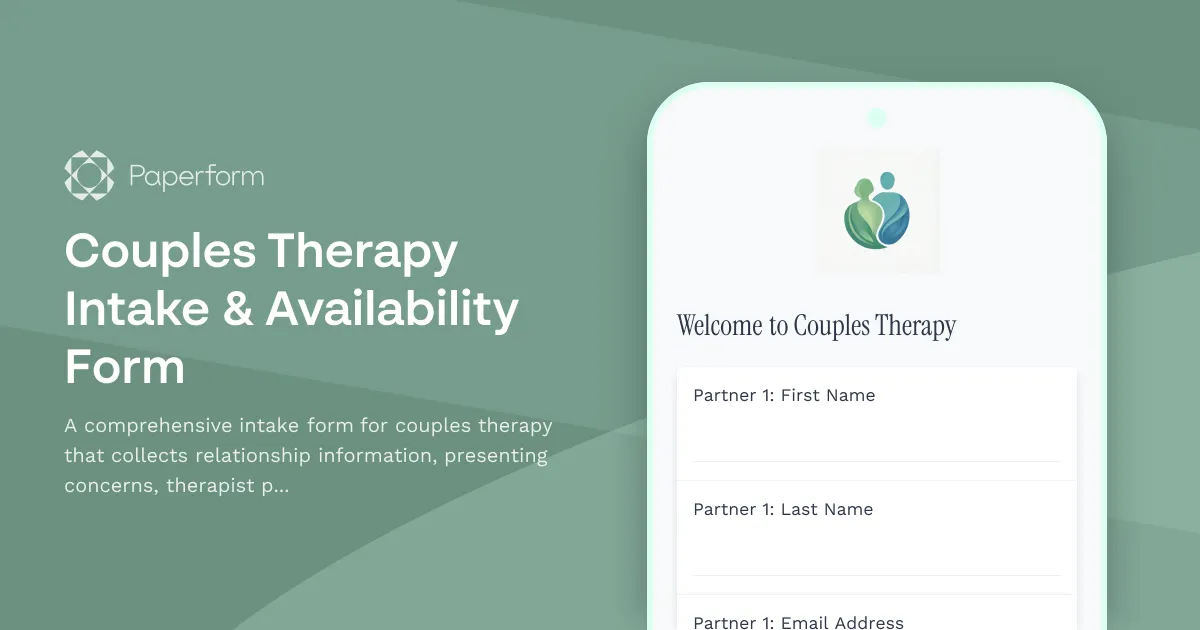
Couples Therapy Intake & Availability Form
A comprehensive intake form for couples therapy that collects relationship information, presenting concerns, therapist preferences, and scheduling availability to streamline the matching and booking process.
Mental Health Therapist Intake and Scheduling Form
A confidential intake and appointment booking form for mental health therapy practices. Collect client information, assess needs, and schedule in-person or teletherapy sessions securely.
Play Therapy Intake Scheduling Form
Schedule your child's initial play therapy consultation with comprehensive intake questions covering behavioral concerns, developmental history, and parent participation preferences.
Therapist First Session Scheduling & Intake Form
Schedule your first therapy session, provide insurance details, and complete an initial intake questionnaire so your therapist can prepare for your visit.
Gottman Method Couples Therapy Scheduling & Assessment
Schedule your initial Gottman Method couples therapy session and complete a comprehensive relationship assessment to help your therapist understand your communication patterns, conflict areas, and therapy goals.
Mentalization-Based Therapy Scheduling Form
Schedule your initial mentalization-based therapy session with comprehensive assessment of reflective functioning, attachment patterns, and treatment goals for long-term therapeutic commitment.

Narrative Therapy Scheduling Form
A thoughtful scheduling form for narrative therapy sessions that explores clients' life stories, preferred identities, and cultural contexts to create a personalized therapeutic approach.
Acceptance and Commitment Therapy (ACT) Intake Form
Comprehensive ACT therapy intake form with psychological flexibility assessment, values clarification exercises, and committed action planning to help therapists understand client needs and therapeutic goals.
Addiction Recovery Therapy Intake Form
A comprehensive intake form for addiction recovery counselors to gather essential information about new clients, including substance use history, previous sobriety attempts, support network, and recovery goals.
Adlerian Therapy Consultation Form
A comprehensive intake form for Adlerian therapy consultations that explores lifestyle assessment, early recollections, social interest, and therapeutic goal-setting.
Behavioral Health Crisis Intervention Scheduling Form
Schedule crisis intervention appointments with comprehensive safety assessment, support network information, and crisis planning to ensure immediate and ongoing mental health support.
Borderline Personality Disorder Assessment Form
A comprehensive clinical assessment tool for screening borderline personality disorder symptoms, including emotion dysregulation, relationship patterns, and behavioral indicators.