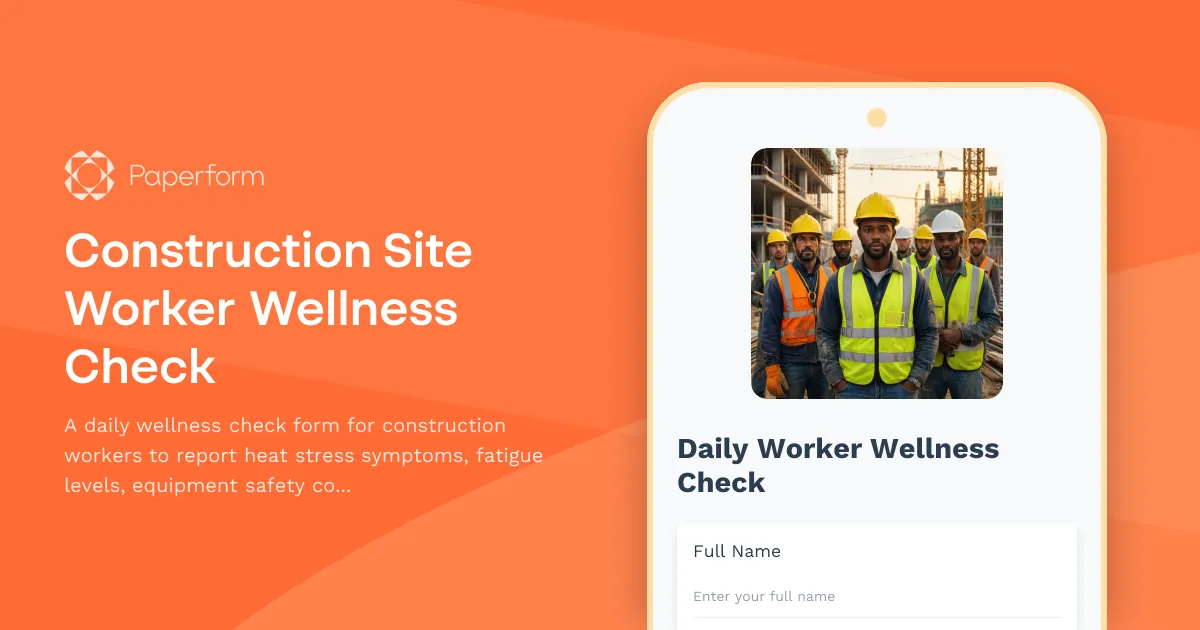
Construction Site Worker Wellness Check Form Template
Keeping your construction crew safe on site isn't just about hard hats and steel-toed boots—it's about staying ahead of heat stress, fatigue, and equipment issues before they become serious incidents. This Construction Site Worker Wellness Check form template gives your team a quick, simple way to report how they're feeling at the start of each shift, flag concerns in real time, and automatically alert supervisors when someone needs support.
Why daily wellness checks matter in construction
Construction sites are high-risk environments. Long hours, physical demands, extreme weather and heavy machinery create the perfect storm for workplace injuries and health emergencies. Heat stress alone accounts for thousands of construction injuries every year, and fatigue significantly increases the risk of accidents.
A daily wellness check isn't about adding paperwork—it's about catching warning signs early. When workers can quickly log symptoms, report equipment concerns, or flag that they're not feeling 100%, supervisors get the visibility they need to reassign tasks, provide breaks, or step in before a small issue becomes a major incident.
What this form does
This Paperform template is designed specifically for construction teams who want a fast, mobile-friendly way to run daily wellness checks on site. Workers can complete it in under two minutes on their phone at the start of a shift or any time during the day if something changes.
The form captures:
- Worker identification and shift details to track who's on site and when
- Heat stress symptom screening, including dizziness, nausea, headaches, confusion, and excessive sweating
- Fatigue assessment to identify workers who may be too tired to operate machinery or work at heights safely
- Hydration and rest break tracking to ensure everyone is taking care of basic needs
- Equipment safety concerns, so issues can be flagged and addressed before someone gets hurt
- General wellness questions to catch anything else that might affect performance or safety
- Automatic supervisor alerts when a worker reports concerning symptoms or urgent safety issues
Conditional logic means supervisors only get pinged when it matters—so they're not flooded with notifications, but they never miss a critical check-in.
Who this form is for
This template is built for:
- Construction site managers who need a reliable way to monitor crew welfare across shifts and projects
- Safety officers responsible for heat illness prevention programs and OSHA compliance
- General contractors and subcontractors working in high-heat environments or on long-duration projects
- Facilities managers overseeing maintenance crews and tradespeople
- HR and safety coordinators managing worker wellness programs and incident prevention
It works for teams of any size—from small residential contractors to large commercial site operations—and can be customized to match your specific safety protocols, reporting requirements, and escalation procedures.
How Paperform makes wellness checks effortless
Paperform is the perfect platform for running daily construction site wellness checks because it's designed to be fast, mobile-friendly, and smart enough to route information where it needs to go.
The form works beautifully on phones and tablets, so workers can complete it on site without heading back to a trailer or office. You can embed it on your internal safety portal, share it via QR code posted around the site, or send it out each morning via SMS or email.
Because Paperform includes conditional logic and calculations, the form automatically adapts based on how workers respond. Report heat stress symptoms? The form asks follow-up questions and flags the submission for immediate review. Say you're well hydrated and feeling strong? The form wraps up quickly so you can get to work.
Automate alerts and reporting with Stepper
Once a worker submits a wellness check, you don't want that data sitting in a spreadsheet—you want action. That's where Stepper (stepper.io) comes in.
With Stepper, Paperform's AI-native workflow builder, you can automatically:
- Send instant alerts to supervisors via SMS, Slack, or email when a worker reports concerning symptoms or safety issues
- Route different responses to different people—heat stress alerts go to the site safety officer, equipment issues go to the maintenance lead
- Log submissions in your safety management system, HRIS, or project tracking tools
- Create follow-up tasks for managers to check in with flagged workers later in the shift
- Generate end-of-week wellness summary reports to identify trends, repeat concerns, or high-risk shifts
All of this happens automatically, in the background, with no code required. You set the rules once, and Stepper handles the rest—so your team can focus on keeping people safe, not chasing down forms.
Built for real job sites
This template reflects the realities of construction work. It's fast enough that workers will actually use it, specific enough to catch real warning signs, and flexible enough to adapt to your site's unique needs.
You can customize the form to include your company branding, add site-specific safety questions, adjust symptom checklists based on regional risks (heat, cold, altitude), and tailor supervisor alerts to match your escalation protocols. And because Paperform is SOC 2 Type II compliant, you can trust that sensitive health data is handled securely.
Construction site wellness checks shouldn't feel like a burden—they should feel like a safety net. With Paperform and Stepper, you can roll out a wellness check program that's easy for workers to complete, gives supervisors real-time visibility, and helps you build a culture where looking out for each other is just part of the job.
Whether you're managing a crew of five or coordinating hundreds of workers across multiple sites, this form template gives you a simple, scalable way to put worker health and safety first—every single shift.
Get started today: Customize this template to match your site safety program, share it with your crew, and start catching warning signs before they become emergencies.



More templates like this
Solar Panel Installation Site Evacuation Form
Emergency evacuation and headcount form for solar panel installation sites with electrical shutdown procedures, roof clearance protocols, equipment securing, and grid disconnection verification.
Construction Site Accident Report Form
Document construction site accidents, safety violations, injuries, and OSHA reporting requirements with a comprehensive incident report form designed for contractors and site managers.
Manufacturing Facility Emergency Evacuation Form
A comprehensive emergency evacuation check-in form for manufacturing facilities to account for shift workers, visitors, contractors, and screen for hazmat exposure during emergency situations.
Marine Vessel Repair Facility Evacuation Check-In Form
Emergency evacuation check-in form for marine repair facilities to verify personnel safety, secure vessels, shut down fuel systems, and document facility status during emergency situations.
Telecommunications Tower Evacuation & Emergency Check-In Form
A comprehensive tower evacuation form for telecommunications sites managing climbers at height, RF exposure protocols, rescue equipment status, ground crew coordination, and carrier notification during emergency situations.

Woodworking Shop Emergency Evacuation Check-In Form
Emergency evacuation and headcount form for woodworking shops with equipment shutdown verification, safety checks, and personnel accountability tracking.
Aircraft Maintenance Hangar Evacuation Form
A comprehensive emergency evacuation and headcount form for aircraft maintenance facilities that tracks personnel, equipment status, and safety protocols during evacuations.
Auto Repair Shop Evacuation Check-In Form
Emergency evacuation and accountability form for auto repair shops to track personnel, equipment shutdown, and vehicle security during crisis situations.
Chemical Spill Emergency Response Form
Report chemical spills and hazardous material incidents with detailed documentation for containment, safety measures, and regulatory compliance.
Contractor Emergency Contact Form
A comprehensive emergency contact form for construction contractors, capturing project site details, safety certifications, workers' compensation information, and emergency contacts for site personnel.
Factory Explosion Incident Report
A comprehensive incident report form for documenting factory explosions and critical industrial incidents, including casualty assessment, OSHA coordination, and evacuation protocols.
Hazmat Storage Facility Evacuation & Accountability Form
Emergency evacuation form for hazardous materials storage facilities to track personnel accountability, containment status, exposure assessment, and regulatory notifications during critical incidents.