Community Health Insurance Enrollment Impact Report
Health insurance enrollment programs transform lives by connecting vulnerable community members with essential healthcare coverage. This Community Health Insurance Enrollment Impact Report helps nonprofit organizations, community health centers, and social service agencies document and communicate the tangible outcomes of their enrollment assistance efforts.
Why impact reporting matters for health insurance programs
For organizations running health insurance enrollment initiatives, measuring impact goes beyond counting applications submitted. Donors, funders, and community stakeholders want to understand how your program is closing coverage gaps, improving healthcare access, and reducing the medical debt burden that affects so many families.
This template is designed specifically for nonprofit organizations, community health workers, and patient advocacy groups who need to report comprehensive program outcomes to foundation funders, individual donors, government agencies, and board members.
What this impact report captures
This form helps you document:
- Enrollment outcomes – Total individuals and families enrolled, demographic breakdowns, and insurance type placement
- Coverage gap analysis – Previously uninsured individuals now covered and coverage continuity improvements
- Healthcare access improvements – New primary care connections, prescription access, preventive care utilization, and specialist referrals
- Medical debt reduction – Debt forgiven, payment plans established, and financial relief provided
- Program efficiency metrics – Staff time, volunteer hours, community partnerships, and cost per enrollment
- Qualitative impact stories – Real experiences that bring the numbers to life
How Paperform enhances your impact reporting
With Paperform's conditional logic, you can create dynamic reports that adapt based on program type, reporting period, or funding source requirements. Use calculation fields to automatically compute key metrics like cost per enrollment or percentage of coverage gaps closed.
Once your impact data is submitted, Stepper can automatically route the report to your development team, update your donor CRM, generate summary documents for board meetings, or trigger thank-you communications to funders. This automation ensures your impact data flows seamlessly into fundraising materials, grant reports, and annual reviews.
Who should use this template
This form is ideal for:
- Community health centers and FQHCs documenting enrollment assistance programs
- Nonprofit health navigators reporting to foundation funders
- Patient advocacy organizations tracking program outcomes
- Social service agencies measuring health insurance program impact
- Community-based organizations applying for continued funding
- Health equity initiatives demonstrating population-level change
By systematically capturing your health insurance enrollment program's impact, you can tell a compelling story about how your organization is building healthier, more secure communities—one enrollment at a time.
More templates like this
Community Health Coverage Enrollment Form
Streamline health coverage enrollment with verification of eligibility, income documentation, special enrollment periods, and automated renewal reminders for community health programs.
Community Doula Program Application
A comprehensive application form for pregnant individuals seeking support from a community doula program, including medical history, birth preferences, and postpartum care scheduling.
Community Health Assessment Grant Report
A comprehensive grant reporting form for organizations receiving community health assessment funding to document data collection, priority health issues, community input, and action plans.
Community Health Brain Injury Support Services Funding Application
A comprehensive funding application form for community organizations seeking grants to provide brain injury support services, including neurocognitive screening, care coordination, cognitive rehabilitation, peer support, family education, and community integration programs.
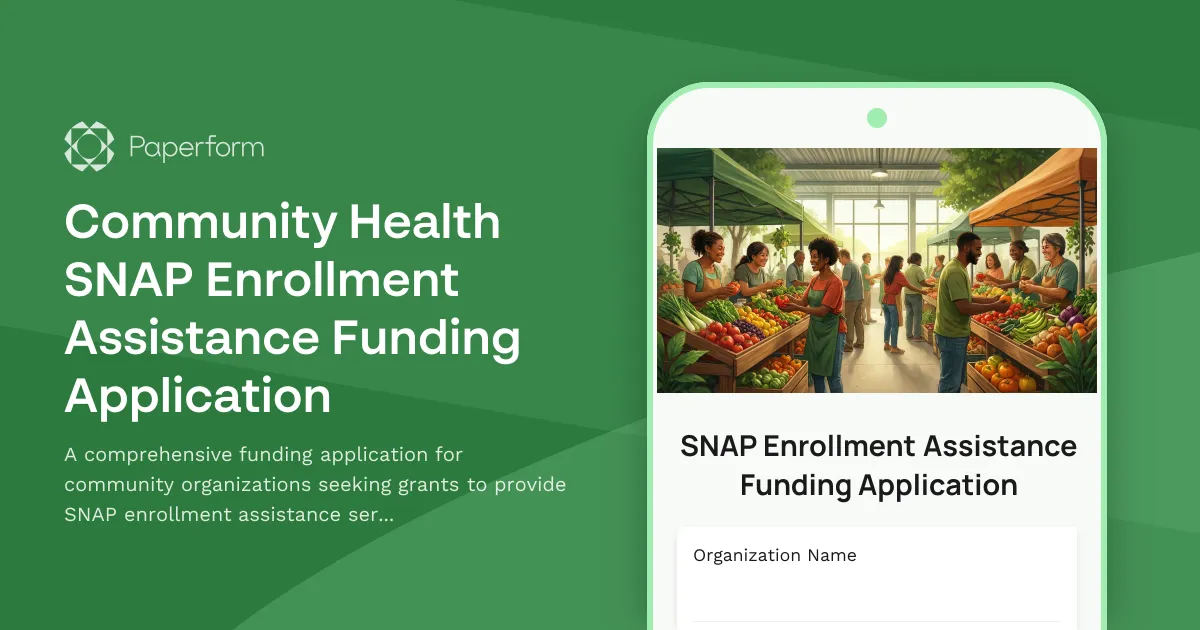
Community Health SNAP Enrollment Assistance Funding Application
A comprehensive funding application for community organizations seeking grants to provide SNAP enrollment assistance services, including food insecurity data, eligibility screening protocols, and nutrition education programs.
Community Health Worker Certification Scholarship Application
Apply for a scholarship to pursue Community Health Worker (CHW) certification with a focus on serving underserved populations and chronic disease navigation.
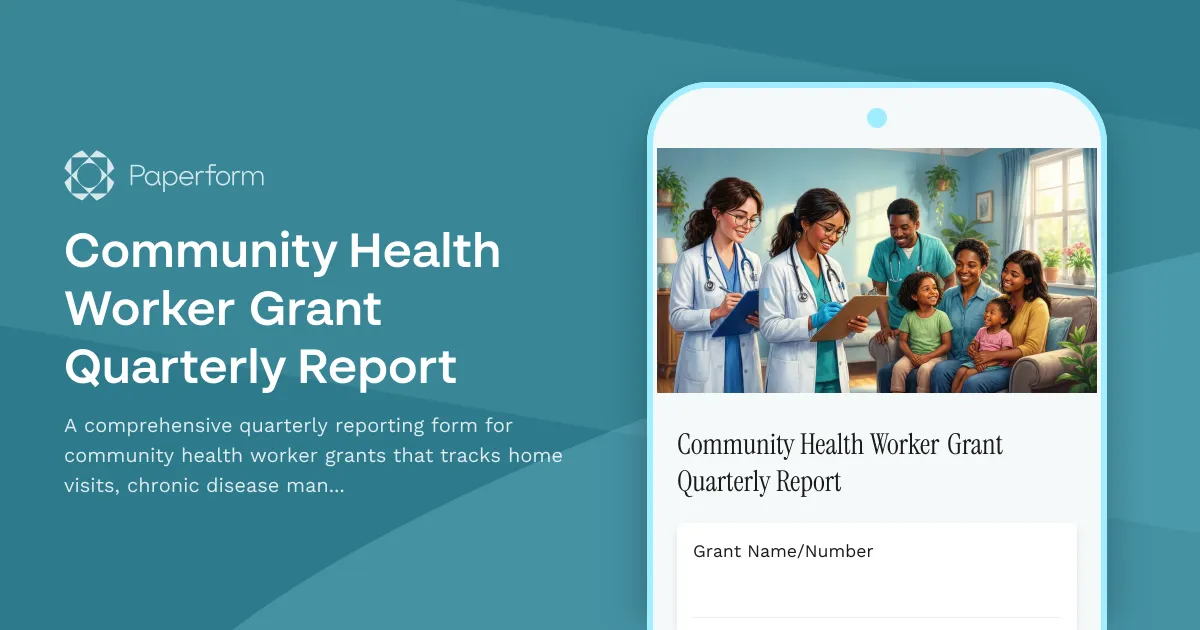
Community Health Worker Grant Quarterly Report
A comprehensive quarterly reporting form for community health worker grants that tracks home visits, chronic disease management support, healthcare navigation, and preventive screening referrals to demonstrate program impact.
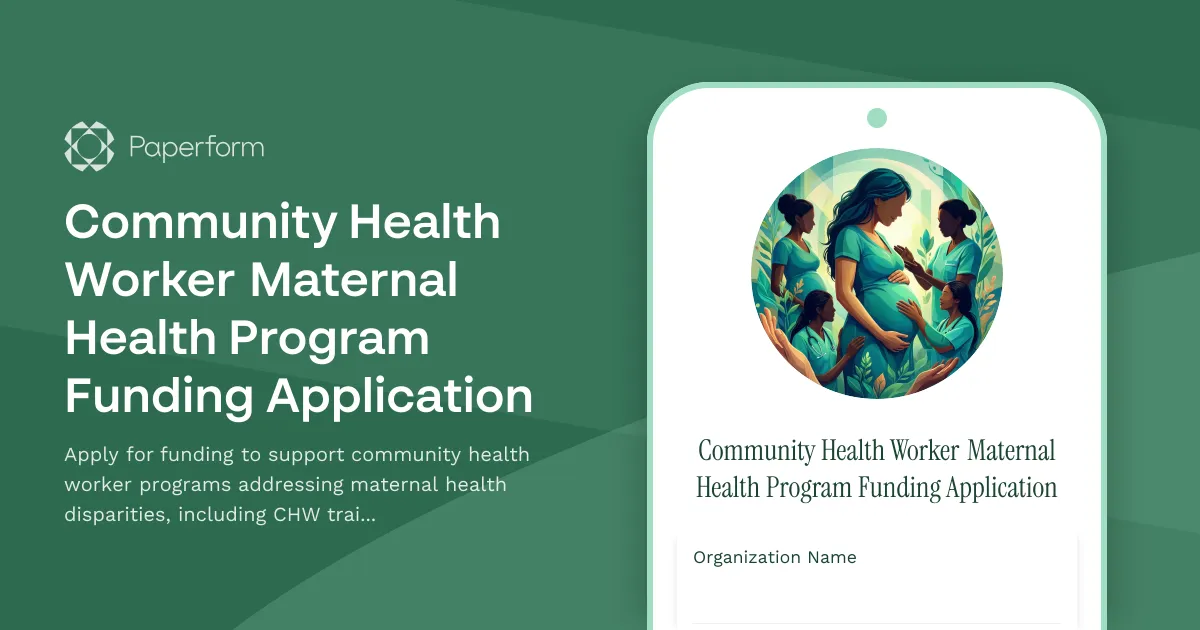
Community Health Worker Maternal Health Program Funding Application
Apply for funding to support community health worker programs addressing maternal health disparities, including CHW training, doula services, prenatal care protocols, and birth outcome improvements.
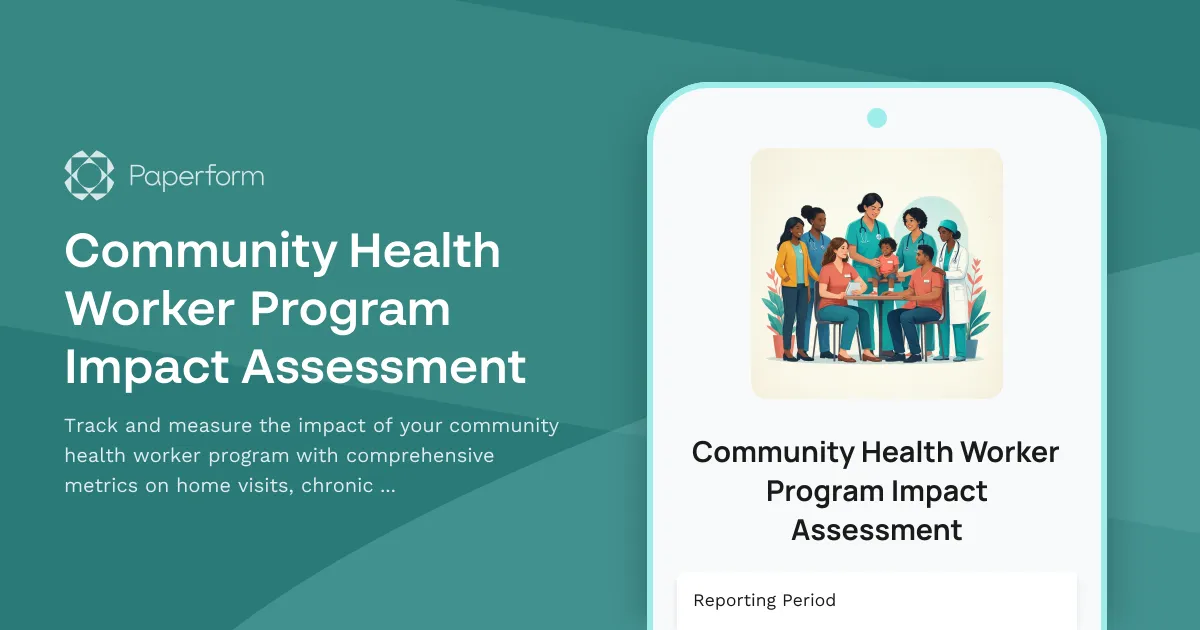
Community Health Worker Program Impact Assessment
Track and measure the impact of your community health worker program with comprehensive metrics on home visits, chronic disease management, preventive care, and emergency room reduction for donor reporting.
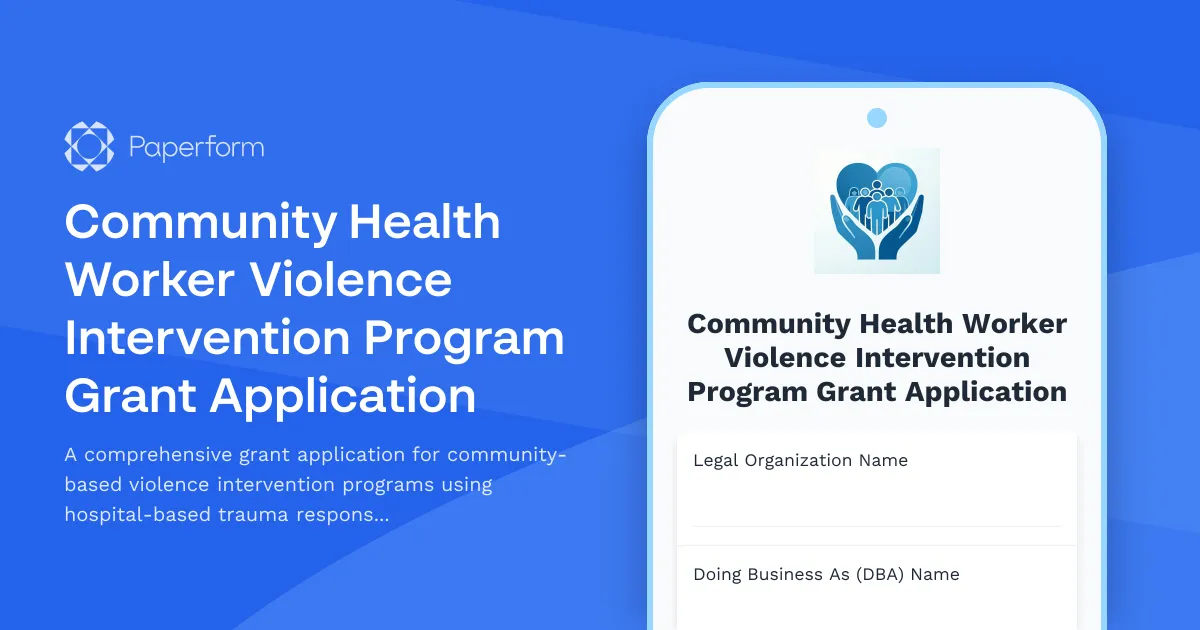
Community Health Worker Violence Intervention Program Grant Application
A comprehensive grant application for community-based violence intervention programs using hospital-based trauma response, case management, and conflict mediation to prevent retaliation and reduce gun violence.
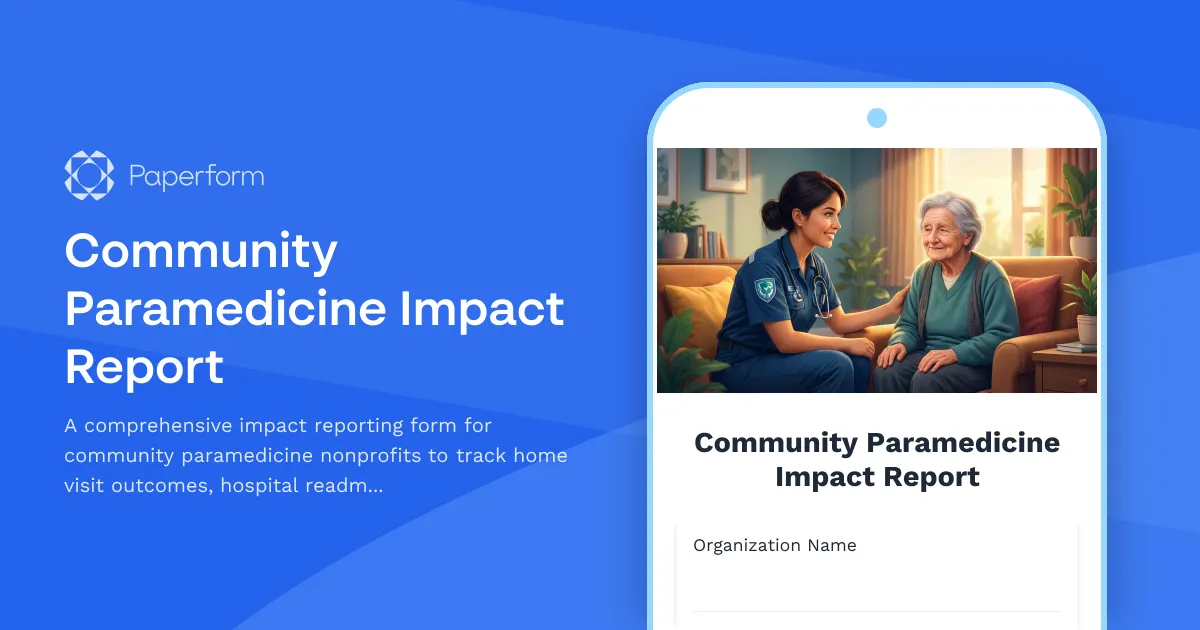
Community Paramedicine Impact Report
A comprehensive impact reporting form for community paramedicine nonprofits to track home visit outcomes, hospital readmission rates, chronic disease management, and healthcare cost savings for donor transparency.
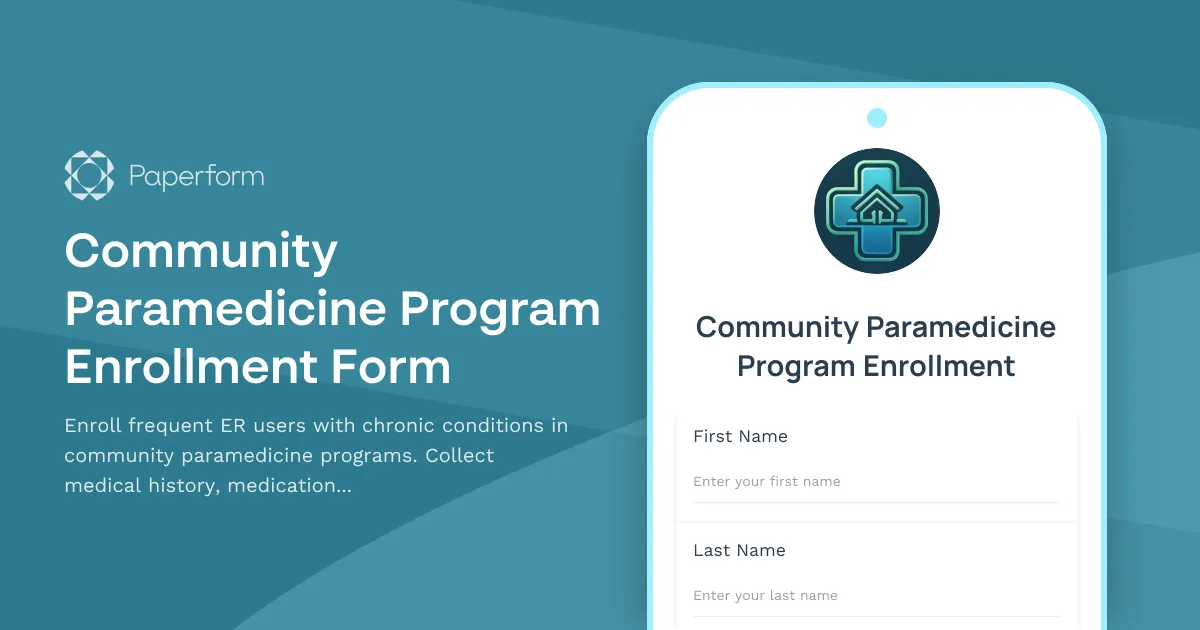
Community Paramedicine Program Enrollment Form
Enroll frequent ER users with chronic conditions in community paramedicine programs. Collect medical history, medication needs, care coordination consent, and home safety information.