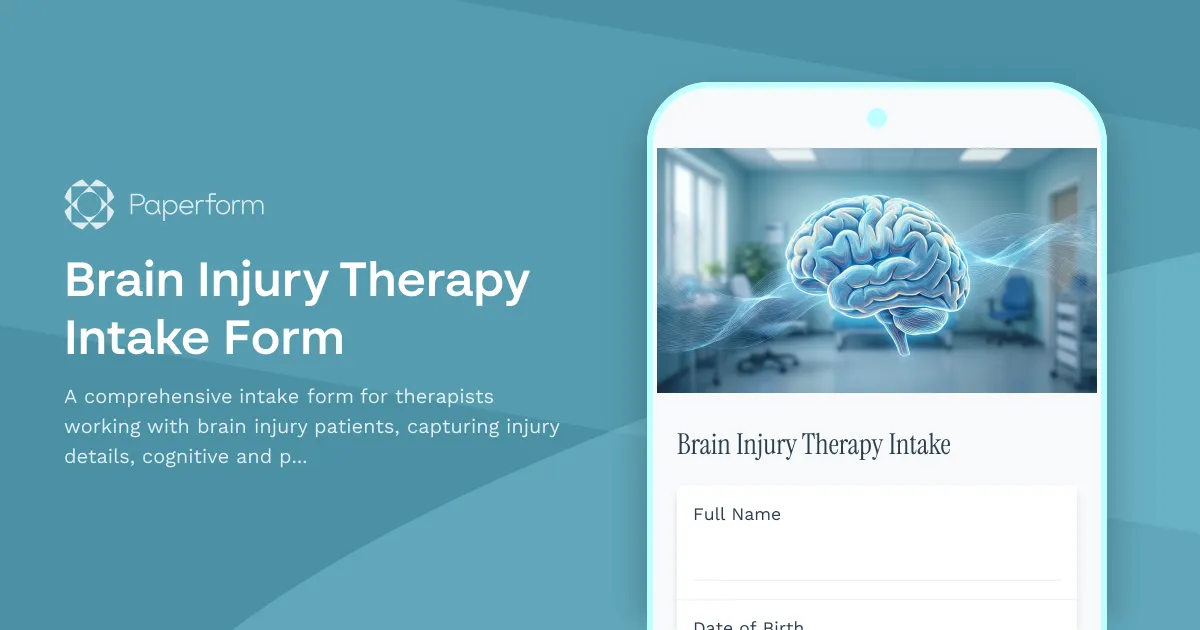
Brain Injury Therapy Intake Form Template
Working with brain injury patients requires detailed understanding of their injury history, cognitive changes, and ongoing challenges. This brain injury therapy intake form is designed for mental health professionals, neuropsychologists, occupational therapists, and rehabilitation specialists who need comprehensive patient information before beginning treatment.
Why This Form Matters for Brain Injury Therapy
Brain injuries—whether traumatic (TBI) or acquired (ABI)—affect each patient differently. Understanding the mechanism of injury, timeline, cognitive and personality changes, and current symptoms helps therapists create individualized treatment plans that address the whole person, not just isolated symptoms.
This template captures:
- Injury mechanism and timeline to understand severity and context
- Cognitive changes including memory, attention, executive function, and processing speed
- Personality and behavioral shifts that affect relationships and daily life
- Current symptoms across physical, emotional, and cognitive domains
- Rehabilitation history to build on previous progress and avoid duplication
- Support systems and daily functioning levels to inform realistic goals
Perfect for Mental Health and Rehabilitation Professionals
This intake form is ideal for:
- Clinical psychologists and neuropsychologists specializing in brain injury
- Licensed therapists (LCSW, LPC, LMFT) working with TBI/ABI patients
- Occupational therapists focused on cognitive rehabilitation
- Speech-language pathologists addressing cognitive-communication disorders
- Rehabilitation counselors coordinating multidisciplinary care
- Behavioral health specialists in hospital and outpatient settings
Streamline Your Practice with Paperform
Built on Paperform, this template offers a compassionate, user-friendly experience for patients and families during a vulnerable time. The clean layout and logical flow make it easy to complete, while conditional logic ensures you only ask relevant follow-up questions based on their specific situation.
Need to collect signatures on consent forms? Integrate Papersign to handle treatment authorizations and HIPAA releases seamlessly. Want to automate follow-up workflows? Use Stepper to trigger appointment reminders, send onboarding materials, or notify your team when high-priority cases come in.
Paperform's secure, professional platform helps mental health and rehabilitation professionals spend less time on paperwork and more time providing the specialized care brain injury patients deserve.



More templates like this
Schizophrenia Spectrum Evaluation Form
A comprehensive psychiatric evaluation form for assessing schizophrenia spectrum disorders, including psychotic symptom checklists, medication history, and hospitalization records for mental health professionals.
Anxiety Disorder Diagnostic Assessment Form
A comprehensive clinical form for mental health professionals to assess anxiety disorder symptoms, including panic attack frequency, avoidance behaviors, and physical symptom presentation.
Bipolar Disorder Intake Form
Comprehensive intake form for bipolar disorder assessment, capturing mood episode history, medication trials, family psychiatric history, and current symptoms to support effective treatment planning.
Cognitive Behavioral Therapy Intake Form
A comprehensive CBT intake form with depression screening, anxiety assessment, and therapy goals to help mental health professionals understand new clients and establish treatment plans.
Ketamine-Assisted Psychotherapy Screening Form
A comprehensive screening form for ketamine-assisted psychotherapy programs, evaluating treatment-resistant depression history, medical clearance requirements, and integration session planning for prospective patients.
Ketamine Therapy for Depression - Patient Intake Form
Comprehensive intake form for patients seeking ketamine therapy for treatment-resistant depression, including psychiatric history, medication trials, and safety screening.
OCD Symptom Severity Scale
A comprehensive OCD symptom assessment form measuring obsession themes, compulsion frequency, and functional impairment to help healthcare providers understand symptom severity before appointments.

Palliative Care Mental Health Intake Form
A compassionate intake form for mental health professionals supporting palliative care patients, covering illness severity, symptom management, existential concerns, and legacy planning.
Panic Disorder Assessment Form
A comprehensive pre-visit assessment form to screen for panic disorder, track panic attack frequency, evaluate physical symptoms, and assess for agoraphobia.
Psychosis Early Intervention Assessment Form
A comprehensive first-episode psychosis screening and coordinated specialty care enrollment form for mental health services, including clinical assessment, family education needs, and treatment planning.
Residential Treatment Center Admission Form
A comprehensive intake form for residential treatment centers to collect client information, psychiatric history, medication details, and family therapy needs for mental health and behavioral health admissions.
Telehealth Eating Disorder Assessment Form
A comprehensive virtual assessment form for eating disorder treatment that tracks meal plan adherence, evaluates body image concerns, monitors exercise patterns, and obtains family-based treatment consent.