
Professional Archaeological Recording Consent for Academic Institutions and Research Projects
Whether you're leading a university-led dig, managing a cultural resource management project, or coordinating community archaeology initiatives, documenting excavation work through photos, video, and audio recordings is essential for research, publication, and public education. But recording participants—from student volunteers to indigenous community members—requires clear, respectful consent that honours academic ethics, cultural sensitivities, and publication rights.
This Archaeological Excavation Recording Consent Form template gives archaeology departments, research institutions, field schools, and heritage organizations a professional, culturally-aware tool to obtain proper permissions for all types of site documentation.
Why Archaeological Projects Need Specialized Recording Consent
Archaeological fieldwork creates extensive visual and audio records: training videos, site documentation photos, drone footage, oral history interviews, and social media content showcasing discoveries. These recordings may appear in academic journals, conference presentations, museum exhibitions, documentary films, and public outreach materials for years or decades after a project concludes.
Unlike generic media releases, archaeological consent forms must address:
- Academic publication and citation rights across journals, books, and conference proceedings
- Long-term archival storage in institutional repositories and digital collections
- Cultural patrimony and indigenous data sovereignty considerations
- Different recording contexts: site work, laboratory analysis, interviews, and public presentations
- Varying levels of attribution from full academic credit to anonymous participation
- Sensitive site location protection to prevent looting or unauthorized visitation
This template reflects the ethical standards of organizations like the Society for American Archaeology (SAA), the World Archaeological Congress (WAC), and international heritage protection protocols.
What This Archaeological Recording Consent Form Includes
Built specifically for fieldwork and academic research contexts, this template collects:
Participant identification with options for full attribution, first name only, or complete anonymity in publications
Recording type permissions covering still photography, video documentation, audio recordings, drone footage, and 3D modeling/photogrammetry
Usage context consent for academic publications, conference presentations, educational materials, institutional archives, media interviews, social media, and fundraising materials
Publication and attribution preferences allowing participants to specify how they wish to be credited (or not credited) in scholarly work
Time duration for consent validity, with options for limited-term or perpetual permissions appropriate to long-term research projects
Cultural sensitivity acknowledgments including indigenous community consultation protocols and cultural patrimony considerations
Site location confidentiality agreements to protect sensitive archaeological sites from looting
Right to review and withdrawal options before publication, respecting participants' ability to change their minds
Emergency contact information and institutional review board (IRB) reference numbers for research ethics compliance
Perfect for Research Institutions, Field Schools, and Heritage Projects
This form template serves archaeology professionals across:
- University archaeology departments running field schools and multi-year excavation projects
- Cultural resource management (CRM) firms conducting compliance-driven archaeological surveys
- Museums leading public archaeology programs and community digs
- Indigenous heritage organizations managing culturally significant sites with community involvement
- Government agencies overseeing national park archaeology, historic preservation, and heritage protection
- Non-profit archaeological foundations coordinating volunteer excavations and citizen science projects
- International field projects requiring multi-lingual consent documentation
Whether you're documenting a semester-long field school in the Mediterranean, recording oral histories with descendant communities, creating educational content about a prehistoric site, or filming a public excavation day for social media, proper consent protects both your participants and your research program.
Streamline Documentation with Paperform's Flexible Design
Paperform makes it easy to create a consent form that reflects the professional standards and cultural sensitivity required in modern archaeology:
- Conditional logic shows only relevant recording contexts based on project type (excavation, survey, lab analysis, or oral history)
- Multi-language support for international projects working with diverse participant groups
- Digital signatures via Papersign create legally binding consent with automatic PDF generation
- Mobile-friendly design perfect for collecting consent in the field on tablets or smartphones at remote dig sites
- Secure file uploads let participants attach government ID if required by institutional ethics boards
- Custom success messages provide participants with a copy of their signed consent and project contact information
- Professional themes with university or institutional branding maintain academic credibility
Automate Follow-Up and Records Management with Stepper
Archaeological projects involve complex participant tracking and institutional compliance. Connect this form to Stepper to automate your consent workflow:
- Archive consent forms automatically in institutional repositories or project management databases
- Notify project PIs when consent forms are submitted, flagging any special restrictions or attribution requests
- Send confirmation emails with research ethics information and participant rights documentation
- Update CRM records linking consent status to participant rosters and field school enrollment
- Flag renewal dates for time-limited consent to ensure ongoing compliance
- Generate compliance reports for IRB annual reviews and grant reporting requirements
This automation ensures you maintain complete consent documentation throughout multi-year projects, meet university research ethics requirements, and respect participant preferences even as projects evolve.
Built for Research Ethics and Cultural Respect
Modern archaeology demands rigorous ethical standards around participant consent, particularly when working with indigenous communities, descendant populations, or volunteers from the general public. This template helps you:
- Meet IRB requirements with comprehensive information disclosure and voluntary participation language
- Honor indigenous protocols through cultural sensitivity acknowledgments and community consultation options
- Protect vulnerable communities from exploitation or misrepresentation in academic and media contexts
- Maintain transparency about how recordings will be used across the academic publication lifecycle
- Provide participant control over their image, voice, and personal information
By giving participants clear choices about recording contexts, attribution levels, and usage restrictions, you build trust with the communities and volunteers who make archaeological research possible.
Trusted by Academic and Heritage Institutions Worldwide
Paperform is used by universities, research institutions, and cultural organizations around the world to manage consent, participant recruitment, and research compliance. With SOC 2 Type II compliance and GDPR-ready features, your participant data stays secure and meets international data protection standards.
The platform's flexibility means you can adapt this template for everything from undergraduate field school documentation to complex multi-stakeholder heritage projects involving museums, indigenous communities, and government agencies—all while maintaining the professional standards expected in academic archaeology.
Get Proper Recording Consent for Your Next Excavation
Stop relying on generic photo release forms or paper consent documents that disappear into field notebooks. This Archaeological Excavation Recording Consent Form template gives you a professional, culturally informed tool that respects participants, meets research ethics standards, and protects your institution.
Whether you're planning a summer field school, launching a community archaeology project, or beginning a multi-year research excavation, proper consent documentation is your foundation for ethical, transparent, and legally compliant fieldwork. Start with Paperform's template and customize it for your site, your institution, and your community.
More templates like this

Traditional Craft Demonstration Recording Consent Form
A comprehensive consent form for recording traditional craft demonstrations, covering cultural preservation, educational use, and artisan promotion while respecting intellectual property and heritage rights.

Historical Site Tour Recording Consent Form
A professional consent form for tour guides and participants to authorize audio and video recordings during historical site tours for preservation, education, and tourism promotion purposes.
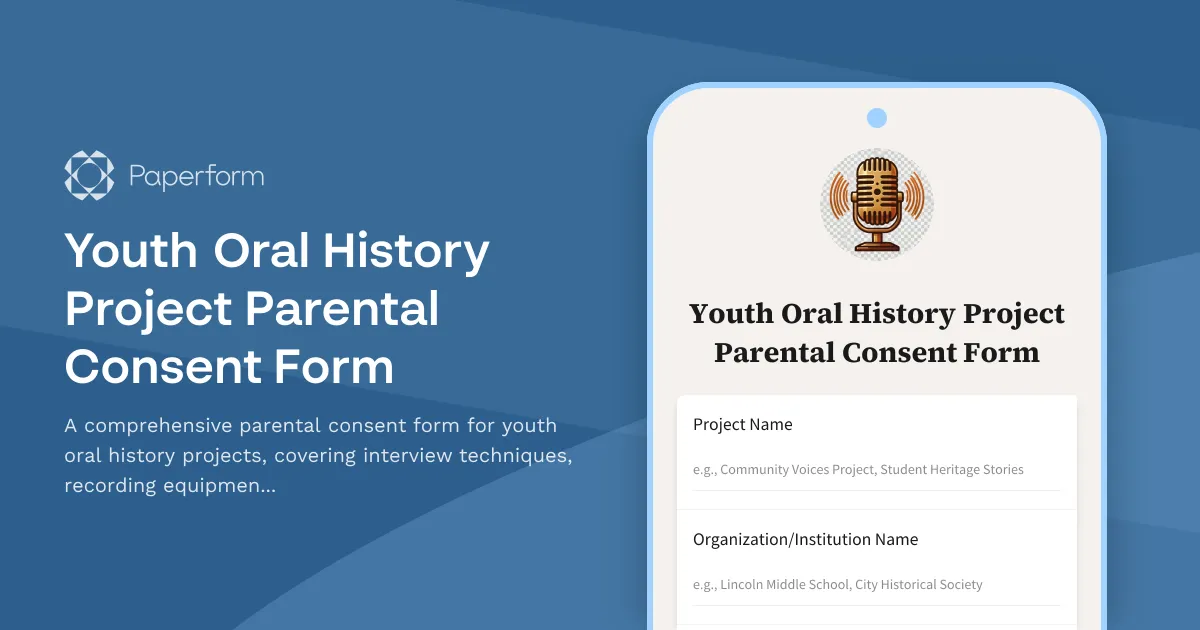
Youth Oral History Project Parental Consent Form
A comprehensive parental consent form for youth oral history projects, covering interview techniques, recording equipment, transcription processes, and archive contributions.
Virtual Museum Tour Recording Consent Form
A comprehensive consent form for museum docents participating in recorded virtual tours, covering educational distribution, accessibility, archival use, and rights management.

Academic Research Participant Observation Recording Consent Form
Comprehensive consent form for academic research participants being recorded during ethnographic observation studies, covering recording permissions, anonymization protocols, and publication rights.
Academic Thesis Defense Recording Consent Form
Obtain permission to record thesis defense presentations for institutional archives, committee review, and educational purposes. Secure student consent for audio/video recording and future academic use.

Medical Procedure Recording Consent Form
A comprehensive consent form for recording medical procedures for educational and training purposes, with full IRB compliance and patient de-identification protocols.

Medical Research Interview Recording Consent Form
A comprehensive consent form for recording medical research interviews, ensuring IRB protocol compliance, participant anonymity, and clear data usage permissions for qualitative analysis.
Data Anonymization Request Form for Research Purposes
A comprehensive GDPR-compliant form for requesting data anonymization for research projects, including technique specification and re-identification risk assessment.
Historical Reenactment Recording Consent Form
Secure recording permissions from historical reenactment participants for documentary, educational, and living history archive use with clear distribution rights.
Live Streaming Event Recording Consent Form
Secure attendee consent for live streaming, recording, and chat participation during virtual events with clear terms for broadcast and archived access.
Marine Conservation Volunteer Consent & Data Release Form
A comprehensive consent form for marine conservation volunteers participating in dive research programs, covering data usage, media release, safety protocols, and research participation.