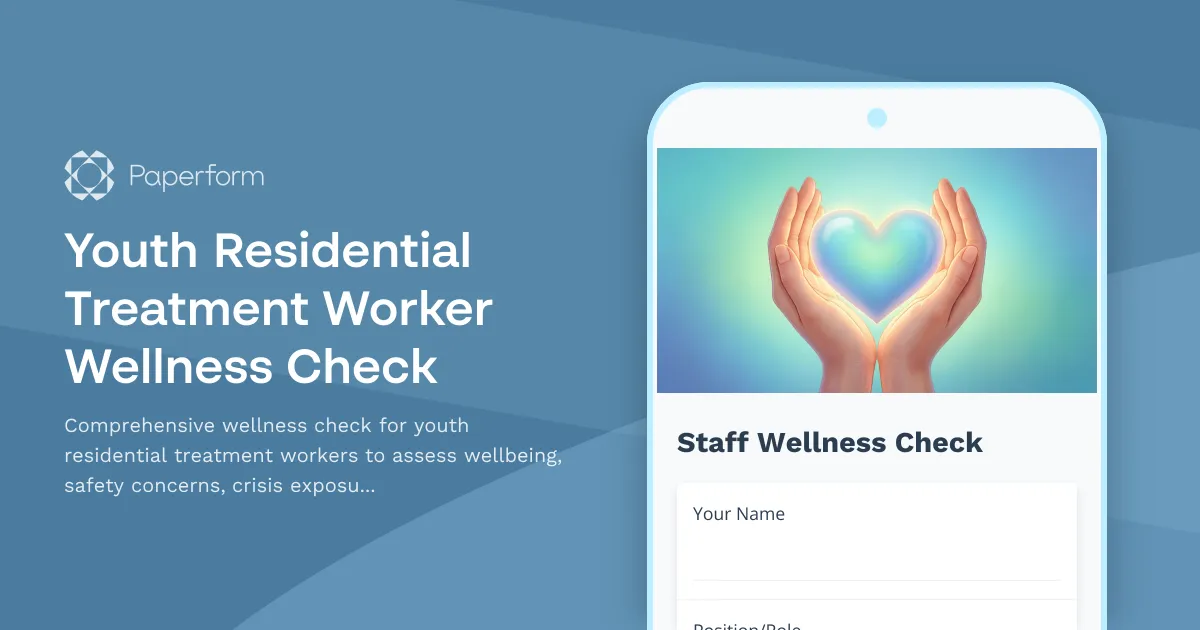
Prioritize Staff Wellbeing in Youth Residential Treatment Settings
Working in psychiatric residential treatment with youth requires exceptional emotional resilience, clinical skill, and physical safety awareness. Staff members regularly navigate behavioral crises, maintain therapeutic boundaries under pressure, and occasionally face violence exposure—all while providing trauma-informed care to vulnerable young people. This Youth Residential Treatment Worker Wellness Check template helps facilities systematically monitor staff wellbeing, identify support needs, and intervene early when team members face burnout, secondary trauma, or safety concerns.
Why Regular Wellness Checks Matter in Residential Treatment
Youth residential treatment facilities operate 24/7 with high-intensity therapeutic environments. Staff members experience unique occupational stressors including:
- Crisis intervention exposure: Responding to behavioral escalations, self-harm incidents, and psychiatric emergencies
- Physical safety risks: Managing aggression, restraint involvement, and shift violence exposure
- Emotional demands: Maintaining therapeutic boundaries while building genuine relationships with traumatized youth
- Vicarious trauma: Absorbing clients' trauma histories and witnessing their struggles
- Burnout factors: Long shifts, emotional exhaustion, and compassion fatigue
Regular wellness checks create a structured way for staff to report their experiences, flag concerns, and access support before reaching crisis points. This proactive approach protects both staff wellbeing and quality of care.
What This Wellness Check Template Covers
This comprehensive form addresses the specific realities of youth residential treatment work:
Safety & Incident Exposure: Document restraint involvement, physical aggression exposure, threats, and workplace violence incidents during the reporting period. This data helps identify staff who may need additional debriefing, trauma-informed support, or schedule adjustments.
Therapeutic Relationship Boundaries: Assess boundary challenges, countertransference concerns, and emotional entanglement with clients. Maintaining healthy boundaries is essential for both staff wellbeing and therapeutic effectiveness.
Crisis Intervention Impact: Evaluate how behavioral crisis responses are affecting staff emotionally and physically, including sleep disruption, hypervigilance, and emotional exhaustion.
Emotional & Mental Health: Screen for burnout symptoms, secondary trauma, anxiety, depression, and compassion fatigue using evidence-informed indicators.
Physical Health & Self-Care: Check on sleep quality, physical injury, chronic pain, and self-care practices that support resilience.
Support Needs & Resources: Identify what support would be most helpful—whether clinical supervision, peer support, schedule changes, EAP referrals, or additional training.
Ideal for Behavioral Health & Residential Treatment Facilities
This template is designed for:
- Residential treatment centers serving youth with psychiatric and behavioral needs
- Therapeutic group homes and congregate care facilities
- Crisis stabilization units for adolescents
- Juvenile justice facilities with mental health components
- Psychiatric hospitals with youth units
- Foster care agencies with therapeutic foster care programs
Any organization employing direct care staff who work with high-acuity youth in 24-hour care settings will benefit from this structured wellness monitoring approach.
How Paperform Supports Staff Wellbeing Workflows
Paperform makes it simple to deploy confidential, accessible wellness checks that integrate seamlessly with your existing support systems:
Anonymous or Identified Options: Configure the form for anonymous submission to encourage honest reporting, or collect names when follow-up support is appropriate. Use conditional logic to let staff choose their level of identification.
Automated Alerts for High-Risk Responses: Set up workflows that automatically notify supervisors, HR, or EAP coordinators when responses indicate high risk for burnout, trauma exposure, or safety concerns—ensuring rapid intervention.
Schedule Regular Check-Ins: Send wellness check links on a regular cadence (weekly, bi-weekly, or monthly) via email or text to normalize wellbeing conversations and catch concerns early.
Confidential Response Collection: Paperform is SOC 2 Type II compliant, ensuring sensitive wellness data is securely stored and accessible only to authorized personnel.
Integrate with Your Support Systems: Connect responses to HRIS systems, case management platforms, or Google Sheets for tracking trends, generating reports, and identifying facility-wide patterns that require systemic intervention.
Extend Your Wellness Program with Workflow Automation
Take your staff support system further with Stepper (stepper.io), Paperform's AI-native workflow builder:
- Triage and Route Urgent Cases: Automatically route high-risk wellness check responses to clinical supervisors, HR, or crisis counselors based on responses
- Schedule Follow-Up: Trigger automated follow-up check-ins or appointment scheduling for staff who flag significant concerns
- Generate Debrief Sessions: Create calendar invites for trauma debriefing or critical incident stress management based on restraint or violence exposure reports
- Track Support Completion: Log what interventions were provided and ensure staff receive promised follow-up resources
- Aggregate Reporting: Compile monthly wellness data for leadership, highlighting trends in burnout, violence exposure, and support utilization
Supporting Those Who Care for Vulnerable Youth
Youth residential treatment workers show up every day to provide life-changing care for some of society's most vulnerable young people. They deserve systematic, compassionate support for their own wellbeing. Regular wellness checks demonstrate organizational commitment to staff health, reduce turnover, improve care quality, and create cultures where seeking support is normalized rather than stigmatized.
This form template is the foundation for a proactive staff wellbeing program that honors the challenging, essential work your team does every day. Start using Paperform to prioritize the people who make healing possible.

More templates like this
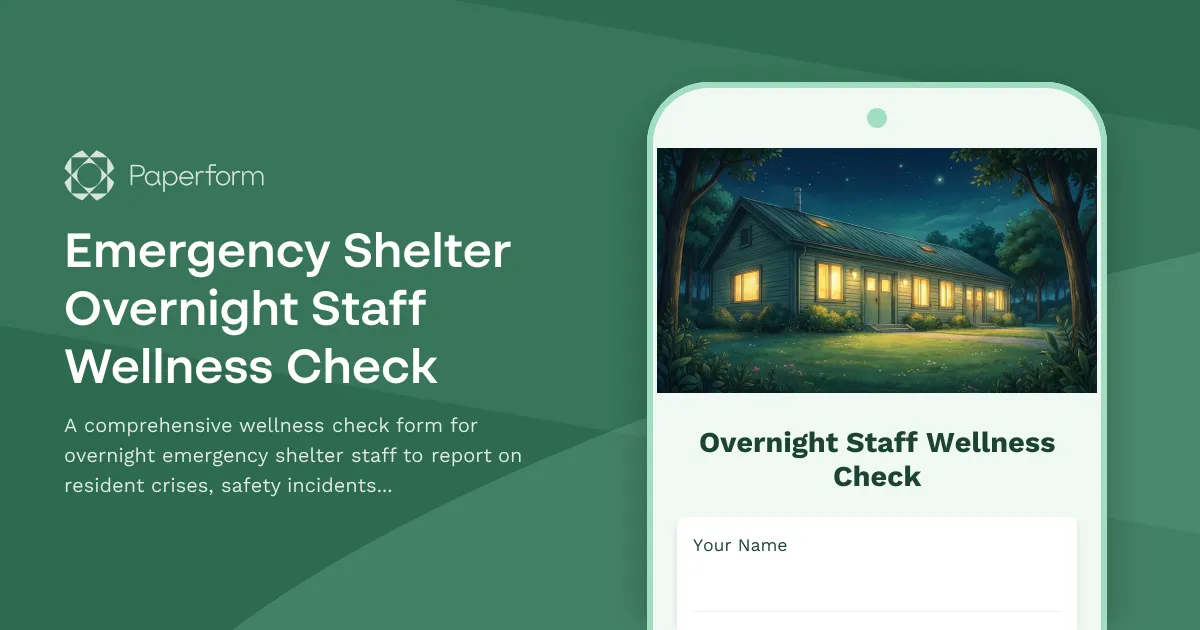
Emergency Shelter Overnight Staff Wellness Check
A comprehensive wellness check form for overnight emergency shelter staff to report on resident crises, safety incidents, personal wellbeing, and supervisor communication needs.
Perinatal Loss Doula Wellness Check Form
A compassionate wellness check form for perinatal loss doulas providing stillbirth support, NICU vigil care, memory photography, and bereaved family follow-up services.
Community Mental Health Worker Wellness Check
A comprehensive wellness check form for community mental health workers to assess client wellbeing, safety risks, medication compliance, and caseload concerns with structured risk assessment protocols.
Crisis Intervention Counselor Wellness Check Form
A confidential wellness assessment form designed for crisis counselors managing high-stress interventions, suicide follow-ups, and transition care with comprehensive safety planning and support resources.

Crisis Intervention Specialist Supervisor Wellness Check
A comprehensive wellness check form for crisis intervention supervisors to assess staff trauma exposure, facilitate critical incident debriefing, and monitor supervisor wellbeing.
Crisis Stabilization Unit Counselor Wellness Check
A comprehensive wellness check form designed for crisis stabilization unit counselors to assess work-related stress, burnout, and emotional wellbeing in high-pressure healthcare environments.
Domestic Violence Shelter Resident Wellness Check
A compassionate wellness check form for domestic violence shelter residents to assess safety, wellbeing, trauma symptoms, children's needs, and connection to support services.
Homeless Veteran Welfare Check & Outreach Report
A comprehensive form for reporting missing chronically homeless veterans with service-connected disabilities to facilitate coordinated outreach efforts between street medicine teams, VA homeless coordinators, and community support services.
International Refugee Missing Person Report with Trauma Support
A sensitive, trauma-informed form for reporting missing refugee individuals with histories of torture or trauma, including interpreter needs and specialized care coordination.
Missing Postpartum Mother Report with Welfare Concerns
A sensitive, comprehensive form for healthcare providers and social services to report missing postpartum mothers enrolled in maternal mental health programs, including depression screening data and infant welfare concerns.
Neonatal Bereavement Follow-Up Wellness Check
A compassionate follow-up form for neonatal bereavement support, enabling nurses to conduct wellness checks, coordinate grief support services, and provide ongoing care for families experiencing pregnancy loss.
Pediatric Oncology Social Worker Wellness Check
A compassionate wellness check form for pediatric oncology social workers to assess family support needs, including terminal diagnosis support, financial stress evaluation, sibling adjustment, and bereavement counseling coordination.