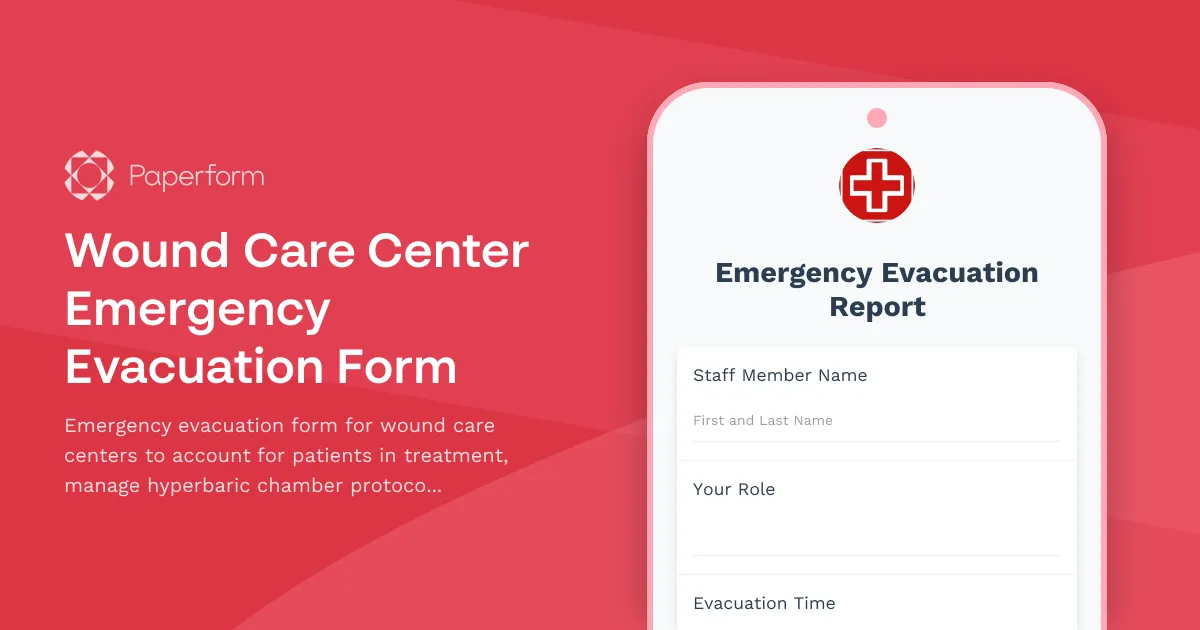
When an emergency evacuation is necessary at a wound care center, the safety of patients—many of whom are in active treatment or specialized therapies—depends on having a clear, organized system for headcount, equipment protocols, and care continuity. This Wound Care Center Emergency Evacuation Form template provides healthcare administrators and staff with a streamlined way to account for all patients, manage hyperbaric chamber protocols, secure specialized dressings and equipment, and reschedule critical appointments.
Built specifically for wound care facilities, this template captures patient status, current treatment details, hyperbaric chamber occupancy, equipment sterilization protocols, and medication needs. It ensures that nothing is overlooked during an evacuation, from accounting for patients in specialized treatment rooms to securing expensive, sensitive equipment and coordinating follow-up care.
Paperform makes it easy to deploy this evacuation form across mobile devices, tablets, and desktops, so staff can complete check-ins in real time during an emergency. Conditional logic guides responders through the right questions based on patient type and treatment status, while secure data handling ensures HIPAA-adjacent care in protecting sensitive patient information. Once submitted, responses can automatically notify managers via email, log to Google Sheets or Airtable for real-time tracking, and trigger follow-up workflows using Stepper to coordinate appointment rescheduling, equipment audits, and family notifications.
Whether you're a wound care center administrator, clinic manager, or healthcare operations professional, this template helps you prepare for the unexpected with a professional, mobile-ready evacuation protocol that prioritizes patient safety and care continuity.



More templates like this
Catheterization Lab Emergency Evacuation Form
A critical incident form for managing cath lab evacuations, tracking patient status, equipment shutdown, sterile field protocols, and staff accountability during emergency situations.
Trauma Center Evacuation Checklist
A comprehensive evacuation management form for trauma centers to track patient status by injury severity, coordinate blood bank resources, monitor surgical suite operations, and manage helipad logistics during emergency evacuations and mass casualty incidents.
Cruise Ship Medical Emergency Report
A comprehensive form for reporting and managing medical emergencies aboard cruise ships, including passenger health crisis assessment, port diversion evaluation, and medical evacuation coordination.
Hospital Evacuation Patient Tracking Form
Track patient status, location, mobility needs, and evacuation assignments during hospital emergency evacuations to ensure safe and organized movement of all patients.
Medical Equipment Preventive Maintenance Emergency Form
A comprehensive emergency response form for medical equipment maintenance issues, ensuring rapid backup deployment, service schedule protection, and minimal clinical impact during critical equipment failures.
Medical Staff Peer Review Emergency Form
A secure emergency peer review form for medical facilities to evaluate clinical cases during crisis situations while protecting documentation and ensuring proper timeline adherence.
Missing Psychiatric Hold Patient Report Form
A comprehensive form for healthcare facilities to report missing patients who left during an involuntary psychiatric hold period before their 72-hour evaluation, including danger assessment and legal authorization tracking.
Neonatal ICU Evacuation Form
A comprehensive emergency evacuation form for NICU staff to document infant status, medical equipment readiness, and transport team coordination during facility evacuations.
Patient Satisfaction Emergency Response Form
Streamline emergency patient complaint resolution with automated prioritization, service recovery workflows, and reputation management coordination to protect your healthcare brand during critical incidents.
Urgent Care Surge Capacity & Patient Flow Management Form
A comprehensive form for urgent care centers to manage surge capacity events, coordinate staff augmentation, track patient flow, and activate transfer protocols during high-volume or crisis situations.
Assisted Living Facility Evacuation Form
A comprehensive evacuation check-in form for assisted living facilities to account for residents, track medical needs, mobility requirements, and emergency contact information during evacuations.
Behavioral Health Crisis Center Patient Elopement Report
A comprehensive elopement report form for behavioral health facilities to document missing patients, assess risk factors, and coordinate immediate response efforts with mobile crisis teams.