Create an Inclusive Woodworking Learning Environment
Woodworking classes should be accessible to everyone, regardless of physical ability or learning differences. This Woodworking Class Accommodation Request Form helps instructors, makerspaces, community colleges, and craft studios gather the information they need to provide meaningful accommodations—from modified equipment and adapted safety gear to alternative instruction formats.
Whether you're running a vocational program, community workshop, or recreational woodworking class, understanding your students' needs upfront allows you to prepare workstations, source adaptive tools, and adjust teaching methods before the first day. This proactive approach creates a safer, more confident learning experience for students with mobility limitations, visual or hearing impairments, learning disabilities, or other accessibility needs.
Built for Education, Trades, and Community Programs
This template is designed for woodworking instructors, program coordinators, community education directors, and makerspace managers who want to create truly inclusive hands-on learning environments. It covers equipment modifications (bench height adjustments, tool grips, jig adaptations), safety gear customizations (hearing protection alternatives, tactile guards, visual alerts), instruction format preferences (written steps, video demonstrations, one-on-one guidance), and workspace accessibility considerations.
By collecting this information through a structured form, you can plan accommodations thoughtfully, communicate with students about what's possible, and ensure compliance with accessibility standards like the ADA. The form can be embedded on your course registration page, sent as a follow-up after enrollment, or included in your student onboarding packet.
Automate Your Accommodation Workflow
Once a request is submitted, you can use Stepper to automatically route accommodation requests to the right team members—sending equipment modification requests to your shop manager, instruction format preferences to teaching staff, and safety gear needs to your procurement coordinator. You can trigger follow-up emails, schedule pre-class consultations, and keep a clear audit trail of how each request was addressed.
Paperform's conditional logic allows you to show or hide questions based on the type of accommodation needed, keeping the form focused and relevant for each student. Whether you're serving adult learners in a community education program, veterans in a trades training initiative, or hobbyists at a local makerspace, this form helps you deliver on your commitment to accessibility with professionalism and care.
Trusted by over 500,000 teams worldwide and fully SOC 2 Type II & GDPR compliant, Paperform gives educators and program coordinators the tools to create accessible, student-centered experiences without needing IT support or complex software.



More templates like this
Calligraphy Class Accommodation Request Form
Request accessibility accommodations for calligraphy classes including pen modifications, paper positioning adaptations, and preferred instruction formats to ensure an inclusive learning experience.
Mosaic Art Class Accommodation Request Form
Request accessibility accommodations for mosaic art classes including workspace modifications, material handling assistance, and alternative instruction methods.
Nalbinding Workshop Accommodation Request Form
A comprehensive accommodation request form for nalbinding workshops, allowing participants to request needle modifications, material handling assistance, and alternative instruction methods to ensure an accessible learning experience.
Origami Class Accommodation Request Form
A welcoming form for students to request accessibility accommodations for origami classes, including paper handling modifications, folding technique adaptations, and alternative instruction methods.
Scrimshaw Workshop Accommodation Request Form
A comprehensive form for scrimshaw workshop participants to request disability and accessibility accommodations, including tool modifications, workspace adjustments, and preferred instruction formats.
Soap Making Class Accommodation Request Form
Request disability accommodations and accessibility modifications for soap making classes. Customize workspace setup, equipment adaptations, and instruction methods to ensure an inclusive learning experience.
Enameling Workshop Accommodation Request Form
A comprehensive form for participants to request disability and accessibility accommodations for enameling workshops, including kiln accessibility needs, tool modifications, and instruction format preferences.
Ink Making Workshop Accommodation Request Form
Request accessibility accommodations for ink making workshops including workspace modifications, material handling assistance, and alternative instruction methods to ensure an inclusive creative experience.
Juggling Class Accommodation Request Form
A comprehensive form for requesting disability and accessibility accommodations in juggling classes, including equipment modifications, practice space adjustments, and instruction format preferences.
Painting Class Accommodation Request Form
Request accessibility accommodations for painting classes, including material adaptations, instructional modifications, and workspace accessibility needs.
Printmaking Workshop Accommodation Request Form
Request accessibility accommodations for printmaking workshops, including press modifications, tool adaptations, and customized instruction formats to ensure inclusive creative learning.
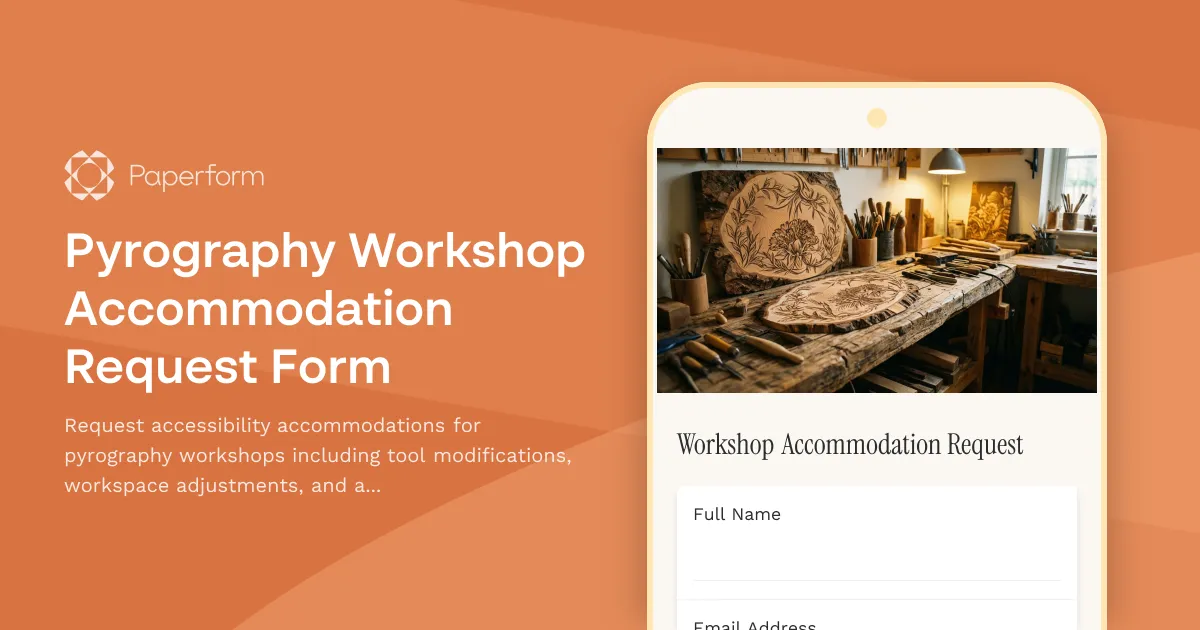
Pyrography Workshop Accommodation Request Form
Request accessibility accommodations for pyrography workshops including tool modifications, workspace adjustments, and alternative instruction methods to ensure an inclusive creative experience.