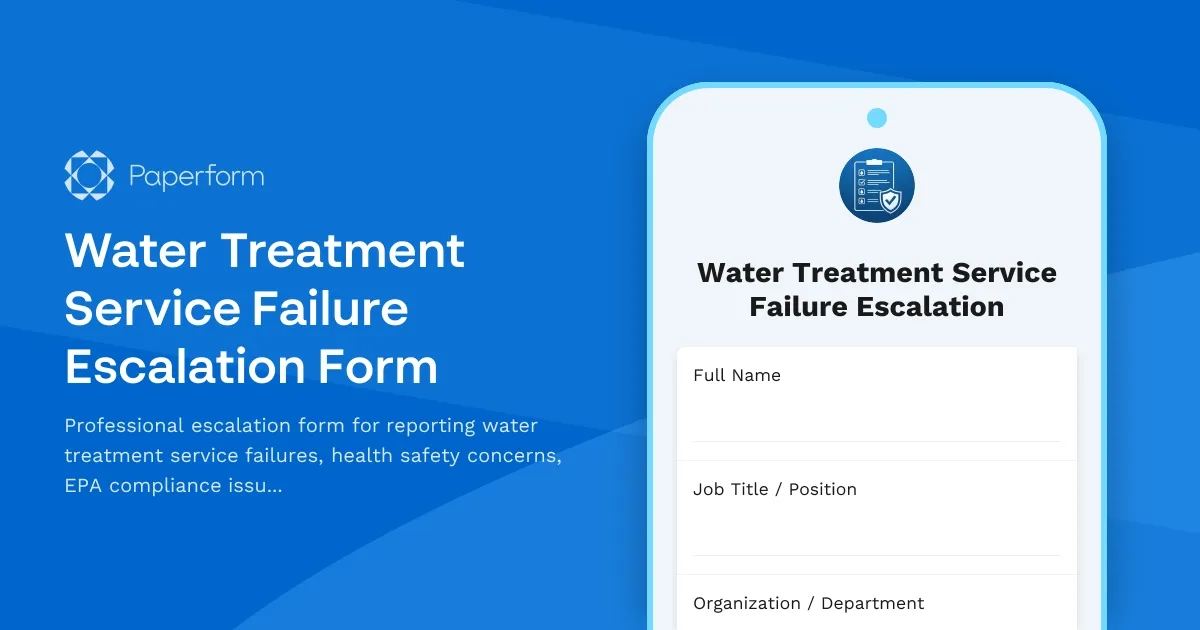
When water treatment services fail, the consequences can be severe—affecting public health, regulatory compliance, and community trust. This Water Treatment Service Failure Escalation Form provides water utilities, municipalities, facility managers, and environmental health departments with a structured process for documenting critical incidents, health safety concerns, EPA compliance violations, testing accuracy disputes, and emergency response failures.
Built with Paperform's flexible form builder, this template captures all essential details for proper escalation and management review: incident classification, affected systems, health impact assessment, regulatory compliance status, testing discrepancies, timeline documentation, and corrective action requests. The clear, professional layout ensures that urgent water quality issues are properly documented and routed to the appropriate authorities for immediate action.
Ideal for water utilities, environmental services, public health departments, facility management, and property managers, this form helps you maintain regulatory compliance, protect public health, and ensure accountability when water treatment systems fail to meet safety standards.
The form includes conditional logic to reveal relevant follow-up questions based on incident type, allowing responders to provide detailed information about contamination events, equipment failures, testing disputes, or emergency protocol breakdowns. Automated workflows through Stepper can route escalations to management, environmental health officers, or regulatory bodies based on severity level, while Papersign can facilitate required acknowledgments and corrective action plans with secure eSignatures.
Whether you're managing municipal water systems, overseeing industrial treatment facilities, or coordinating environmental health responses, this template ensures that water treatment failures are escalated through proper channels with complete documentation—protecting community health and meeting regulatory requirements.



More templates like this
Anonymous Community Paramedicine Scope Violation Report
Confidential reporting form for community paramedicine scope violations and patient safety concerns to state EMS authorities.
Food Safety Violation Witness Statement Form
A comprehensive witness statement form for documenting food safety violations, health code breaches, and contamination incidents for official reporting and inspector notification.
Chemical Spill Emergency Response Form
Report chemical spills and hazardous material incidents with detailed documentation for containment, safety measures, and regulatory compliance.
Fire Protection Service Failure Escalation Form
Report critical fire protection system failures, code compliance gaps, and inspection issues to building safety authorities and management for immediate review and resolution.
Nuclear Facility Radiological Incident Report
A comprehensive incident report form for nuclear facilities to document radiological events, assess exposure levels, determine evacuation zones, and ensure NRC notification compliance.
Correctional Facility Riot Incident Report
Complete riot and critical incident documentation for correctional facilities, including tactical response, injury assessment, and state oversight notification requirements.
Joint Commission Immediate Threat to Life Citation Report
A comprehensive form for healthcare facilities to document Joint Commission immediate threat to life (ITL) citations discovered during unannounced surveys, outline corrective actions, and address patient safety risks to maintain accreditation compliance.
Medical Device Post-Market Surveillance Inquiry Form
A comprehensive form for reporting and tracking medical device incidents, adverse events, and product complaints as part of post-market surveillance programs and regulatory compliance.
Mobile X-ray Unit Radiation Exposure Incident Report
Document radiation exposure incidents involving mobile X-ray equipment, including technician and patient dosage, equipment malfunctions, and regulatory compliance requirements.
Pipeline Rupture Witness Statement Form
A comprehensive witness statement form for documenting pipeline ruptures, environmental damage, safety failures, and notifying the Pipeline Safety Administration of incidents.
Queensland Workplace Health and Safety Incident Report
A comprehensive WHS incident report form for Queensland workplaces to document incidents, identify hazards, record corrective actions, and obtain WHS officer sign-off in compliance with Work Health and Safety Act 2011.
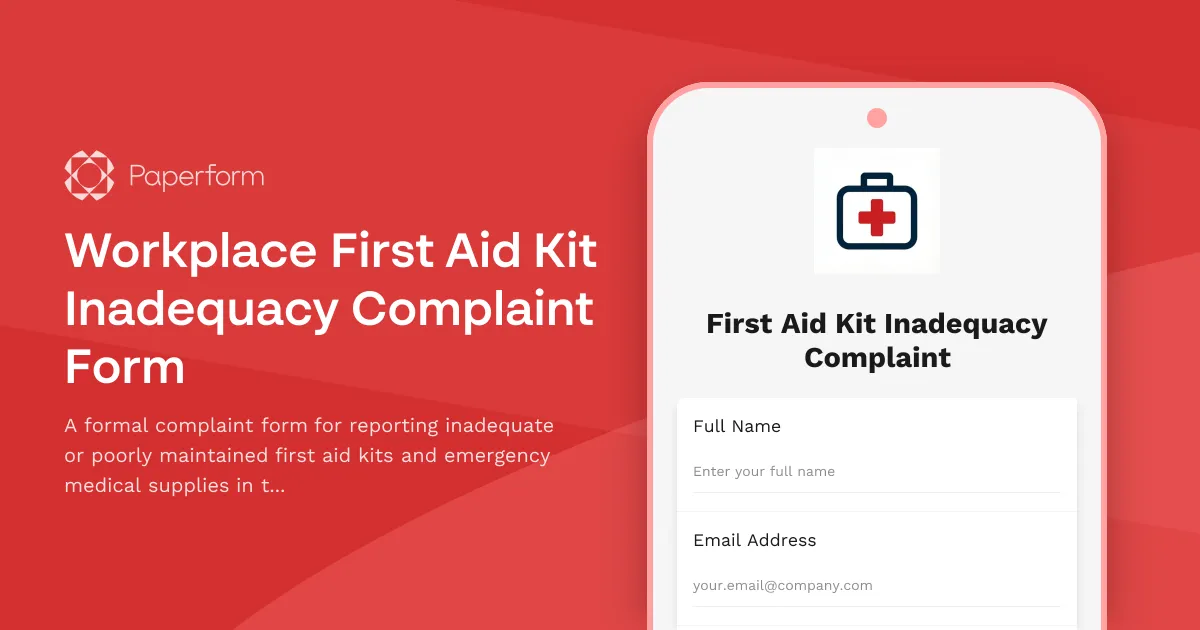
Workplace First Aid Kit Inadequacy Complaint Form
A formal complaint form for reporting inadequate or poorly maintained first aid kits and emergency medical supplies in the workplace, ensuring OSHA compliance and employee safety.