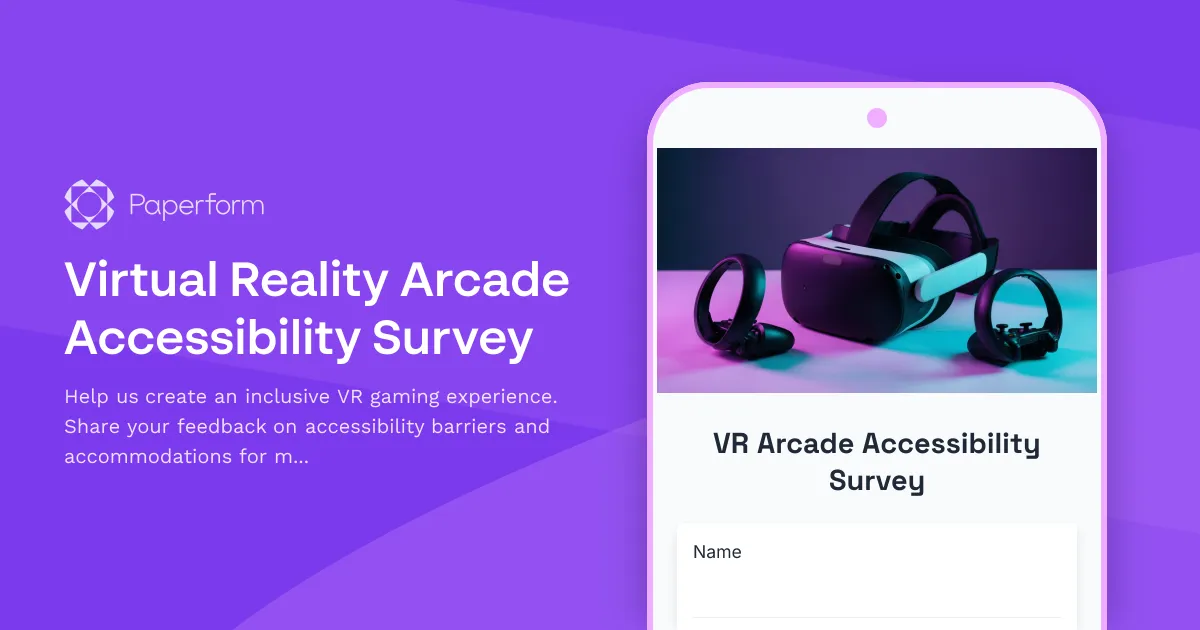
Make VR Gaming Accessible for Everyone
Virtual reality has the power to transport players to incredible worlds—but only if those worlds are accessible to everyone. If you're a gamer with mobility, visual, or hearing disabilities, your feedback is essential to creating an inclusive VR arcade experience that works for all abilities.
This VR arcade accessibility survey helps arcade owners, game developers, and venue managers understand the real barriers gamers face when using VR headsets, controllers, and game interfaces. Whether you've visited VR arcades before or are interested in trying them, your insights will directly shape improvements to headset accommodations, control adaptations, audio-visual settings, and physical space design.
Why VR Accessibility Feedback Matters
The gaming industry is increasingly focused on accessibility, but VR presents unique challenges. Headsets can be uncomfortable or incompatible with assistive devices, motion controls may not work for everyone, and immersive audio-visual experiences can create barriers for players with sensory disabilities.
By collecting structured feedback through this survey template, VR arcade operators and game developers can:
- Identify specific accommodation needs for different types of disabilities
- Prioritize accessibility improvements based on real player experiences
- Design better onboarding processes that accommodate diverse needs
- Create equipment loan programs for adaptive controllers and assistive devices
- Improve physical space navigation for wheelchair users and those with mobility aids
- Enhance subtitle, captioning, and audio description features in games
What Makes This Survey Effective
This Paperform template is designed specifically for gathering nuanced accessibility feedback from the gaming community. Unlike generic feedback forms, it includes:
- Disability-specific question paths using conditional logic to show relevant questions based on the types of accessibility needs you indicate
- Detailed accommodation assessments covering headset fit, controller adaptability, seated vs. standing gameplay, and assistive technology compatibility
- Game-specific feedback sections allowing you to comment on particular VR titles and their accessibility features
- Priority ranking to help venues understand which improvements matter most
- Open feedback opportunities for sharing experiences that structured questions might miss
The form uses Paperform's Guided Mode to present one question at a time, creating a comfortable, conversational experience that doesn't overwhelm respondents with a long wall of questions. This is especially important for accessibility surveys where fatigue and cognitive load matter.
Perfect for VR Arcades, Game Developers, and Accessibility Advocates
This template is ideal for:
- VR arcade owners and managers looking to make their venues more inclusive
- Game developers testing accessibility features in VR titles
- Entertainment venues adding VR experiences and want to ensure universal access
- Disability advocacy organizations gathering data on VR accessibility barriers
- University accessibility offices researching VR in educational and recreational settings
- Esports venues expanding into accessible competitive VR gaming
Automate Your Accessibility Improvements with Stepper
Once you've collected survey responses, you can use Stepper to automatically route feedback to the right teams and trigger follow-up actions. For example:
- Send high-priority accessibility concerns to management immediately
- Create maintenance tickets when equipment compatibility issues are reported
- Route game-specific feedback to development teams
- Aggregate responses into monthly accessibility reports
- Trigger email follow-ups to survey participants when improvements are implemented
This closed-loop feedback system ensures that accessibility insights don't just sit in a spreadsheet—they drive real change.
Customize for Your VR Environment
Every VR arcade is different, so this template is fully customizable through Paperform's document-style editor. You can:
- Add questions about your specific VR games and hardware
- Include photos or videos of your space to gather location-specific feedback
- Customize the visual design to match your arcade's brand
- Embed the survey on your website or share it via social media
- Add conditional follow-up questions based on specific game titles or accessibility features
Built on Paperform: Forms That Feel Human
Unlike clunky survey tools that feel clinical and impersonal, Paperform lets you create beautiful, conversational forms that encourage genuine engagement. The doc-style editor means you can add context, images, and explanatory text wherever needed—essential for accessibility surveys where clarity and comfort matter.
With AI Insights, you can automatically analyze open-ended responses to identify common themes in accessibility barriers, saving hours of manual review. And because Paperform is SOC 2 Type II compliant with robust data security, you can confidently collect sensitive information about disabilities and health conditions.
Join the Movement Toward Inclusive Gaming
The future of VR gaming is inclusive, adaptive, and welcoming to players of all abilities. By gathering structured, actionable feedback through this survey template, you're taking an essential step toward removing barriers and creating experiences where everyone can play.
Get started with this VR arcade accessibility survey template today—customize it for your venue, share it with your community, and start building a more accessible virtual reality experience.

More templates like this
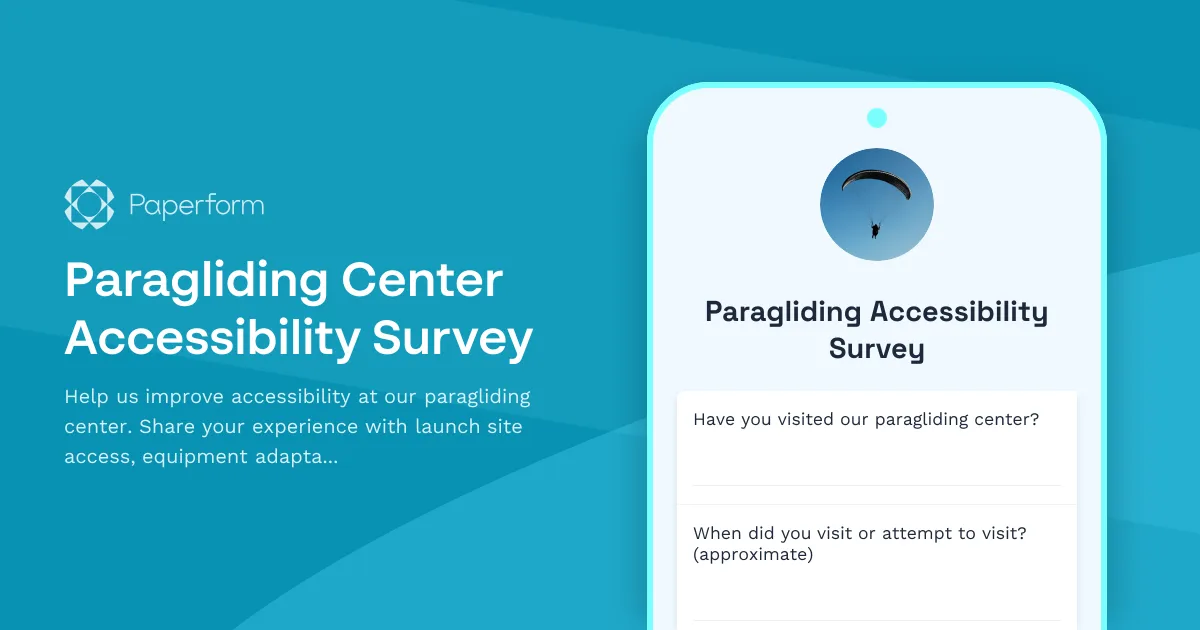
Paragliding Center Accessibility Survey
Help us improve accessibility at our paragliding center. Share your experience with launch site access, equipment adaptations, and flight options for flyers with disabilities.
Axe Throwing Facility Accommodation Request Form
Request disability and accessibility accommodations for axe throwing activities, including throwing line modifications, equipment adaptations, and alternative safety instruction formats.
Boxing Gym Accessibility Feedback Form
Collect feedback from athletes with disabilities on boxing gym accessibility, equipment modifications, ring access, and training accommodations to create a more inclusive training environment.
Escape Room Accommodation Request Form
A comprehensive form for requesting disability and accessibility accommodations at escape room venues, including puzzle modifications, time extensions, and sensory adjustments.
Kayaking Tour Accommodation Request Form
Professional accommodation request form for kayaking tours, capturing accessibility needs for equipment modifications, launch assistance, and safety briefing adaptations to ensure all participants can enjoy the experience safely.
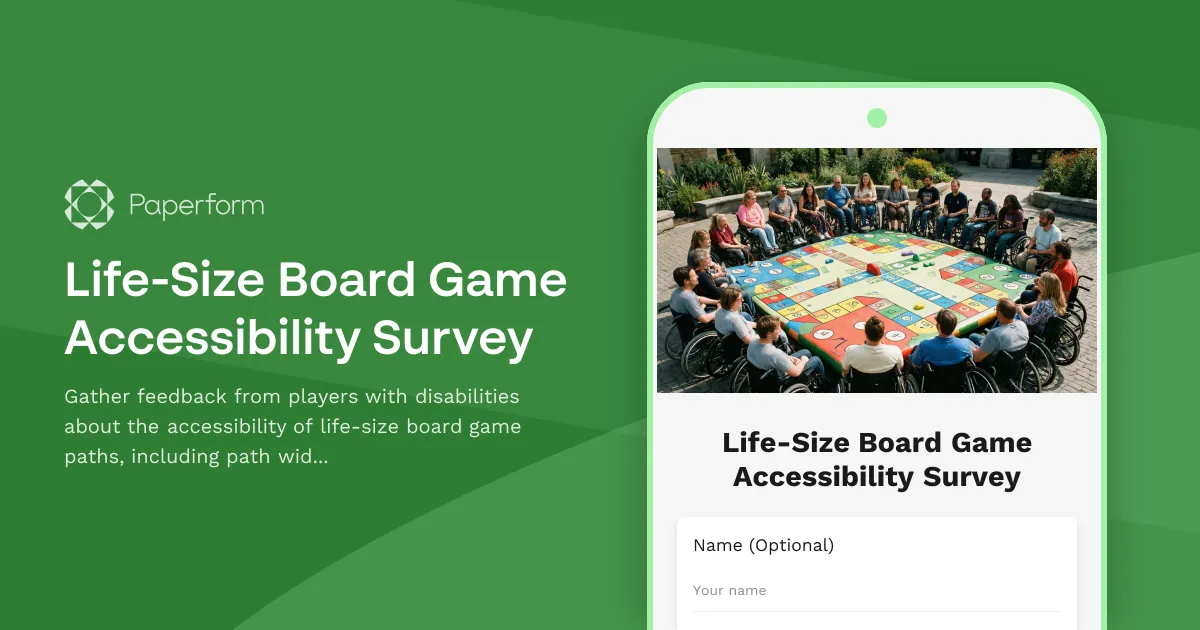
Life-Size Board Game Accessibility Survey
Gather feedback from players with disabilities about the accessibility of life-size board game paths, including path width, movement methods, and game card access.
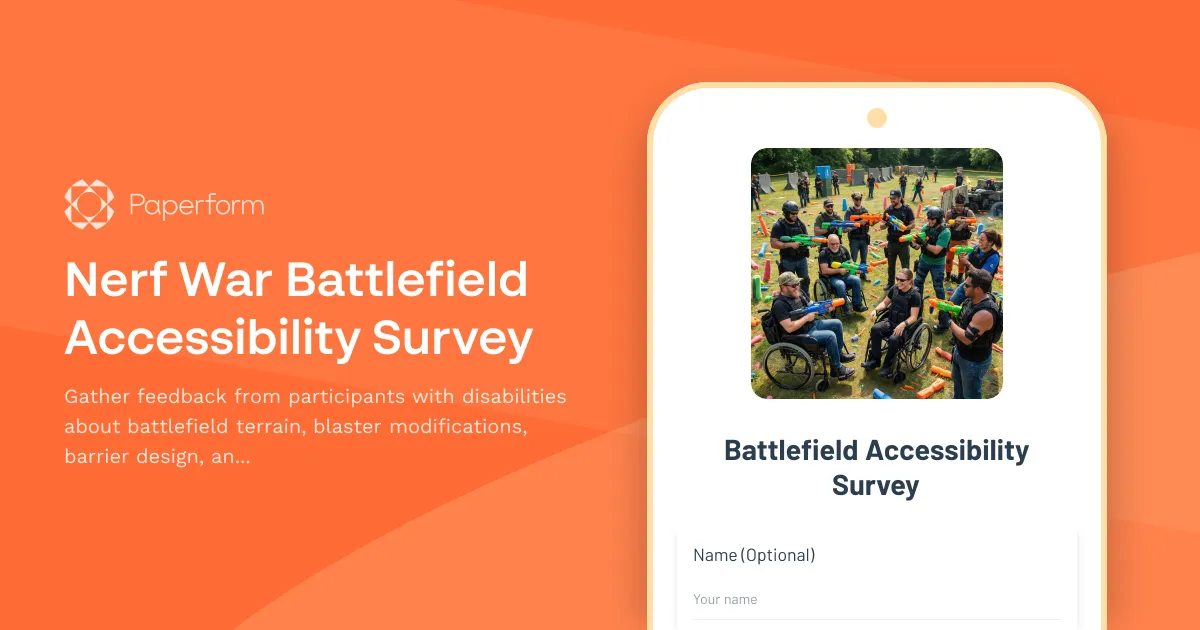
Nerf War Battlefield Accessibility Survey
Gather feedback from participants with disabilities about battlefield terrain, blaster modifications, barrier design, and accessibility improvements for inclusive Nerf war events.
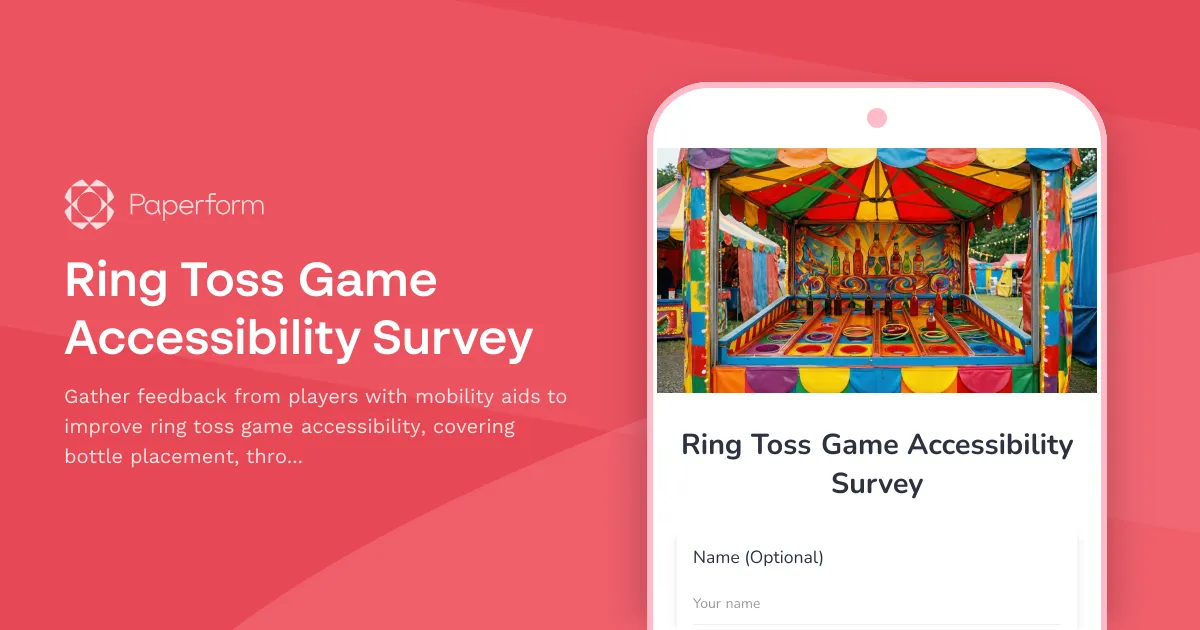
Ring Toss Game Accessibility Survey
Gather feedback from players with mobility aids to improve ring toss game accessibility, covering bottle placement, throwing accommodations, and prize retrieval.
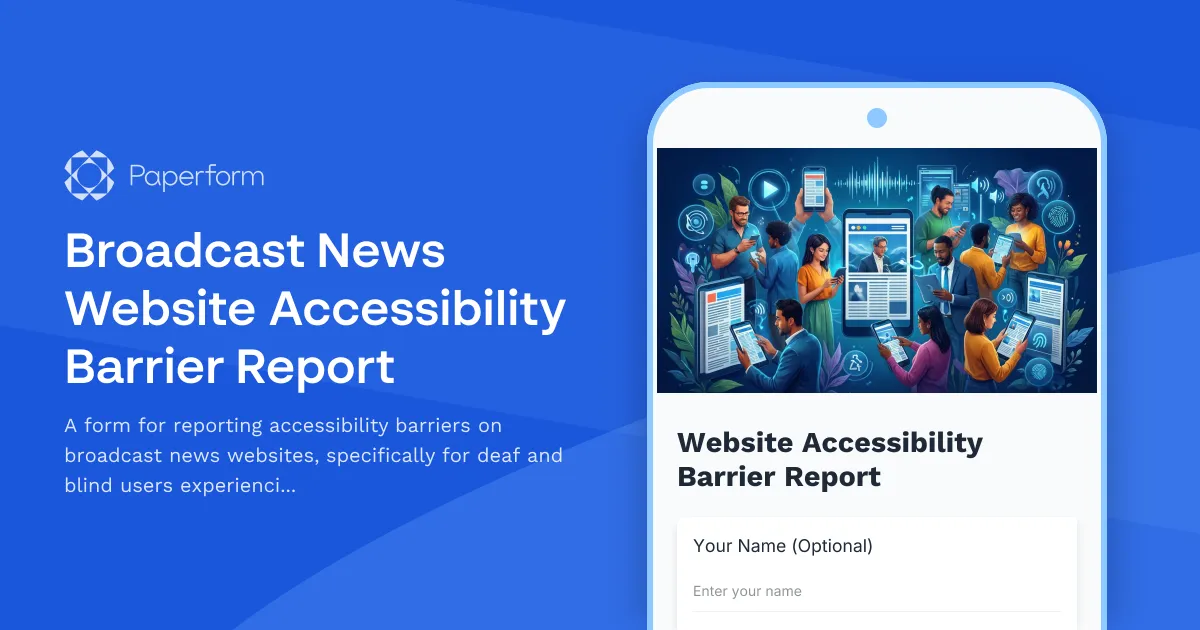
Broadcast News Website Accessibility Barrier Report
A form for reporting accessibility barriers on broadcast news websites, specifically for deaf and blind users experiencing issues with video content and breaking news updates.
Escape Room Design Consultation Accommodation Request Form
Request accessibility accommodations for escape room design consultations and puzzle experiences. Includes puzzle accessibility assessment, modification recommendations, and inclusive design integration to ensure an engaging experience for all participants.
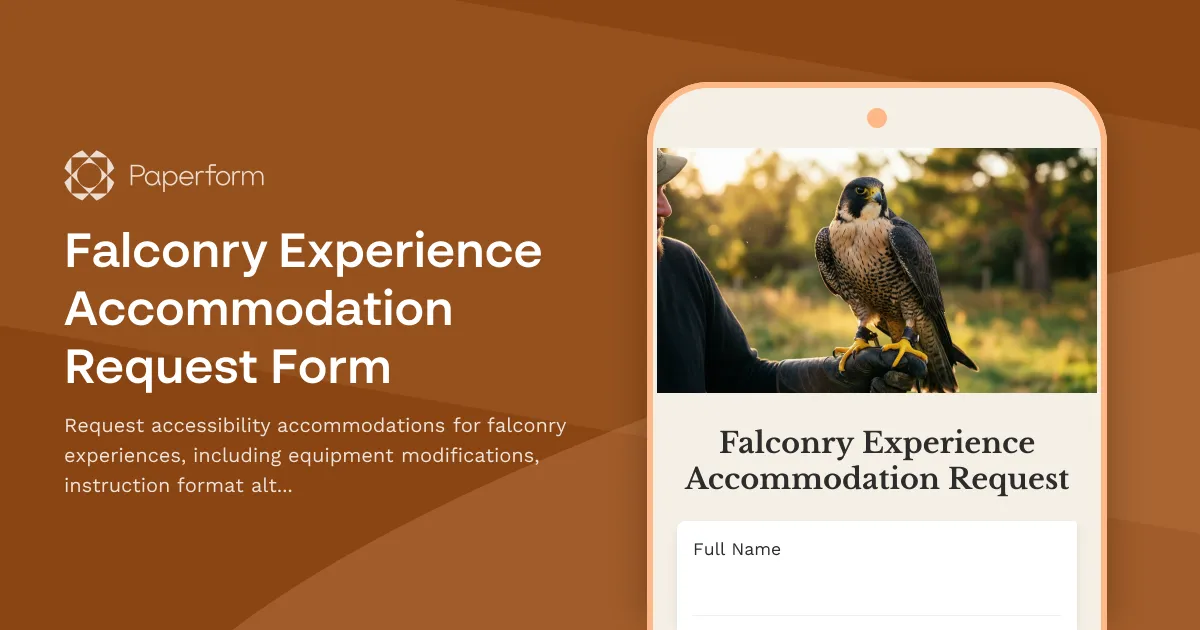
Falconry Experience Accommodation Request Form
Request accessibility accommodations for falconry experiences, including equipment modifications, instruction format alternatives, and bird handling adaptations to ensure an inclusive and safe experience for all participants.
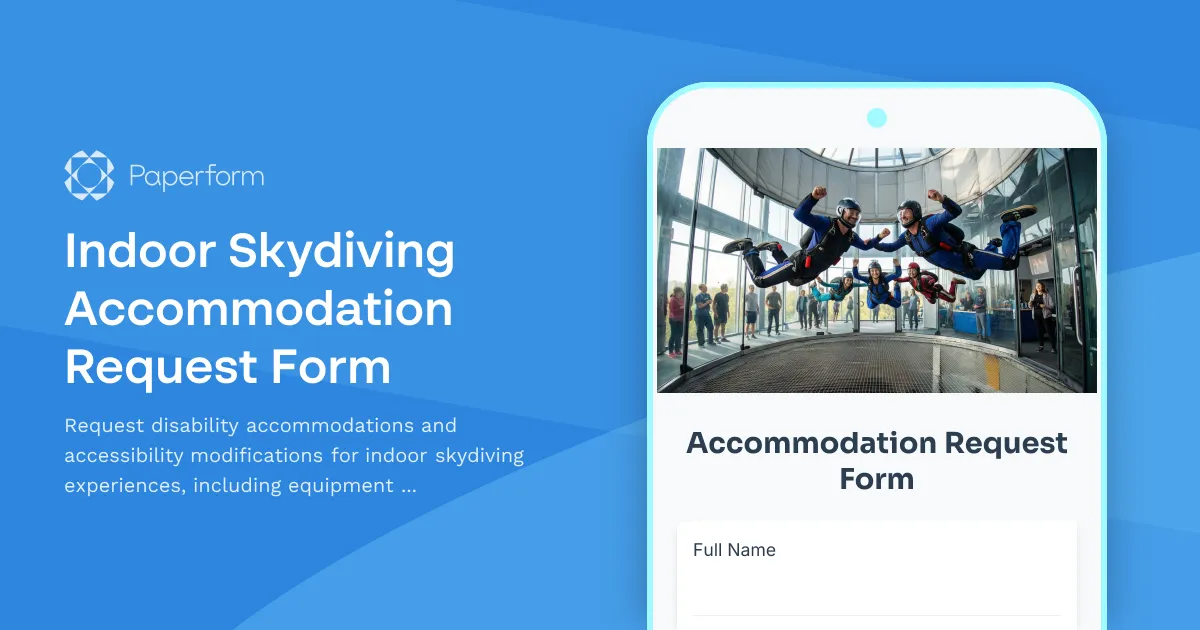
Indoor Skydiving Accommodation Request Form
Request disability accommodations and accessibility modifications for indoor skydiving experiences, including equipment adaptations, instruction alternatives, and customized safety protocols.