Underwater Pipeline Inspection Evacuation Form
When conducting underwater pipeline inspections, emergency preparedness isn't optional—it's mission-critical. This Underwater Pipeline Inspection Evacuation Form is purpose-built for marine contractors, offshore energy companies, and diving service providers who need to account for every team member during emergency evacuations, from saturation divers to ROV operators.
Built for High-Risk Marine Operations
Underwater pipeline work involves complex, multi-team coordination across divers, surface support crews, ROV technicians, and medical personnel. During an emergency evacuation—whether triggered by weather, equipment failure, medical incident, or security threat—you need immediate visibility into who's accounted for, who requires decompression, and who needs hyperbaric intervention.
This template captures critical information in seconds: diver depth profiles, decompression obligations, surface support headcount, ROV operational status, and hyperbaric chamber access requirements. Conditional logic ensures the right questions appear based on role and risk level, while real-time submission tracking gives incident commanders the data they need to make life-safety decisions.
Seamless Integration with Your Safety Stack
Paperform integrates with the tools offshore teams rely on—push evacuation data to safety management systems via webhooks, alert emergency response coordinators through Slack or SMS using Stepper workflows, and log incidents automatically in your HSEQ platform. With SOC 2 Type II compliance and data residency controls, you can trust your evacuation data meets the stringent security standards required in energy and maritime sectors.
Whether you're managing saturation diving operations in the North Sea or shallow-water inspections in the Gulf of Mexico, this form template gives your team a fast, reliable way to account for personnel when every second counts—no clipboards, no radio confusion, just clear digital accountability that works even in chaotic conditions.



More templates like this
Aircraft Maintenance Hangar Evacuation Form
A comprehensive emergency evacuation and headcount form for aircraft maintenance facilities that tracks personnel, equipment status, and safety protocols during evacuations.

Oil Rig Evacuation Checklist & Accountability Form
A critical safety form for offshore oil rig emergencies, tracking crew evacuation status, muster station accountability, lifeboat assignments, and well shut-in procedures during emergency situations.
Solar Panel Installation Site Evacuation Form
Emergency evacuation and headcount form for solar panel installation sites with electrical shutdown procedures, roof clearance protocols, equipment securing, and grid disconnection verification.
Oil Rig Safety Inspection Checklist
Comprehensive offshore safety inspection form covering blowout preventer testing, gas detection systems, emergency shutdown protocols, and critical equipment verification for oil rig operations.
Semiconductor Fab Emergency Evacuation Check-In Form
A comprehensive evacuation check-in form for semiconductor fabrication facilities tracking cleanroom personnel, equipment shutdown protocols, wafer processing status, and contamination prevention measures during emergency situations.
Soap Manufacturing Facility Evacuation & Headcount Form
Emergency evacuation check-in form for soap manufacturing facilities to account for all personnel, document chemical hazards, and ensure safe evacuation procedures during emergencies.
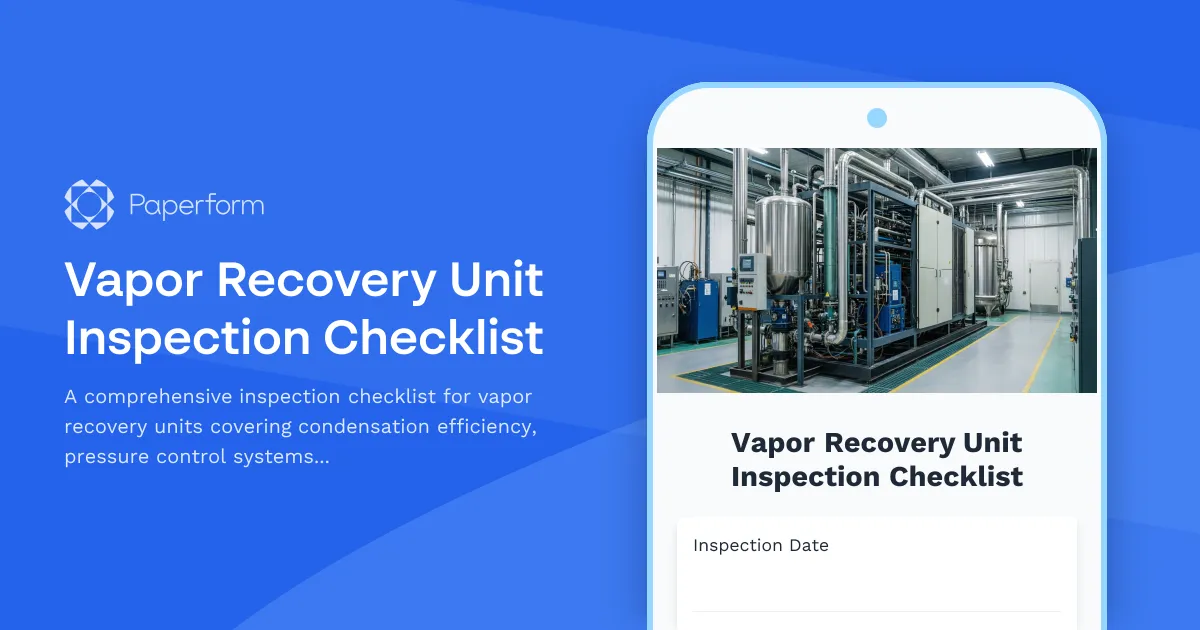
Vapor Recovery Unit Inspection Checklist
A comprehensive inspection checklist for vapor recovery units covering condensation efficiency, pressure control systems, and liquid knockout assessments to ensure optimal VRU performance and regulatory compliance.
Water Treatment Plant Evacuation Form
Emergency evacuation form for water treatment facilities to track personnel safety, equipment shutdown status, and critical system monitoring during emergency situations.
Auto Repair Shop Evacuation Check-In Form
Emergency evacuation and accountability form for auto repair shops to track personnel, equipment shutdown, and vehicle security during crisis situations.
Concrete Batching Plant Inspection Checklist
A comprehensive inspection checklist for concrete batching plants covering scale calibration verification, admixture dispenser accuracy, dust collection systems, and quality control procedures.
Electric Utility Field Crew Near Miss Report
A comprehensive near miss reporting form designed for electric utility field crews to document powerline proximity incidents, arc flash events, and close calls to improve workplace safety.
Hazmat Storage Facility Evacuation & Accountability Form
Emergency evacuation form for hazardous materials storage facilities to track personnel accountability, containment status, exposure assessment, and regulatory notifications during critical incidents.