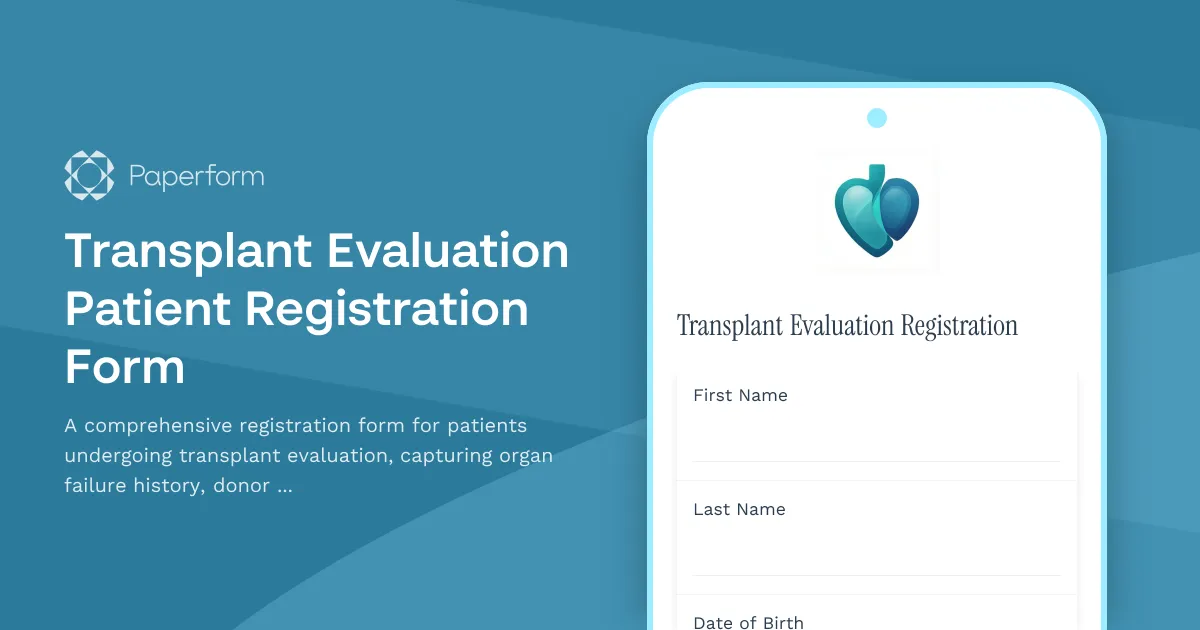
Transplant Evaluation Patient Registration Made Simple
Transplant evaluation is a complex, multi-step process that requires detailed patient information across medical, social, and psychological domains. This Transplant Evaluation Patient Registration Form streamlines the initial intake process for transplant centers, nephrology clinics, hepatology departments, and multi-organ transplant programs.
Built with Paperform, this template helps healthcare teams collect critical information about organ failure history, donor compatibility factors, medication adherence patterns, and psychosocial readiness—all in one secure, professional form that patients can complete before their first appointment.
Why This Template Works for Transplant Programs
Transplant coordinators and evaluation teams need comprehensive patient data to assess candidacy, plan testing schedules, and coordinate multidisciplinary care. This template replaces scattered paper forms and incomplete intake packets with a single, conditional form that adapts based on organ type and patient history.
The form captures:
- Current organ failure details and primary diagnosis
- Medical history including previous transplants and comorbidities
- Donor compatibility information for living donor scenarios
- Medication adherence assessment to gauge post-transplant compliance readiness
- Psychosocial screening covering support systems, mental health, and financial stability
- Insurance and consent documentation
Conditional logic ensures patients only see questions relevant to their specific organ evaluation (kidney, liver, heart, lung, pancreas, or multi-organ), reducing form fatigue while maintaining clinical thoroughness.
Designed for Healthcare Workflows
Once submitted, this form integrates seamlessly with your existing systems. Use Stepper (stepper.io) to automatically route completed evaluations to the appropriate transplant coordinator, trigger follow-up appointment scheduling, update patient records in your EMR, and send confirmation emails with next steps.
For programs that need signed consent forms, connect Papersign (papersign.com) to turn the initial registration into a formal evaluation agreement or HIPAA authorization, keeping all documentation linked to the original patient submission.
Trusted by transplant centers and specialty clinics nationwide, this template helps you deliver a modern, patient-centered intake experience while capturing the comprehensive data your evaluation team needs to make informed decisions.
Important Note: While Paperform offers SOC 2 Type II compliance and robust security features, it is not a HIPAA-compliant solution. Please ensure your patient data handling practices align with your organization's compliance requirements and consider using this template for pre-evaluation screening or non-PHI collection purposes.



More templates like this
Geriatric Medicine Comprehensive Assessment Form
A thorough new patient intake form for geriatric medicine practices covering medical history, fall risk screening, cognitive assessment, medication reconciliation, functional status, and advance care planning.
Addiction Treatment Center Intake Form
A comprehensive intake form for addiction treatment centers to collect essential patient information, substance use history, withdrawal symptoms, previous treatment attempts, and recovery support systems.
Hospice Care Discovery Form
A compassionate intake form for hospice care providers to assess patient needs, medical status, symptom management requirements, spiritual preferences, and family support services.
Hospital Readmission Risk Assessment Form
A comprehensive risk assessment form to evaluate a patient's likelihood of hospital readmission, covering recent hospitalization history, medication understanding, home support systems, and early warning signs.
Medical Detox Admission Form
A comprehensive medical detox intake form for assessing substance dependence severity, withdrawal risks, co-occurring mental health conditions, and medication-assisted treatment eligibility.
Memory Clinic Cognitive Assessment Intake Form
A comprehensive intake form for memory clinics to assess cognitive decline, screen for dementia, evaluate caregiver burden, and identify safety concerns for new patients.
Palliative Care New Patient Intake Form
A comprehensive intake form for new palliative care patients to document medical history, symptom management needs, advance care planning, spiritual preferences, and caregiver information.
Pediatric Specialty Clinic Intake Form
A comprehensive intake form for pediatric specialty clinics serving children with developmental delays and special needs, capturing medical history, developmental milestones, school accommodations, and care coordination details.
Post-Hospital Discharge Transition of Care Form
A comprehensive discharge form to ensure smooth care transitions after hospital stays, capturing diagnosis, medication changes, follow-up appointments, and warning signs for readmission prevention.
Raynaud's Phenomenon Screening Questionnaire
A comprehensive screening tool for Raynaud's phenomenon that documents color changes, identifies triggers, assesses underlying conditions, and determines the need for rheumatology consultation.

Remote Oncology Supportive Care Visit Form
A comprehensive telehealth form for oncology patients to track chemotherapy side effects, pain levels, nausea symptoms, and discuss caregiver support needs during virtual supportive care visits.
Residential Treatment Center Admission Form
A comprehensive intake form for residential treatment centers to collect client information, psychiatric history, medication details, and family therapy needs for mental health and behavioral health admissions.