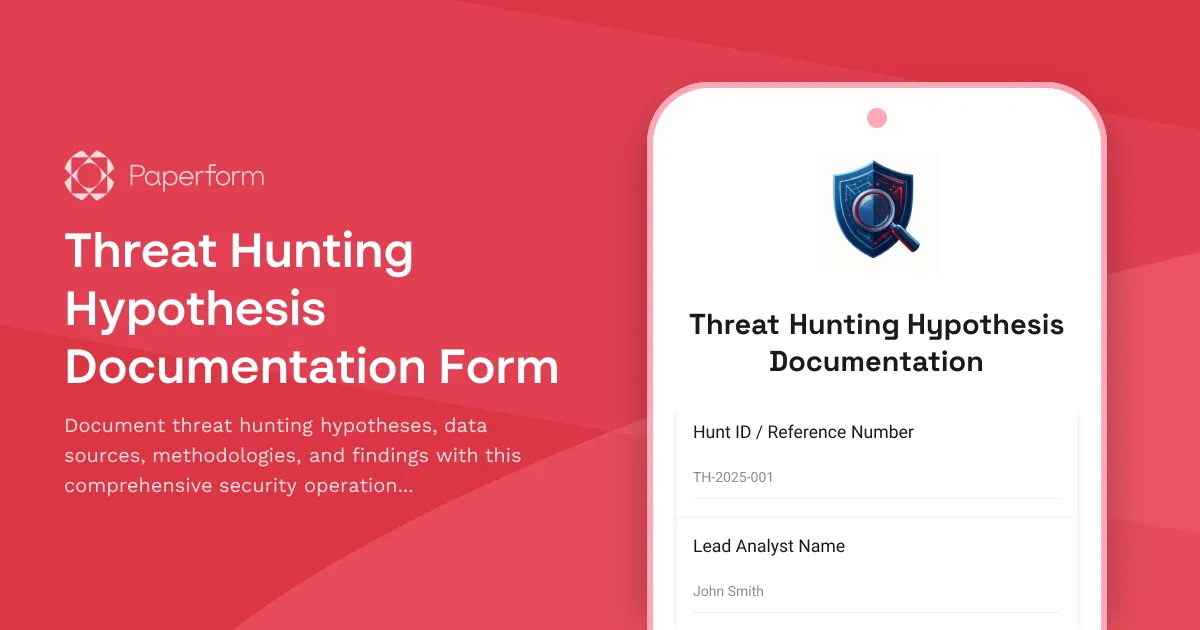
Streamline threat hunting operations with structured hypothesis documentation
Effective threat hunting requires methodical documentation of hypotheses, data sources, hunt procedures, and actionable findings. This Threat Hunting Hypothesis Documentation Form gives security operations centers (SOC), threat intelligence teams, and security analysts a standardised framework to capture every element of a threat hunt—from initial hypothesis to final recommendations.
Built for cybersecurity professionals, IT security teams, and incident response specialists, this template helps you maintain consistent documentation across all hunting activities, ensuring knowledge transfer, audit readiness, and continuous improvement of your security posture.
Why this template works for security operations
Traditional threat hunting often suffers from inconsistent documentation, making it difficult to track what's been investigated, share findings across teams, or prove due diligence during audits. This Paperform template centralises your threat hunting workflow in one intelligent form that:
- Captures structured hypotheses based on threat intelligence, TTPs, or environmental indicators
- Documents data source requirements including logs, telemetry, and detection tools needed
- Records hunt methodology step-by-step for repeatability and knowledge sharing
- Standardises findings documentation with severity ratings, IOCs, and remediation steps
- Generates audit trails automatically with timestamps and analyst attribution
The form uses conditional logic to adapt based on your hunt type and findings severity, ensuring you capture the right level of detail without overwhelming analysts with unnecessary fields.
Perfect for SOC teams and security professionals
Whether you're running proactive threat hunts, investigating suspicious activity, or conducting scheduled security audits, this template supports your entire workflow. Use it to document:
- Hypothesis-driven hunts based on emerging threats or intelligence feeds
- Baseline deviation hunts looking for anomalies in normal behaviour patterns
- TTP-based hunts targeting specific adversary techniques from MITRE ATT&CK
- Scheduled compliance hunts required for regulatory or audit purposes
After submission, connect this form to your security orchestration platform using Stepper (stepper.io) to automatically create tickets in your SIEM, notify relevant teams via Slack, update your threat intelligence platform, or trigger containment workflows based on findings severity.
SOC 2 compliant and built for security teams
Paperform is SOC 2 Type II compliant and trusted by security-conscious organisations worldwide. Your threat hunting documentation is encrypted at rest and in transit, with role-based access controls ensuring only authorised analysts can view sensitive hunting data. Export findings for executive reporting, integrate with your existing security stack via webhooks and Stepper workflows, and maintain complete audit trails of all hunting activities.
Start documenting your threat hunts with the professional structure your security operations deserve.


More templates like this
Data Breach Incident Report Form
Document and manage data breach incidents with comprehensive system impact analysis, user assessment, response tracking, and regulatory notification timelines.
IT Network Segmentation Change Request Form
Submit network segmentation change requests including VLAN configuration, security zones, and access control list modifications with technical details and approval workflow.
Network DDoS Mitigation Request Form
Submit a request to activate DDoS protection services, configure traffic scrubbing parameters, set detection thresholds, and whitelist legitimate traffic sources for your network infrastructure.
Security Incident Timeline & Investigation Form
Document security incidents with detailed timeline reconstruction, event sequencing, evidence tracking, and investigation artifact management for comprehensive incident response.
Security Training Needs Assessment Form
Evaluate security training requirements across your organization with role-based assessments, skill gap analysis, and certification tracking to build a comprehensive security awareness program.
Backup and Disaster Recovery Security Audit Form
A comprehensive security audit form for evaluating backup systems, encryption compliance, restoration testing, and offsite storage protocols to ensure business continuity and data protection.
CMMC Self-Assessment for Defense Contractors
A comprehensive self-assessment form for defense contractors to evaluate their cybersecurity maturity level against CMMC requirements, document practice implementation evidence, and develop gap remediation plans.
Cybersecurity Breach Incident Report
Report and document cybersecurity breaches, data exposures, and security incidents with comprehensive system impact assessment and executive notification workflow.
Cybersecurity Incident Post-Mortem Report
Conduct thorough post-incident analysis with attack vector documentation, response timeline tracking, and security gap identification to strengthen your organization's cybersecurity posture.
Cybersecurity Incident Report Form
Report and document cybersecurity incidents with threat classification, affected systems tracking, and automatic escalation to security leadership.
Data Loss Prevention Policy Violation Investigation Form
A comprehensive security investigation form for tracking DLP policy violations, analyzing user intent, documenting content inspection findings, and managing remediation actions.
Endpoint Security Policy Change Request Form
Request changes to endpoint security policies including antivirus configuration, device compliance rules, and enforcement timelines. Streamline security policy updates with structured approvals.