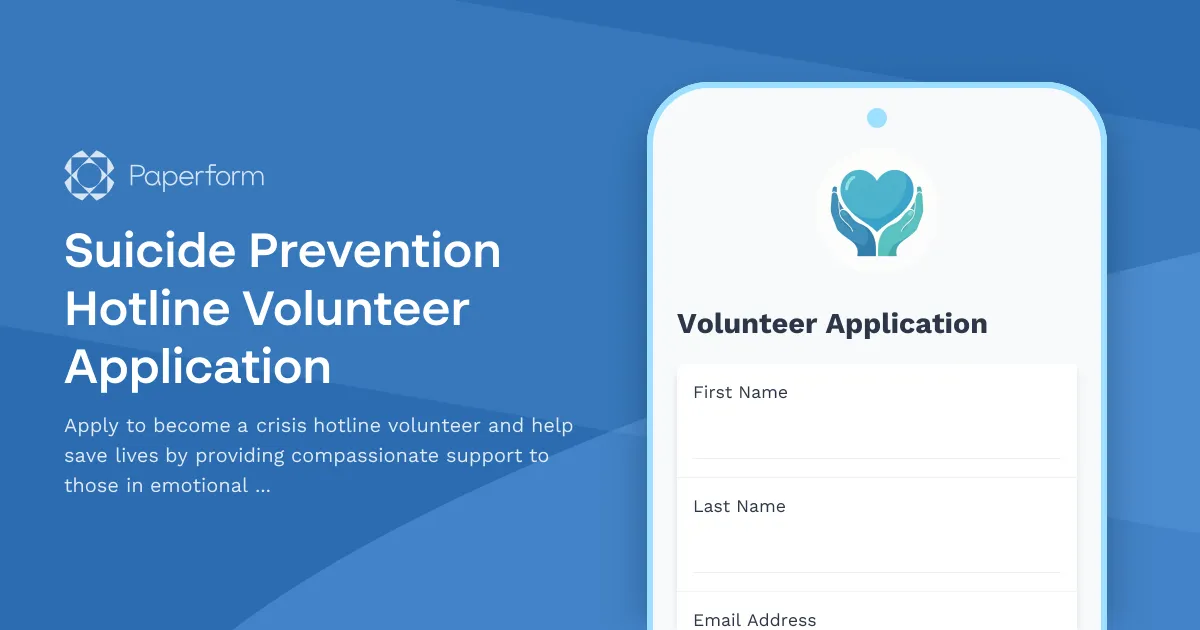
Make a Life-Saving Difference as a Crisis Hotline Volunteer
Every call matters. Every conversation can save a life. If you're looking for a meaningful way to give back to your community and support people during their darkest moments, becoming a suicide prevention hotline volunteer could be your calling.
What Does a Crisis Hotline Volunteer Do?
Crisis hotline volunteers provide immediate, compassionate support to individuals experiencing suicidal thoughts, emotional distress, or mental health crises. Through active listening, empathy, and evidence-based crisis intervention techniques, volunteers help callers work through their immediate crisis, develop safety plans, and connect with appropriate resources.
This isn't just answering phones—it's about being present for someone when they need it most, providing a lifeline of hope when everything feels overwhelming.
Who Should Apply?
We're looking for compassionate, emotionally resilient individuals who:
- Have strong listening and communication skills
- Can remain calm and focused during high-stress situations
- Are committed to ongoing training and self-care
- Can maintain strict confidentiality
- Are available for regular shifts, including overnight hours
- Are at least 21 years old (required for this program)
You don't need a professional background in mental health or counseling—we provide comprehensive training to all accepted volunteers. However, personal or professional experience with mental health challenges, either your own or supporting others, can provide valuable perspective.
Comprehensive Crisis Intervention Training Included
All accepted volunteers complete our intensive crisis intervention training program before taking calls. You'll learn:
- Active listening and empathy-building techniques
- Suicide risk assessment and safety planning
- De-escalation strategies for high-intensity situations
- Cultural competency and trauma-informed care
- Self-care practices and volunteer wellness
- Resource navigation and referral protocols
Training combines classroom learning, role-playing scenarios, and supervised call practice to ensure you feel confident and prepared. Ongoing support, supervision, and continuing education keep your skills sharp throughout your volunteer journey.
The Reality of Overnight Shifts
Many people in crisis reach out during evening and overnight hours when other support systems aren't available. Overnight shift volunteers (typically 10 PM - 6 AM) are critically needed and often make the most significant impact.
While overnight shifts can be challenging, many volunteers find them deeply rewarding. The late-night/early-morning hours often bring the most vulnerable callers—those who have been struggling alone, unable to sleep, feeling isolated. Being there for someone at 3 AM when they have nowhere else to turn creates profound, life-changing connections.
Why Use Paperform for Your Volunteer Application?
This Suicide Prevention Hotline Volunteer Application template is built on Paperform, the flexible form builder trusted by nonprofits and crisis services organizations to streamline their volunteer recruitment and management processes.
Paperform helps your organization:
- Create a professional, empathetic application experience that reflects the seriousness and compassion of your mission while putting applicants at ease
- Collect comprehensive information efficiently with conditional logic that adapts the form based on responses—asking follow-up questions only when relevant
- Screen candidates effectively by gathering information about mental health background, availability, motivation, and scenario responses in one organized submission
- Integrate seamlessly with your workflow by connecting form submissions to your CRM, volunteer management system, or Google Sheets via native integrations or Stepper workflows
- Maintain applicant confidentiality with SOC 2 Type II compliance and secure data handling—critical when handling sensitive mental health information
- Build trust with applicants through custom branding, warm messaging, and a thoughtfully designed form that demonstrates your organization's professionalism
After submission, you can use Stepper to automate your volunteer onboarding workflow—sending background check requests, scheduling interviews, enrolling accepted volunteers in training programs, and keeping everything coordinated without manual work.
For organizations requiring reference checks or authorization documents, Papersign allows you to automatically generate volunteer agreements, confidentiality forms, or background check authorizations and send them for eSignature, keeping the entire process connected to the original application.
The Impact You'll Make
Crisis hotline volunteers don't just answer calls—they save lives. Research shows that compassionate, trained crisis support significantly reduces immediate suicide risk and helps connect people with longer-term resources and care.
Volunteers report that their service:
- Provides profound meaning and purpose
- Builds empathy, listening skills, and emotional intelligence
- Offers perspective on their own challenges and mental health
- Connects them with a community of like-minded, compassionate people
- Creates genuine, lasting impact on their community
Getting Started
Applying takes about 15-20 minutes. We'll ask about your background, experience, availability, and motivation. There are also a few scenario questions to help us understand your approach to challenging situations.
After reviewing applications, we'll reach out to qualified candidates for an interview. The full process—from application through training to your first shift—typically takes 2-3 months.
This form template is ready to use, fully customizable, and designed specifically for suicide prevention and crisis hotline volunteer recruitment. Whether you're a established crisis center or a grassroots mental health nonprofit, Paperform gives you the tools to find, screen, and onboard compassionate volunteers who will make a real difference.
If you're ready to be there for someone during their darkest hour and help save lives, complete this application today. Your community needs you.



More templates like this
Bereavement Support Volunteer Application Form
A comprehensive application form for individuals interested in volunteering as bereavement support counselors, including grief counseling certification verification, support group experience, and training commitment assessment.
Crisis Hotline Volunteer Application
Apply to become a crisis hotline volunteer. Includes mental health screening, communication skills assessment, and shift availability preferences.
Veterans Crisis Line Volunteer Application
A comprehensive volunteer application form for crisis hotline support positions, designed to assess military cultural competency, suicide prevention training, and availability for overnight shifts.
Peer Recovery Coach Volunteer Application
A comprehensive volunteer application form for peer recovery coaches with personal recovery experience. Collects information about recovery journey, coaching certifications, crisis support availability, and commitment to supporting others in their recovery.
Addiction Counseling Certification Scholarship Application
A comprehensive scholarship application for individuals pursuing Certified Alcohol and Drug Counselor (CADC) certification, designed for those with recovery support experience and commitment to trauma-informed care.
Adventure Therapy Practitioner Training Application
Professional training application for adventure therapy practitioners to assess outdoor leadership credentials, mental health background, risk management qualifications, and supervision experience for program admission.
Animal-Assisted Therapy Certification Scholarship Application
A comprehensive scholarship application for aspiring animal-assisted therapy practitioners seeking certification funding, including therapy animal handling experience, special populations interest, and professional recommendations.
Animal-Assisted Therapy Handler Program Application
Apply to become a certified animal-assisted therapy handler. This comprehensive application collects information about your animal partner, therapy experience, specialization preferences, and training requirements.
Clinical Mental Health Counseling Scholarship Application
A comprehensive scholarship application for aspiring mental health counselors with crisis intervention experience and commitment to community-based care.
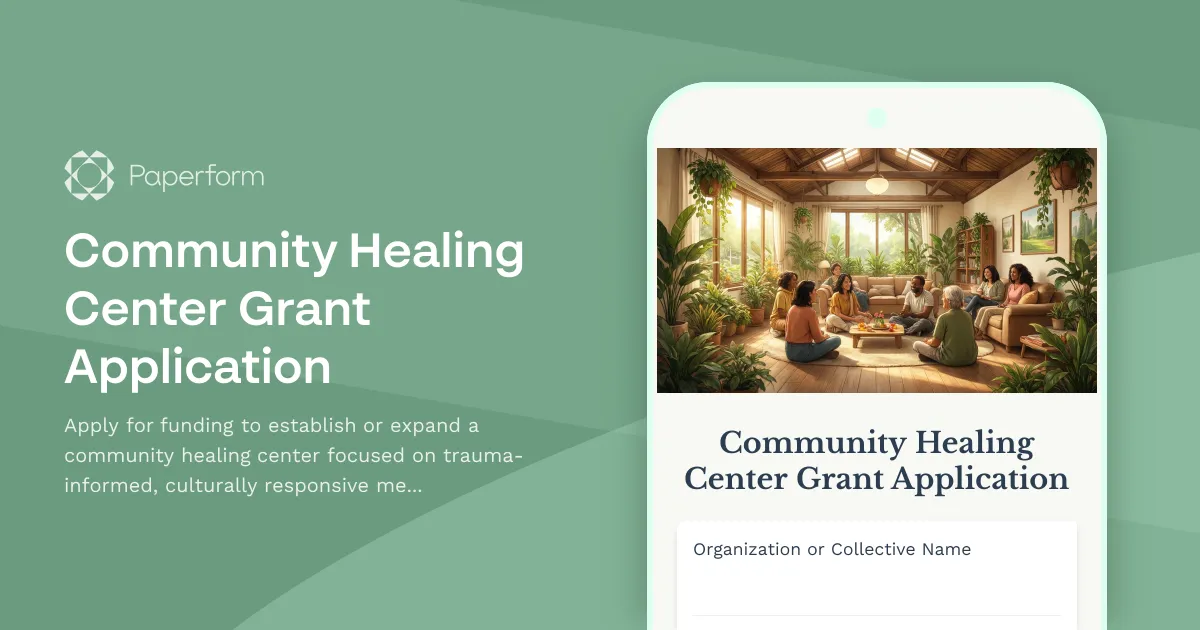
Community Healing Center Grant Application
Apply for funding to establish or expand a community healing center focused on trauma-informed, culturally responsive mental health and wellness services with sliding scale accessibility.
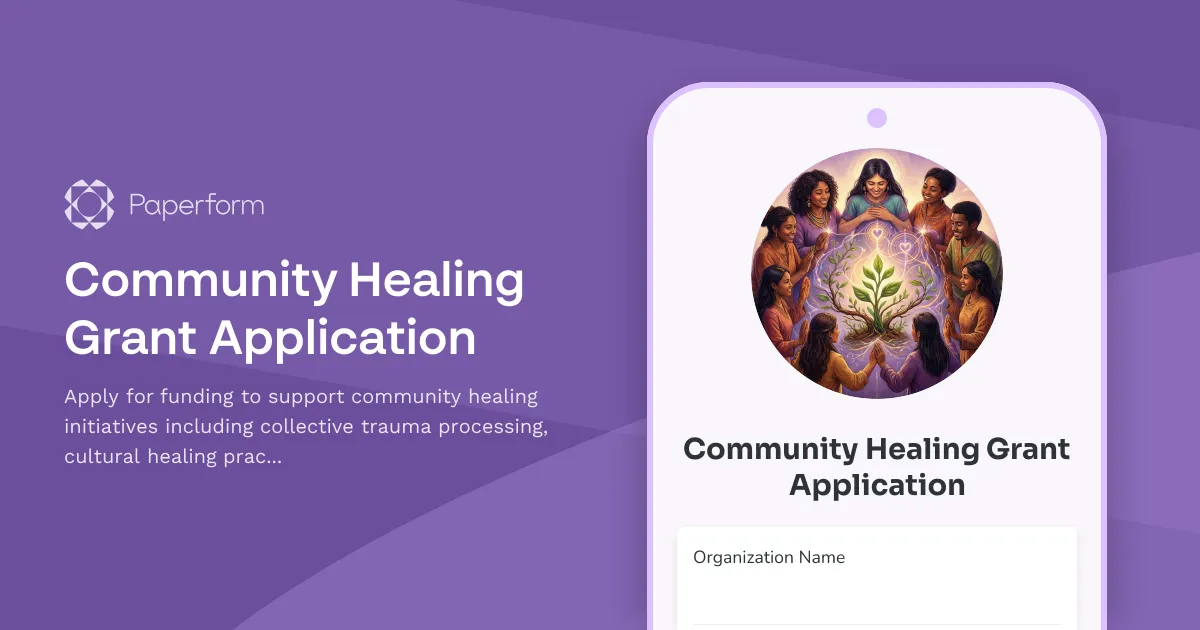
Community Healing Grant Application
Apply for funding to support community healing initiatives including collective trauma processing, cultural healing practices, storytelling circles, and intergenerational healing spaces.
Compassion Fatigue & Self-Care Facilitation Certification Scholarship Application
Apply for a scholarship to pursue certification in compassion fatigue prevention and self-care facilitation for helping professionals working in healthcare and nonprofit organizations.