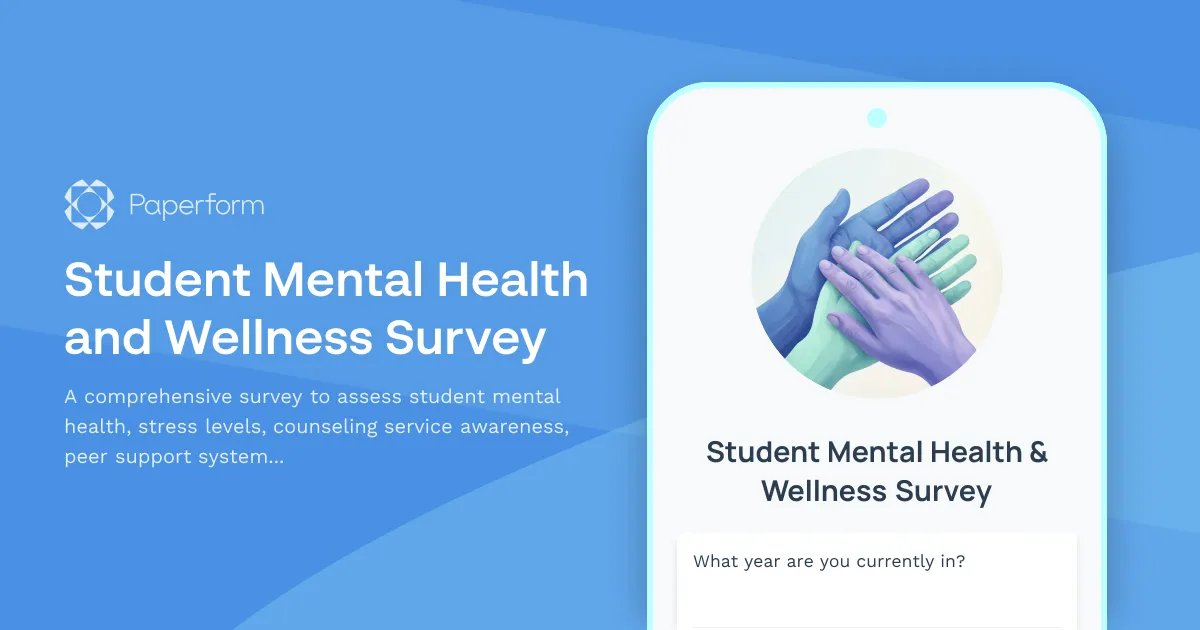
Creating a supportive educational environment starts with understanding student mental health needs. This Student Mental Health and Wellness Survey template helps schools, colleges, and universities gather critical insights about student wellbeing, stress levels, awareness of counseling services, and the accessibility of mental health resources.
Whether you're a school counselor, student affairs professional, or educational administrator, this survey template provides a structured approach to evaluating campus mental health support systems. The form covers stress and anxiety levels, academic pressures, social support networks, awareness of available services, and barriers to accessing help.
Paperform makes it easy to collect sensitive student feedback with a professional, branded survey that feels approachable rather than clinical. With conditional logic built in, you can tailor follow-up questions based on responses—for example, asking students who report high stress levels about specific stressors or directing those unaware of services to informational resources.
The form's anonymous response capability encourages honest feedback, while AI Insights can help you quickly identify patterns across hundreds of responses—spotting common themes like exam-period stress spikes, housing concerns, or gaps in service awareness without manually reading every submission.
For institutions ready to act on survey data, Stepper (stepper.io) can automatically route flagged responses to appropriate support staff, update student information systems, or trigger follow-up communications about wellness resources based on specific answer combinations.
This template is ideal for educational institutions conducting semesterly wellness checks, mental health awareness campaigns, counseling service evaluations, or broader student experience assessments. The insights gathered can inform resource allocation, program development, and targeted outreach to students who need support most.
More templates like this
College Accessibility Services Student Survey
Evaluate your college's accessibility services with this comprehensive student feedback form covering accommodations, staff support, assistive technology, testing arrangements, and advocacy effectiveness.
School Art Therapy Program Effectiveness Survey
Evaluate the impact of art therapy programs on students' emotional well-being, creative confidence, stress reduction, therapeutic relationships, and behavioral improvements.
Classroom Seating & Learning Environment Survey
Evaluate classroom comfort, lighting, temperature, noise levels, and accessibility features to improve student learning environments and ensure optimal conditions for academic success.
College Academic Probation Support Program Feedback Survey
A comprehensive feedback survey designed to evaluate academic probation support programs, including advisor effectiveness, study skills resources, mental health support, and student success outcomes.
College Career Services Satisfaction Survey
Evaluate your career services experience including resume assistance, interview prep, job fairs, employer connections, and alumni networking to help improve student outcomes.
College Writing Center Usage Survey
A comprehensive survey to gather student feedback on writing center services, tutor quality, appointment availability, workshops, and resources to improve academic support.
Dental Hygiene School Patient Satisfaction Survey
A comprehensive patient satisfaction questionnaire designed for dental hygiene schools to gather feedback on student performance, treatment quality, appointment experience, and value.
International Student Satisfaction Survey
A comprehensive survey to gather feedback from international students on visa support, cultural integration, language resources, and campus services to improve their overall experience.
Problem-Based Learning Medical Education Student Survey
Comprehensive survey to evaluate problem-based learning (PBL) effectiveness in medical education, assessing clinical reasoning, collaborative diagnosis skills, self-directed learning, faculty facilitation, and real-world clinical preparation.
School Growth Mindset Initiative Effectiveness Survey
Evaluate the impact of your growth mindset program on students' attitudes toward challenges, effort, failure, feedback, and achievement. Track behavioral shifts and measure initiative effectiveness.
Student Orientation Program Satisfaction Survey
Gather comprehensive feedback on your student orientation program, including campus tour quality, registration support, social integration, and information clarity to continuously improve the new student experience.
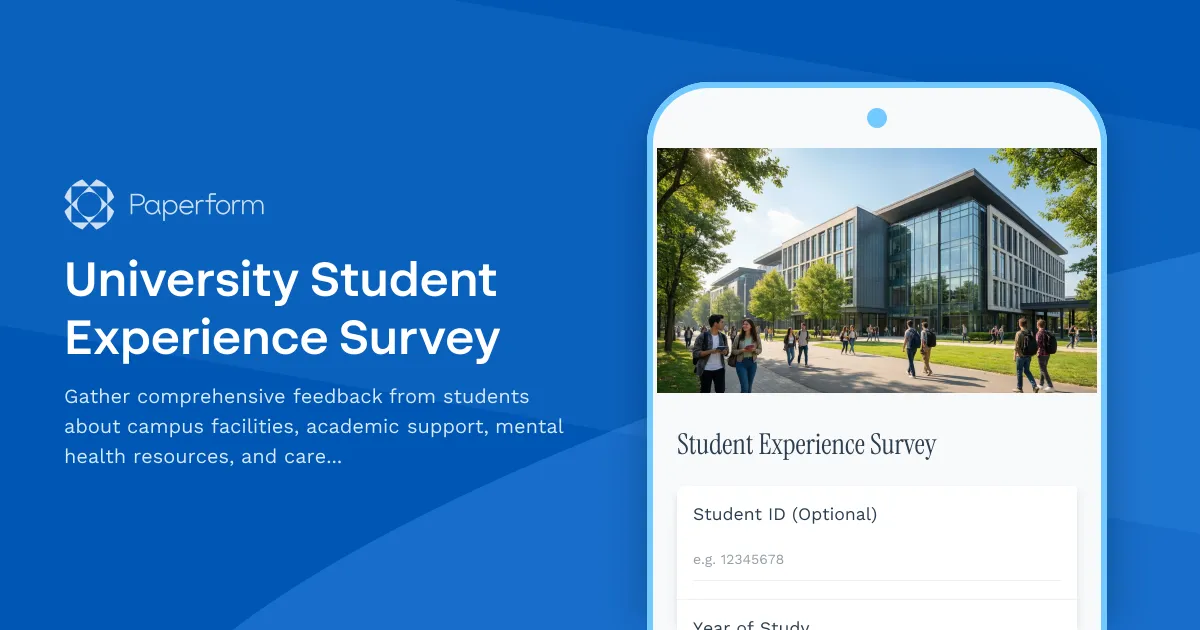
University Student Experience Survey
Gather comprehensive feedback from students about campus facilities, academic support, mental health resources, and career services to improve the overall university experience.