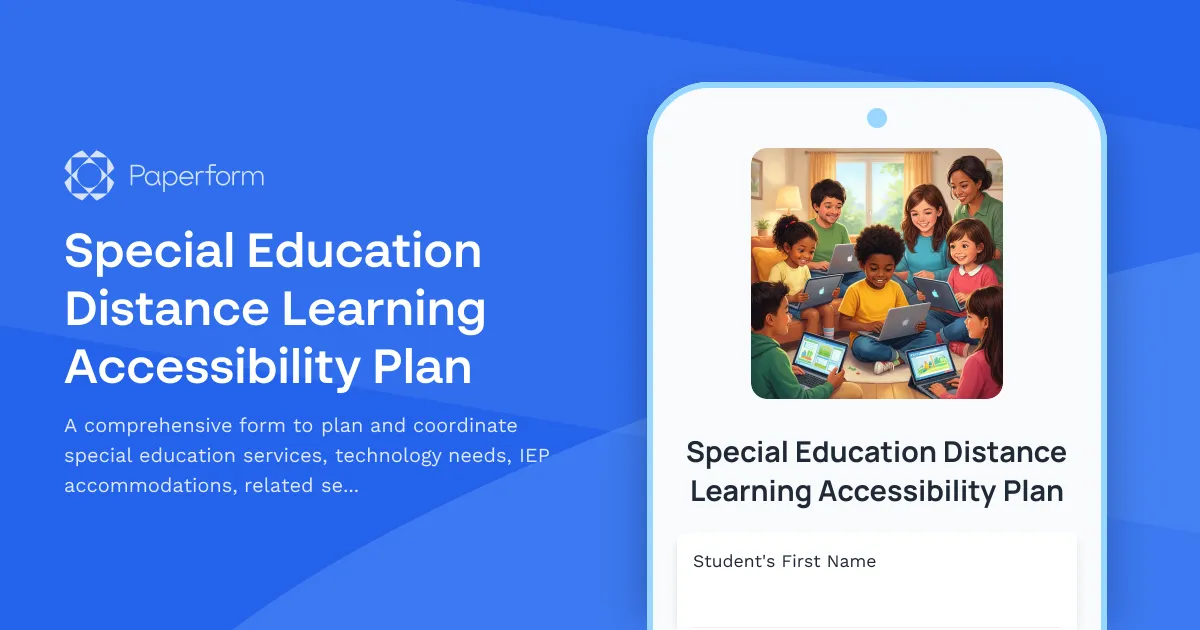
Supporting Special Education Students Through Distance Learning
Special education distance learning requires careful planning to ensure every student receives the individualized support outlined in their IEP. This Special Education Distance Learning Accessibility Plan template helps schools, special education coordinators, and support teams document technology needs, service delivery methods, and family support requirements for successful remote learning.
Why This Template Is Essential for Special Education Programs
Remote instruction presents unique challenges for students with disabilities, from ensuring accessible technology to maintaining continuity of specialized services. This form helps educators and administrators create comprehensive plans that address:
- Technology accessibility and assistive device provision for each student's unique needs
- IEP service delivery modifications for virtual environments while maintaining FAPE requirements
- Related services telepractice coordination including speech therapy, occupational therapy, and counseling
- Parent and caregiver support with training, communication schedules, and resource access
Whether you're planning for hybrid learning, emergency remote instruction, or ongoing distance education programs, this template ensures no student's needs fall through the cracks during the transition from in-person to virtual services.
Streamline Special Education Compliance and Service Coordination
For special education directors, case managers, and multidisciplinary teams, maintaining compliance while adapting to remote delivery can feel overwhelming. This Paperform template centralizes all the information you need—from internet connectivity assessments to therapy session scheduling—in one accessible, organized format that can be shared across your team.
Once families and educators complete the form, you can use Stepper to automatically route information to the right specialists, create task lists for technology distribution, schedule telepractice sessions, and send follow-up communications to parents. This automation ensures timely service delivery while reducing administrative burden on already-stretched special education staff.
Schools and districts serving students with IEPs, 504 plans, and other accessibility needs trust Paperform's secure, compliant platform to gather sensitive educational information with confidence. The professional, easy-to-navigate design respects families' time while collecting the detailed information your team needs to provide equitable, effective distance learning experiences.
More templates like this
Learning Disability Assessment Form
A comprehensive pre-assessment form for identifying learning difficulties, academic challenges, processing speed concerns, and accommodation needs for students and individuals seeking evaluation.
Assistive Technology Evaluation Request Form
Request an assistive technology evaluation for students with learning barriers. Assess current technology use, identify needs, and connect with AT specialists for personalized support.
Autism Spectrum Support Services Intake Form
A comprehensive intake form for autism spectrum support services that captures sensory profiles, communication preferences, social skills assessments, and behavior patterns to create personalized support plans.
Individual Counseling Services Request for Students with Emotional Disturbance
A comprehensive form for requesting and documenting intensive individual counseling services for students with emotional disturbance, including treatment planning, evidence-based interventions, crisis prevention strategies, and outcome measurement.
School Counselor to Child Psychiatrist Referral Form
A comprehensive referral form for school counselors to refer students to child psychiatrists, including behavioral incident logs, academic performance data, teacher observations, and documented parental concerns.
School Drama Therapy Services Parental Consent Form
A comprehensive parental consent form for school-based drama therapy programs, covering therapeutic techniques including role-playing, improvisation, storytelling, and dramatic projection for student emotional exploration and wellbeing.
Sensory Room Usage Protocol Form
A comprehensive form for scheduling and documenting sensory room sessions for students with autism or sensory processing disorders, including safety protocols, regulation strategies, and behavioral data collection.
Student Crisis Intervention Plan
A comprehensive crisis intervention plan template for students with emotional and behavioral disabilities, documenting de-escalation strategies, safe spaces, communication protocols, and emergency contacts.
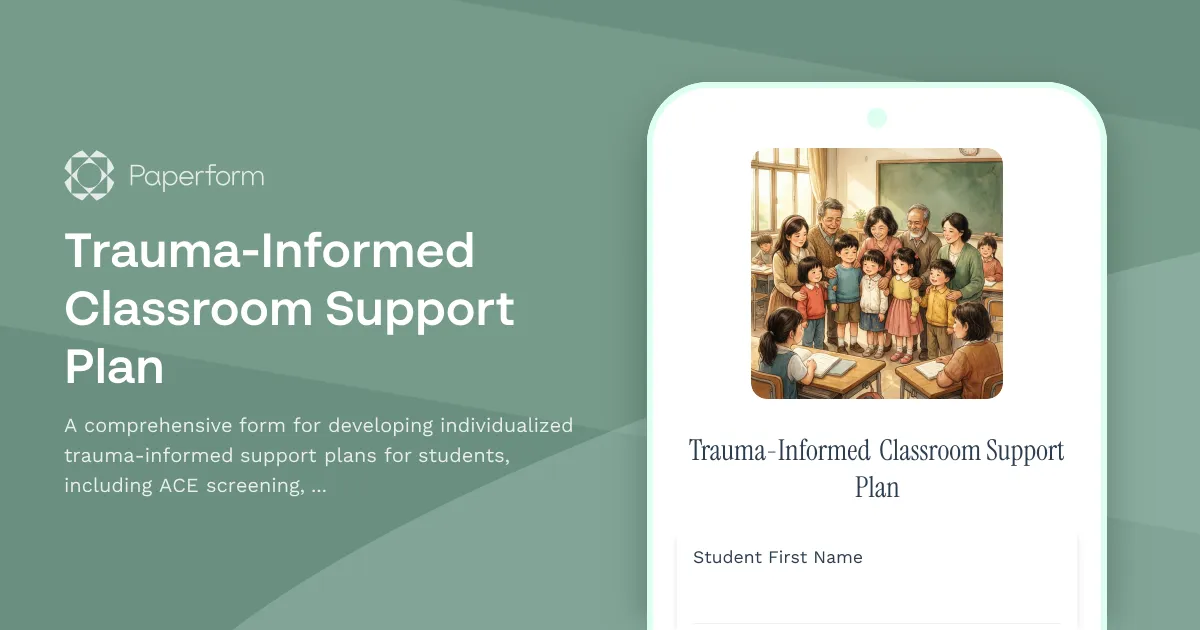
Trauma-Informed Classroom Support Plan
A comprehensive form for developing individualized trauma-informed support plans for students, including ACE screening, regulation strategies, trusted adult assignment, and mental health referral pathways.
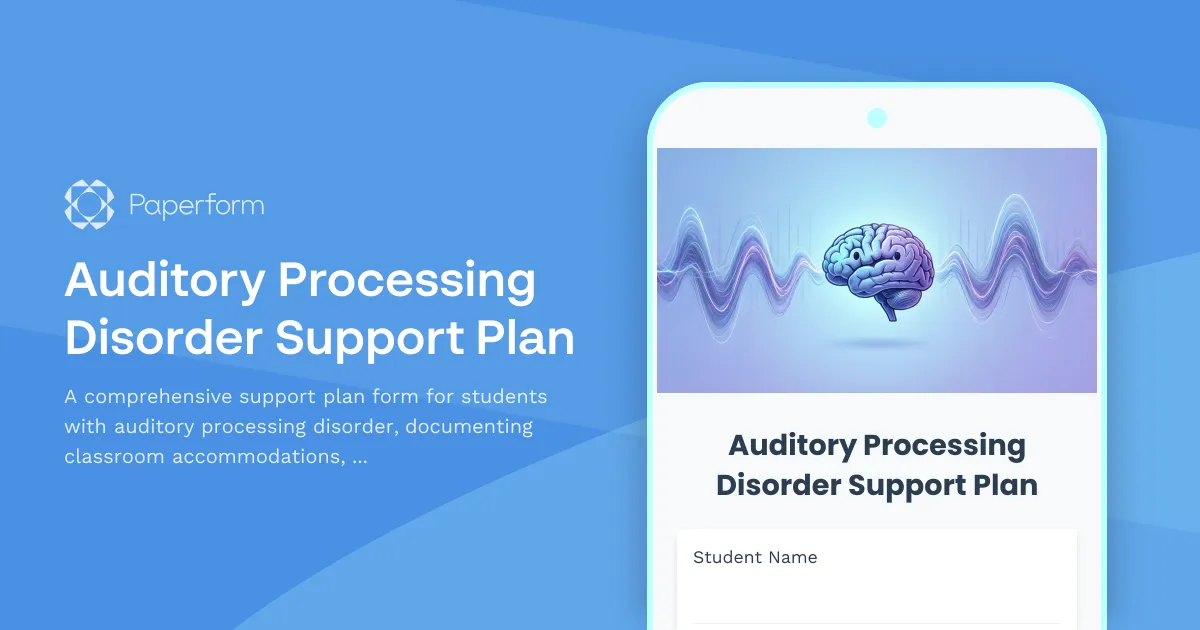
Auditory Processing Disorder Support Plan
A comprehensive support plan form for students with auditory processing disorder, documenting classroom accommodations, sensory needs, and therapy collaboration for optimal learning.
Augmentative and Alternative Communication (AAC) Device Trial Request Form
Request a trial of AAC devices for students or individuals with communication needs. Assess current communication methods, device preferences, training requirements, and funding options to support communication goals.
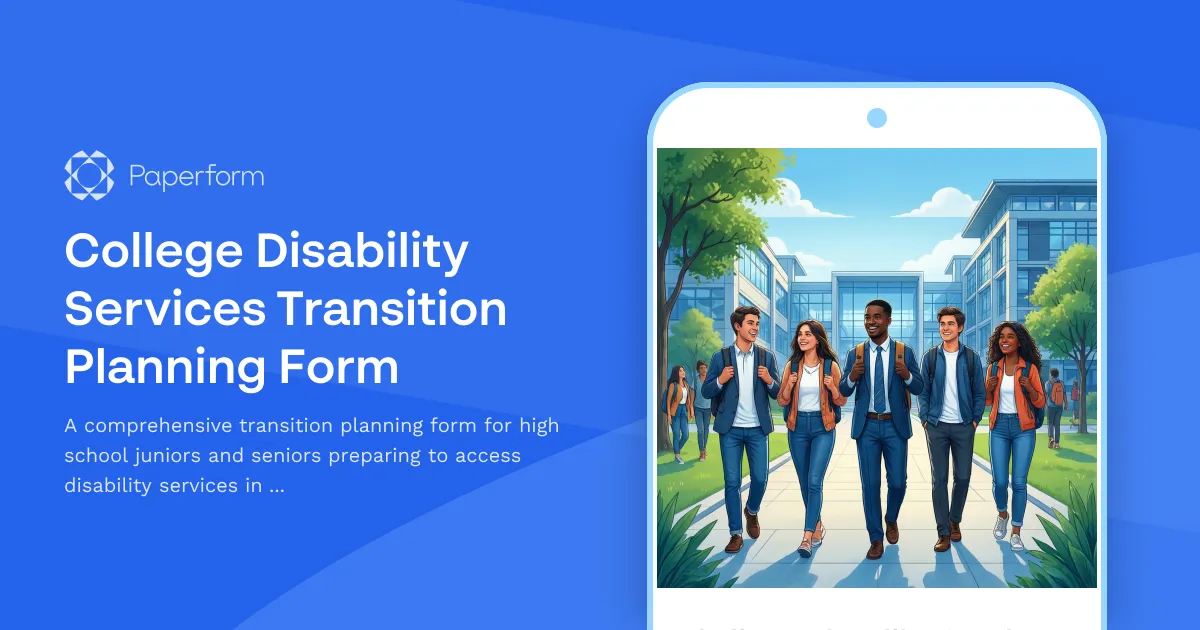
College Disability Services Transition Planning Form
A comprehensive transition planning form for high school juniors and seniors preparing to access disability services in college. Streamline documentation requirements, accommodation planning, and self-advocacy skill assessment.